
UNITED STATES
SECURITIES AND EXCHANGE COMMISSION
Washington, D.C. 20549
FORM 8-K
CURRENT REPORT
PURSUANT TO SECTION 13 OR 15(d) of the SECURITIES EXCHANGE ACT OF 1934
Date of Report (Date of earliest event reported): November 25, 2026
(Exact name of registrant as specified in its charter)
(State or other jurisdiction of incorporation) | (Commission File Number) | (IRS Employer Identification Number) | ||||||
(Address of principal executive offices)
(650 ) 577-3600
(Registrant’s telephone number, including area code)
Not Applicable
(Former name or former address, if changed since last report)
Check the appropriate box below if the Form 8-K filing is intended to simultaneously satisfy the filing obligation of the registrant under any of the following provisions:
Securities registered pursuant to Section 12(b) of the Act:
| Title of each class | Trading Symbol(s) | Name of each exchange on which registered | ||||||
Indicate by check mark whether the registrant is an emerging growth company as defined in Rule 405 of the Securities Act of 1933 (17 CFR 230.405) or Rule 12b-2 of the Securities Exchange Act of 1934 (17 CFR 240.12b-2)
Emerging Growth Company o
If an emerging growth company, indicate by check mark if the registrant has elected not to use the extended transition period for complying with any new or revised financial accounting standards provided pursuant to Section 13(a) of the Exchange Act o
Item 7.01 Regulation FD Disclosure.
On November 25, 2026, Vistagen Therapeutics, Inc. began utilizing a new corporate presentation, a copy of which is attached to this Current Report on Form 8-K as Exhibit 99.1.
The information under this Item 7.01 and Exhibit 99.1 attached hereto are intended to be furnished and shall not be deemed “filed” for purposes of Section 18 of the Securities Exchange Act of 1934, as amended (the “Exchange Act”), or otherwise subject to the liabilities of that section, nor shall such information be deemed incorporated by reference in any filing under the Securities Act of 1933, as amended, or the Exchange Act, except as expressly set forth by specific reference in such a filing.
Item 9.01 Financial Statements and Exhibits.
(d)Exhibits Index
| Exhibit No. | Description | |||||||
| 99.1 | ||||||||
| 104 | Cover Page Interactive Data File (embedded within the Inline XBRL document) | |||||||
Signatures
Pursuant to the requirements of the Securities Exchange Act of 1934, the registrant has duly caused this report to be signed on its behalf by the undersigned thereunto duly authorized.
| Vistagen Therapeutics, Inc. | ||||||||
| Date: November 25, 2026 | By: | /s/ Shawn K. Singh | ||||||
| Shawn K. Singh President and Chief Executive Officer | ||||||||
1 Nasdaq: VTGN Harnessing the therapeutic power and potential of brain regulation with nose-to-brain neurocircuitry December 2026
2 Forward-looking Statements This presentation contains certain forward-looking statements within the meaning of the Private Securities Litigation Reform Act of 1995 that are within the meaning of federal securities laws. These forward-looking statements involve known and unknown risks that are difficult to predict and include all matters that are not historical facts. In some cases, you can identify forward-looking statements by the use of words such as “may,” “could,” “expect,” “project,” “outlook,” “strategy,” “intend,” “plan,” “seek,” “anticipate,” “believe,” “estimate,” “predict,” “potential,” “strive,” “goal,” “continue,” “likely,” “will,” “would” and variations of these terms and similar expressions, or the negative of these terms or similar expressions. Such forward-looking statements are necessarily based upon estimates and assumptions that, while considered reasonable by Vistagen Therapeutics, Inc. (Vistagen or the Company) and its management, are inherently uncertain. As with all pharmaceutical products, development and commercialization involve substantial risks and uncertainties, and actual results or developments may differ materially from those projected or implied in these forward-looking statements. There can be no guarantee that any of Vistagen’s product candidates, including fasedienol, will successfully complete future clinical trials within estimated timelines or at all, receive regulatory approval or be commercially successful. Because the Repeat Dose Study was not powered to demonstrate statistical significance, there can be no assurance that the numerical trends and nominally significant findings described in this presentation will be replicated in future, adequately powered clinical trials, or that the U.S. Food and Drug Administration (FDA) will view such findings as supportive of a registrational pathway for fasedienol. Other factors that may cause such a difference include, without limitation, risks and uncertainties relating to conducting future clinical trials as currently expected or at all; Vistagen’s ability to replicate numerical trends and nominally significant findings from studies in the PALISADE Program or that the FDA will view such findings as supportive of a registrational pathway for fasedienol; Vistagen’s ability to successfully employ cash preservation measures and/or secure adequate financing for its operations, including financing or collaborative support for continued clinical development of its product candidates; Vistagen’s dependence on third-party collaborators for the development, regulatory approval, and/or commercialization of its product candidates and other aspects of its business, which are outside of Vistagen’s full control; the scope and enforceability of Vistagen’s patents, including patents related to Vistagen’s pherine product candidates; fluctuating costs of materials and other resources and services required to conduct Vistagen’s ongoing and/or planned clinical and non-clinical trials; market conditions; the impact of general economic, industry or political conditions in the United States or internationally; and other technical and unexpected hurdles in the development, manufacture and commercialization of Vistagen’s product candidates. These risks are more fully discussed in the section entitled “Risk Factors” in Vistagen’s Annual Report on Form 10-K for the fiscal year ended March 31, 2026, and Quarterly Report on Form 10-Q for the period ended September 30, 2026, as well as discussions of potential risks, uncertainties, and other important factors in our other filings with the U.S. Securities and Exchange Commission (SEC). The Company’s SEC filings are available on the SEC’s website at www.sec.gov. Given these uncertainties, you should not place undue reliance on these forward-looking statements, which apply only as of the date of this presentation and should not be relied upon as representing the Company’s views as of any subsequent date. The Company explicitly disclaims any obligation to update any forward-looking statements other than as may be required by law. If the Company does update one or more forward-looking statements, no inference should be made that we will make additional updates with respect to those or other forward-looking statements. Be aware that our development and commercialization plans may change at any time, without public notice, based on the kinds of risk factors described above. This presentation discusses certain product candidates that have not yet received marketing authorization or clearance by the FDA. No representation is made as to the safety, effectiveness or likelihood of marketing authorization or clearance of these product candidates. Certain clinical data for fasedienol in this presentation are based on separate studies and include pooled data between such studies. Differences exist between clinical trial design and patient populations, and caution should be exercised when pooling and/or comparing data across trials as pooled data and cross-study comparisons are inherently limited and such data may not be directly comparable. This presentation also contains estimates and other statistical data made by independent parties and by us relating to market size and growth and other data about our industry. These data involve numerous assumptions and limitations, and you are cautioned not to give undue weight to such estimates and data. Neither we nor any other person makes any representation as to the accuracy or completeness of such data or undertakes any obligation to update such data after the date of this presentation.
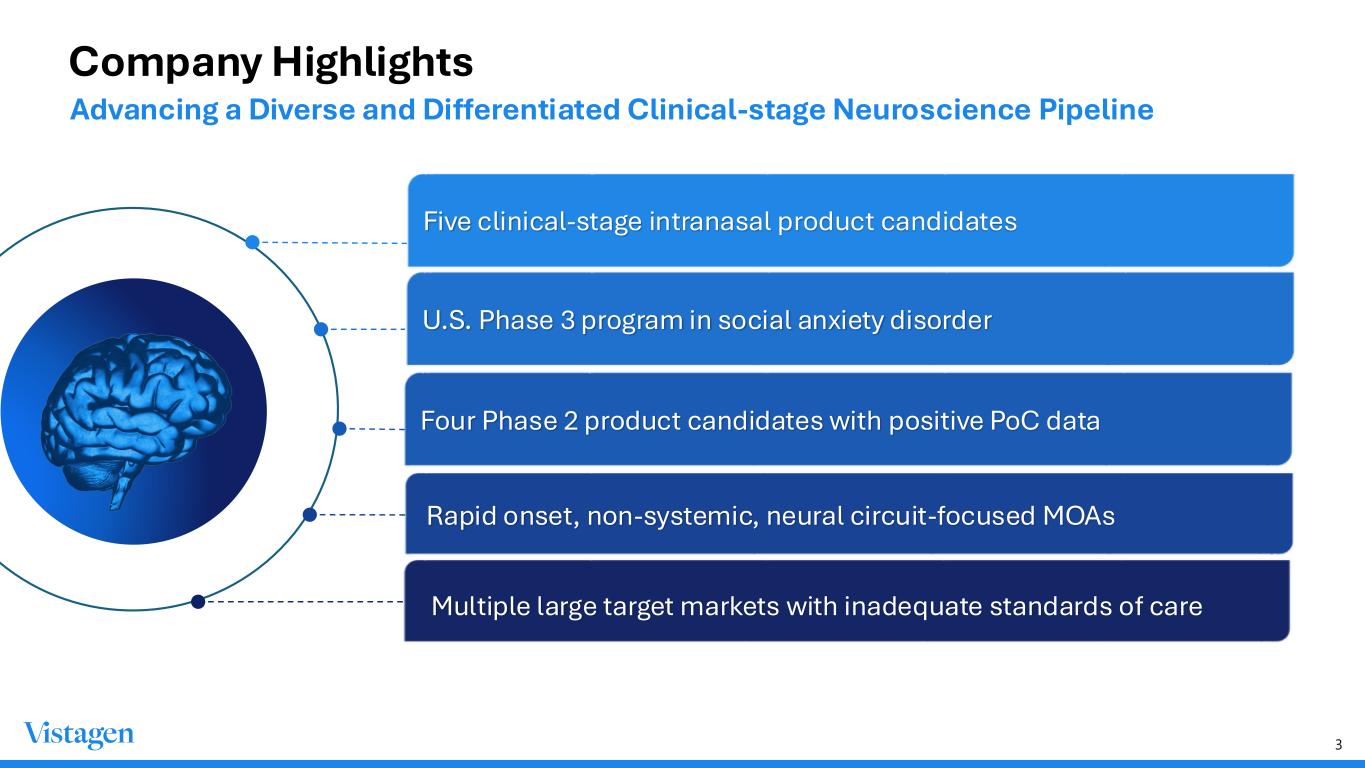
3 Company Highlights Four Phase 2 product candidates with positive PoC data Five clinical-stage intranasal product candidates U.S. Phase 3 program in social anxiety disorder Advancing a Diverse and Differentiated Clinical-stage Neuroscience Pipeline Multiple large target markets with inadequate standards of care Rapid onset, non-systemic, neural circuit-focused MOAs
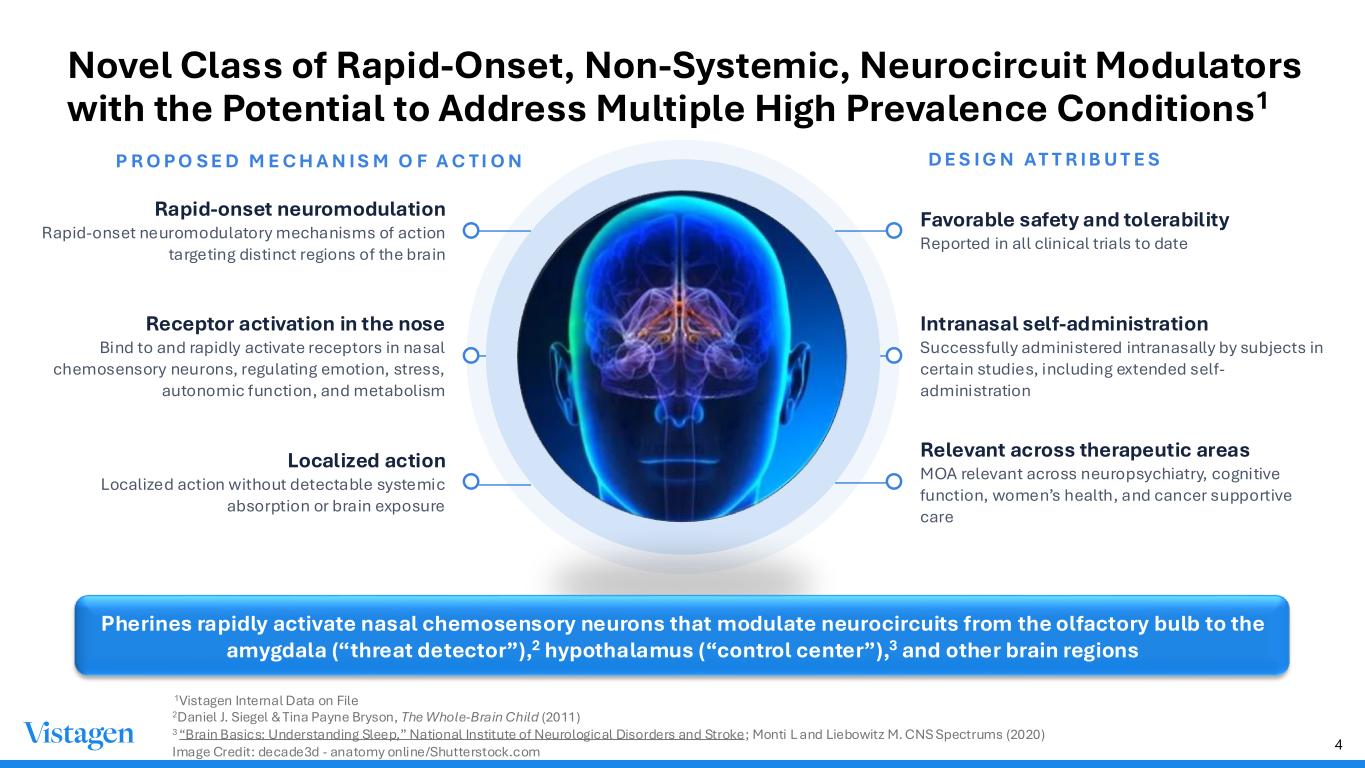
4 Novel Class of Rapid-Onset, Non-Systemic, Neurocircuit Modulators with the Potential to Address Multiple High Prevalence Conditions1 1Vistagen Internal Data on File 2Daniel J. Siegel & Tina Payne Bryson, The Whole-Brain Child (2011) 3 “Brain Basics: Understanding Sleep,” National Institute of Neurological Disorders and Stroke; Monti L and Liebowitz M. CNS Spectrums (2020) Image Credit: decade3d - anatomy online/Shutterstock.com P R O P O S E D M E C H A N I S M O F A C T I O N D E S I G N A T T R I B U T E S Rapid-onset neuromodulation Rapid-onset neuromodulatory mechanisms of action targeting distinct regions of the brain Receptor activation in the nose Bind to and rapidly activate receptors in nasal chemosensory neurons, regulating emotion, stress, autonomic function, and metabolism Localized action Localized action without detectable systemic absorption or brain exposure Favorable safety and tolerability Reported in all clinical trials to date Intranasal self-administration Successfully administered intranasally by subjects in certain studies, including extended self- administration Relevant across therapeutic areas MOA relevant across neuropsychiatry, cognitive function, women’s health, and cancer supportive care Pherines rapidly activate nasal chemosensory neurons that modulate neurocircuits from the olfactory bulb to the amygdala (“threat detector”),2 hypothalamus (“control center”),3 and other brain regions
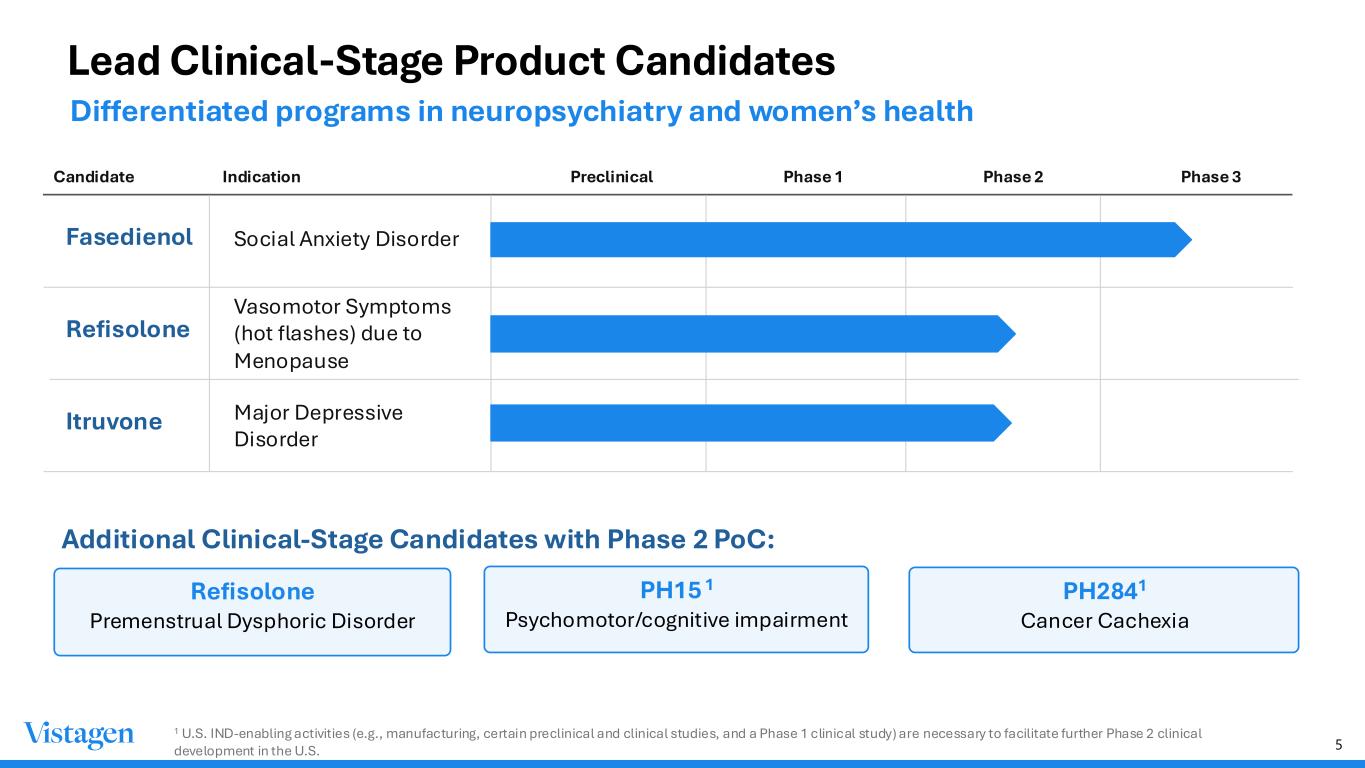
5 Lead Clinical-Stage Product Candidates Differentiated programs in neuropsychiatry and women’s health Candidate Indication Preclinical Phase 1 Phase 2 Phase 3 Fasedienol Social Anxiety Disorder Itruvone Major Depressive Disorder Refisolone Vasomotor Symptoms (hot flashes) due to Menopause Additional Clinical-Stage Candidates with Phase 2 PoC: Refisolone Premenstrual Dysphoric Disorder PH15 1 Psychomotor/cognitive impairment PH2841 Cancer Cachexia 1 U.S. IND-enabling activities (e.g., manufacturing, certain preclinical and clinical studies, and a Phase 1 clinical study) are necessary to facilitate further Phase 2 clinical development in the U.S.
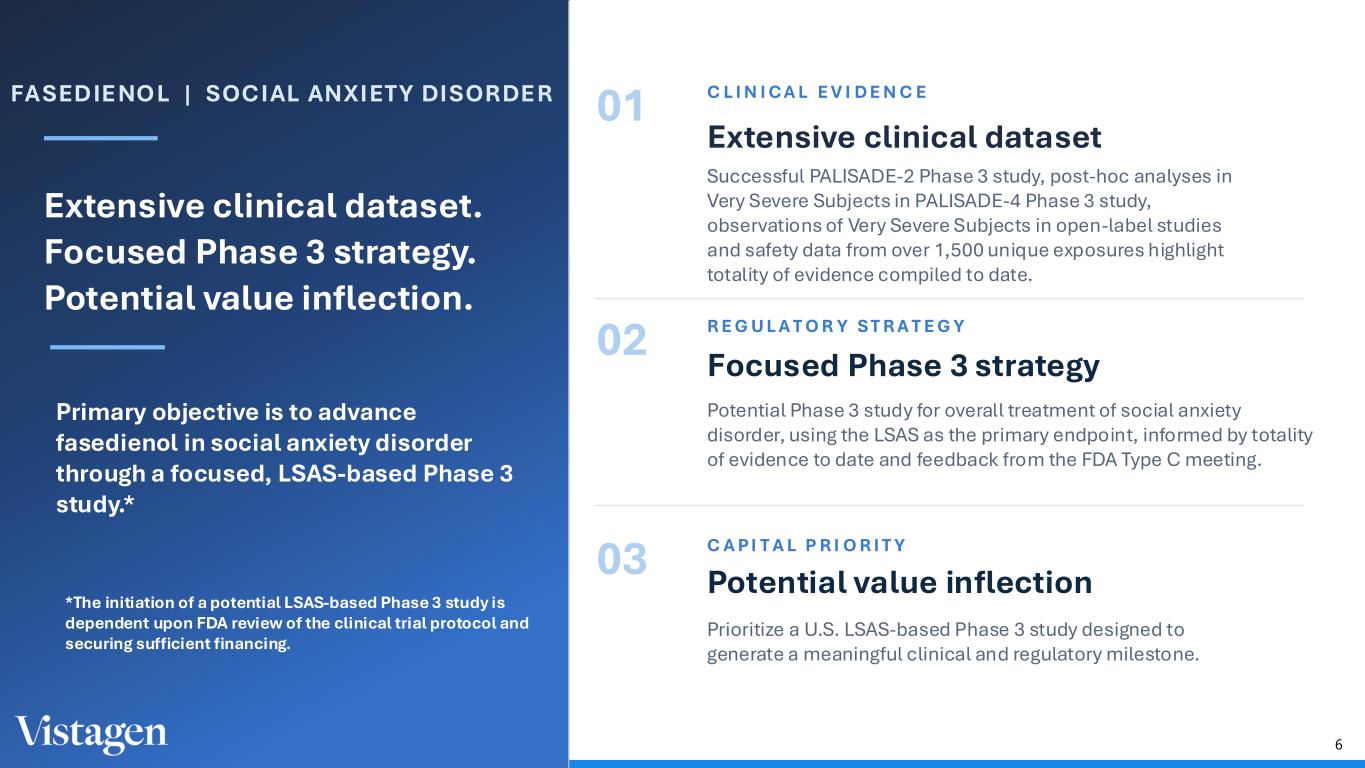
6 Extensive clinical dataset. Focused Phase 3 strategy. Potential value inflection. Primary objective is to advance fasedienol in social anxiety disorder through a focused, LSAS-based Phase 3 study.* *The initiation of a potential LSAS-based Phase 3 study is dependent upon FDA review of the clinical trial protocol and securing sufficient financing. FASEDIENOL | SOCIAL ANXIETY DISORDER 01 C L I N I C A L E V I D E N C E Extensive clinical dataset Successful PALISADE-2 Phase 3 study, post-hoc analyses in Very Severe Subjects in PALISADE-4 Phase 3 study, observations of Very Severe Subjects in open-label studies and safety data from over 1,500 unique exposures highlight totality of evidence compiled to date. 02 R E G U L A T O R Y S T R A T E G Y Focused Phase 3 strategy Potential Phase 3 study for overall treatment of social anxiety disorder, using the LSAS as the primary endpoint, informed by totality of evidence to date and feedback from the FDA Type C meeting. 03 C A P I T A L P R I O R I T Y Potential value inflection Prioritize a U.S. LSAS-based Phase 3 study designed to generate a meaningful clinical and regulatory milestone.
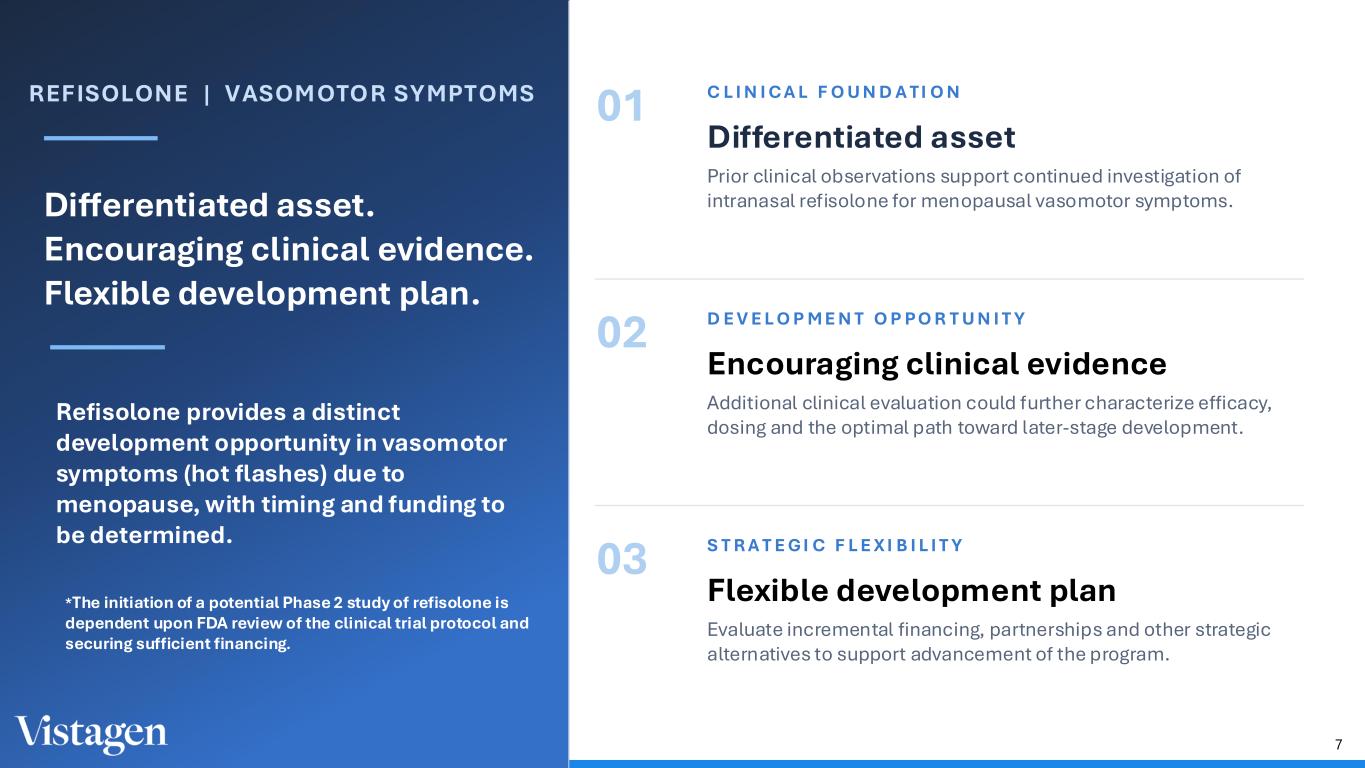
7 Differentiated asset. Encouraging clinical evidence. Flexible development plan. Refisolone provides a distinct development opportunity in vasomotor symptoms (hot flashes) due to menopause, with timing and funding to be determined. *The initiation of a potential Phase 2 study of refisolone is dependent upon FDA review of the clinical trial protocol and securing sufficient financing. 01 C L I N I C A L F O U N D A T I O N Differentiated asset Prior clinical observations support continued investigation of intranasal refisolone for menopausal vasomotor symptoms. 02 D E V E L O P M E N T O P P O R T U N I T Y Encouraging clinical evidence Additional clinical evaluation could further characterize efficacy, dosing and the optimal path toward later-stage development. 03 S T R A T E G I C F L E X I B I L I T Y Flexible development plan Evaluate incremental financing, partnerships and other strategic alternatives to support advancement of the program. REFISOLONE | VASOMOTOR SYMPTOMS
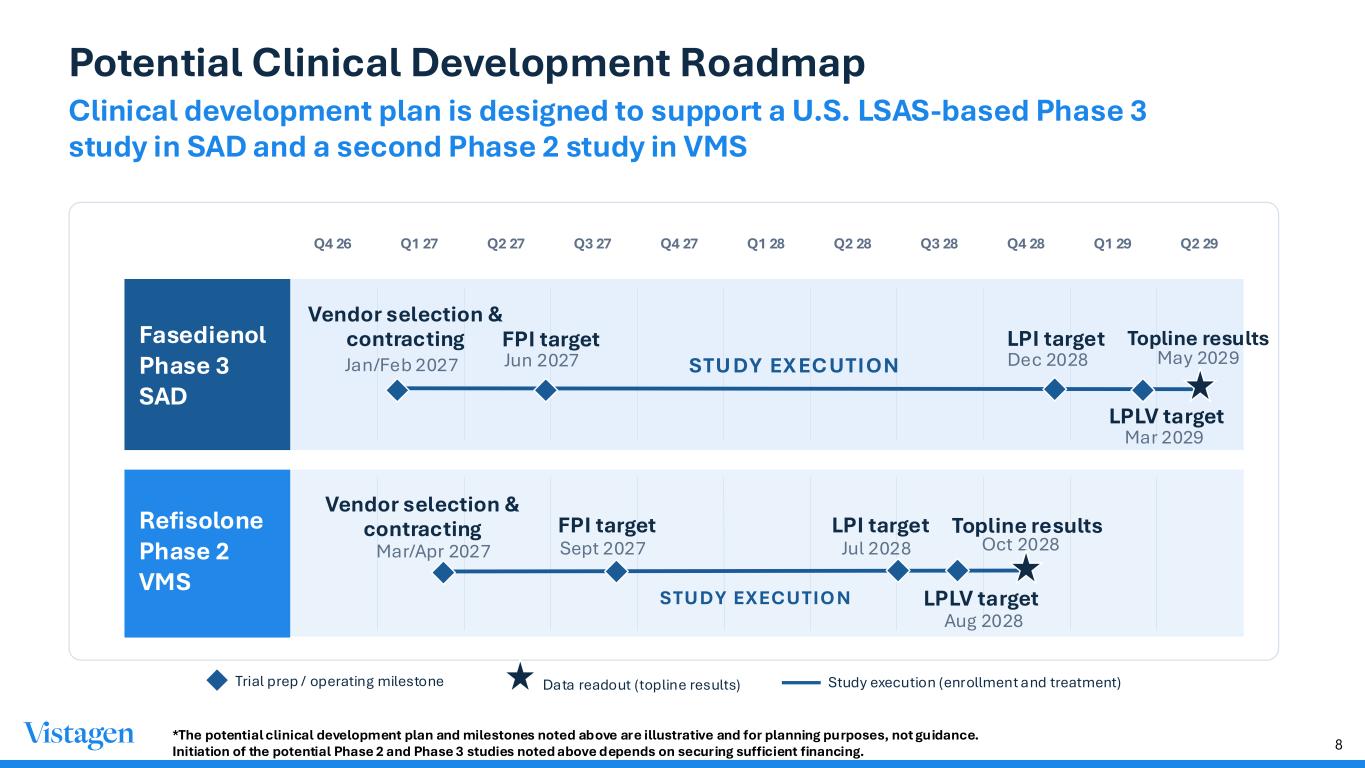
8 Potential Clinical Development Roadmap Clinical development plan is designed to support a U.S. LSAS-based Phase 3 study in SAD and a second Phase 2 study in VMS Fasedienol Phase 3 SAD Refisolone Phase 2 VMS Vendor selection & contracting Jan/Feb 2027 FPI target Jun 2027 STU DY EX EC UTION Topline results May 2029 Mar/Apr 2027 FPI target Sept 2027 STUDY EXECUTIO N Topline results Oct 2028 Trial prep / operating milestone Data readout (topline results) Study execution (enrollment and treatment) LPLV target Mar 2029 LPLV target Aug 2028 Vendor selection & contracting LPI target Dec 2028 LPI target Jul 2028 Q4 26 Q1 27 Q2 27 Q3 27 Q4 27 Q1 28 Q2 28 Q3 28 Q4 28 Q1 29 Q2 29 *The potential clinical development plan and milestones noted above are illustrative and for planning purposes, not guidance. Initiation of the potential Phase 2 and Phase 3 studies noted above depends on securing sufficient financing.
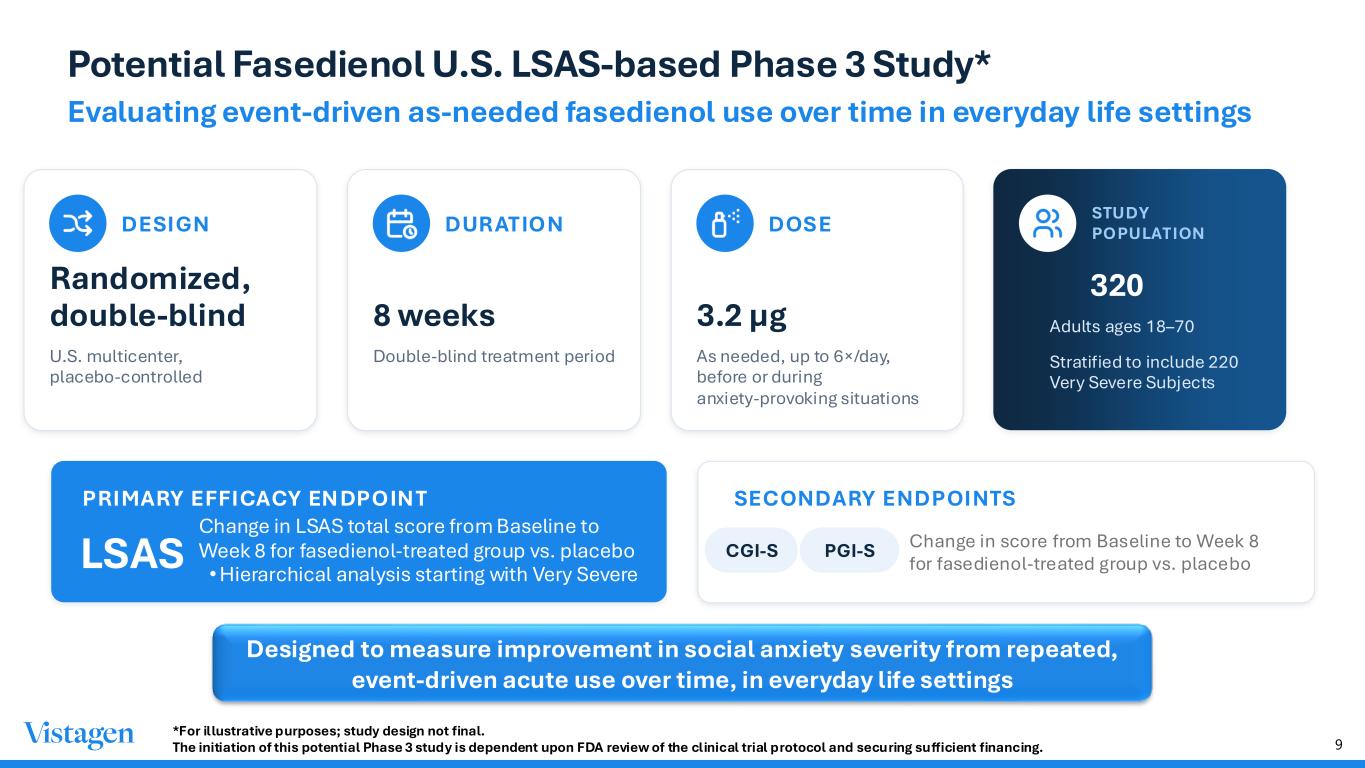
9 Potential Fasedienol U.S. LSAS-based Phase 3 Study* Evaluating event-driven as-needed fasedienol use over time in everyday life settings DESIGN Randomized, double-blind U.S. multicenter, placebo-controlled DURATION 8 weeks Double-blind treatment period DOSE 3.2 µg As needed, up to 6×/day, before or during anxiety-provoking situations STUDY POPULATION 320 Adults ages 18–70 PRIMARY EFFICACY ENDPOINT LSAS Change in LSAS total score from Baseline to Week 8 for fasedienol-treated group vs. placebo •Hierarchical analysis starting with Very Severe SECONDARY ENDPOINTS CGI-S PGI-S Change in score from Baseline to Week 8 for fasedienol-treated group vs. placebo Designed to measure improvement in social anxiety severity from repeated, event-driven acute use over time, in everyday life settings *For illustrative purposes; study design not final. The initiation of this potential Phase 3 study is dependent upon FDA review of the clinical trial protocol and securing sufficient financing. Stratified to include 220 Very Severe Subjects
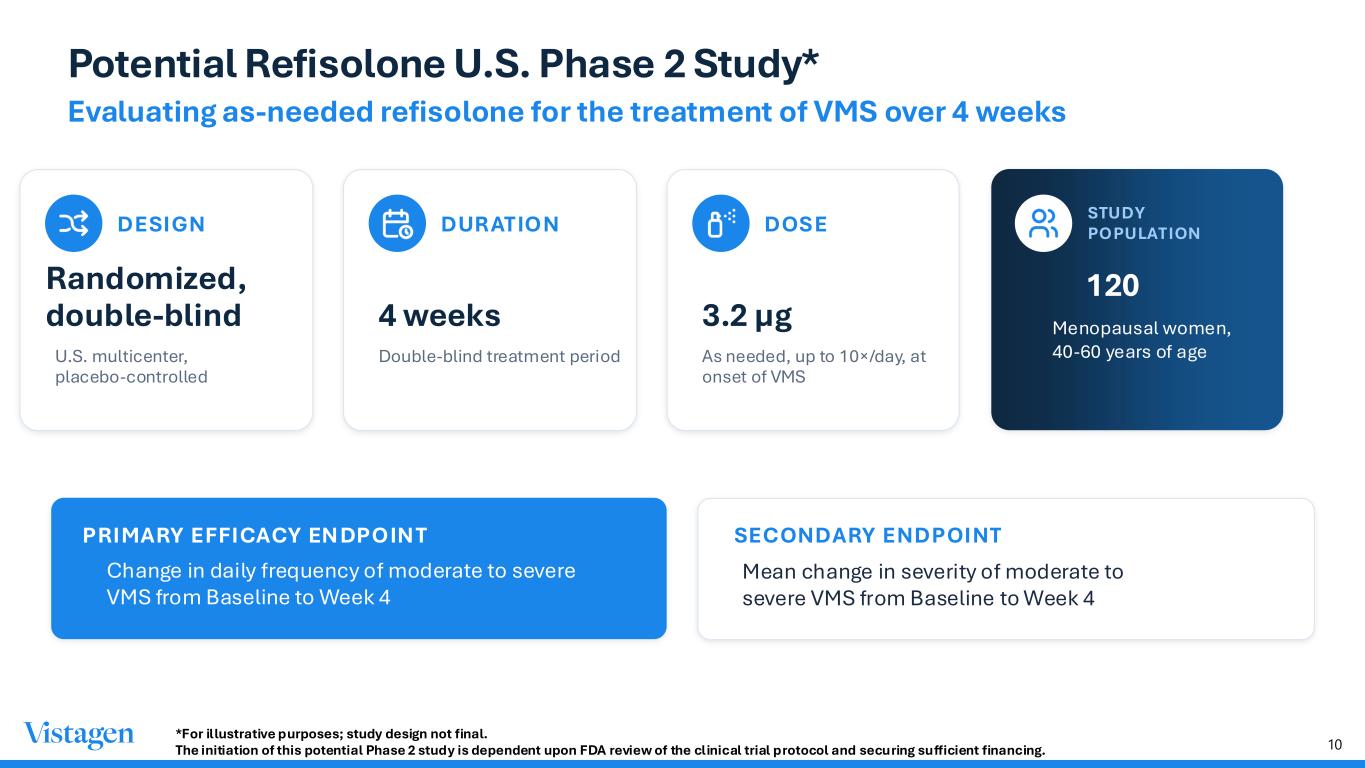
10 Potential Refisolone U.S. Phase 2 Study* Evaluating as-needed refisolone for the treatment of VMS over 4 weeks DESIGN Randomized, double-blind U.S. multicenter, placebo-controlled DURATION 4 weeks Double-blind treatment period DOSE 3.2 µg As needed, up to 10×/day, at onset of VMS STUDY POPULATION 120 Menopausal women, 40-60 years of age PRIMARY EFFICACY ENDPOINT Change in daily frequency of moderate to severe VMS from Baseline to Week 4 SECONDARY ENDPOINT Mean change in severity of moderate to severe VMS from Baseline to Week 4 *For illustrative purposes; study design not final. The initiation of this potential Phase 2 study is dependent upon FDA review of the clinical trial protocol and securing sufficient financing.
11 Social Anxiety Disorder Fasedienol
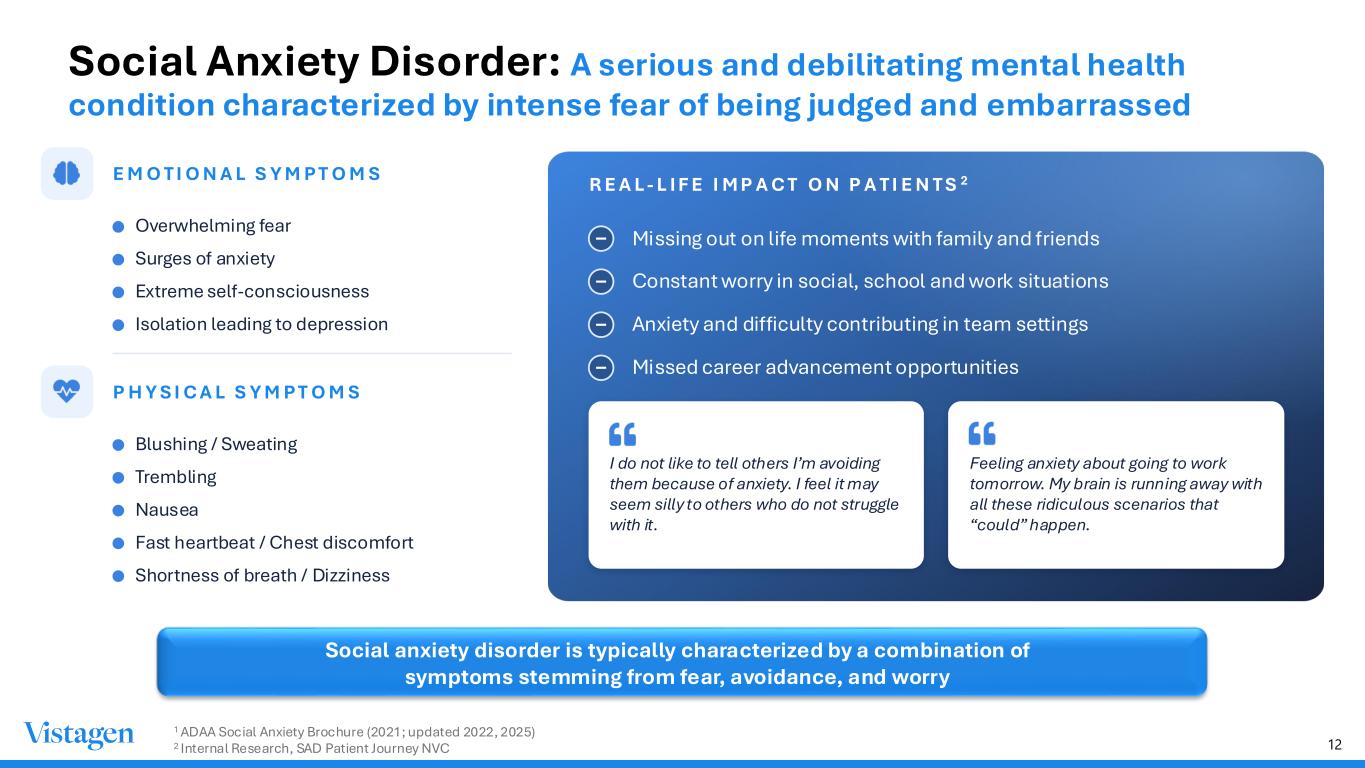
12 E M O T I O N A L S Y M P T O M S Overwhelming fear Surges of anxiety Extreme self-consciousness Isolation leading to depression P H Y S I C A L S Y M P T O M S Blushing / Sweating Trembling Nausea Fast heartbeat / Chest discomfort Shortness of breath / Dizziness R E A L - L I F E I M P A C T O N P A T I E N T S 2 Missing out on life moments with family and friends Constant worry in social, school and work situations Anxiety and difficulty contributing in team settings Missed career advancement opportunities I do not like to tell others I’m avoiding them because of anxiety. I feel it may seem silly to others who do not struggle with it. Feeling anxiety about going to work tomorrow. My brain is running away with all these ridiculous scenarios that “could” happen. 1 ADAA Social Anxiety Brochure (2021; updated 2022, 2025) 2 Internal Research, SAD Patient Journey NVC Social Anxiety Disorder: A serious and debilitating mental health condition characterized by intense fear of being judged and embarrassed Social anxiety disorder is typically characterized by a combination of symptoms stemming from fear, avoidance, and worry
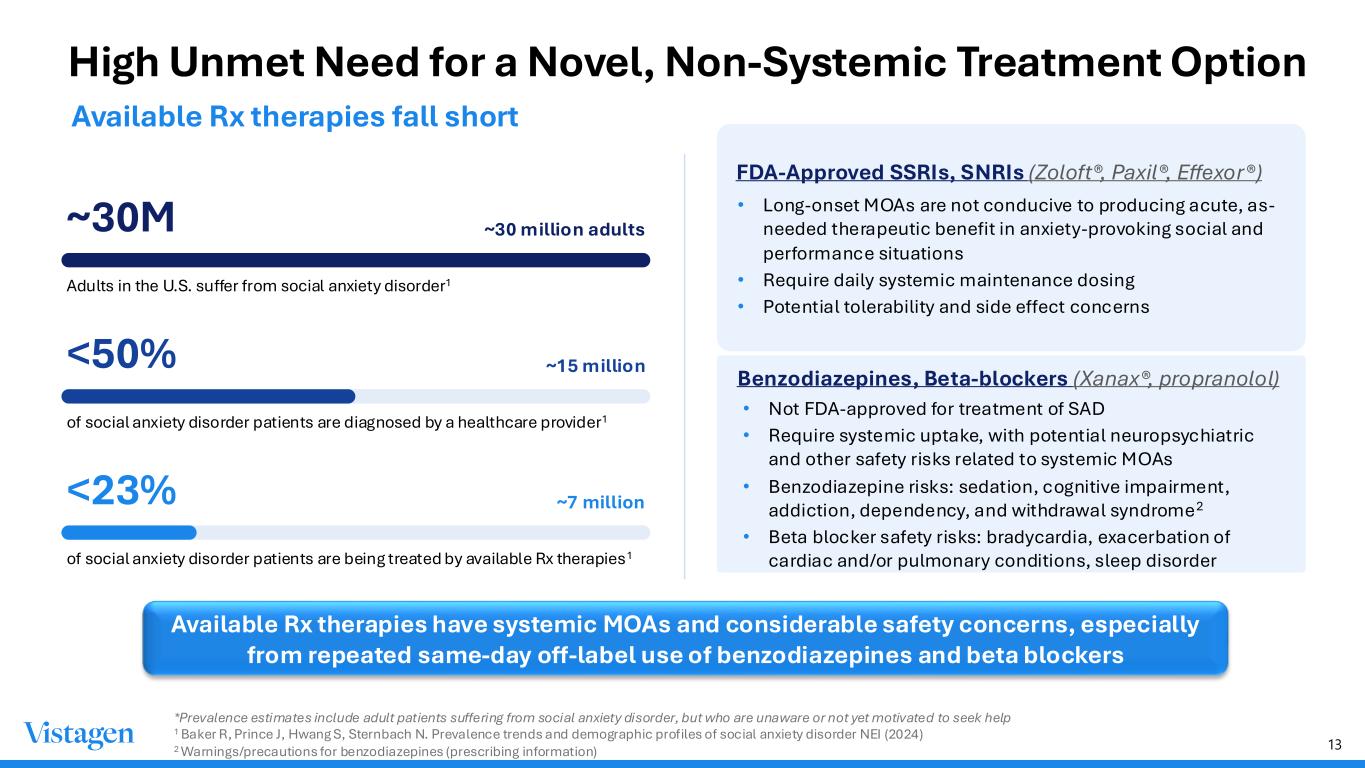
13 High Unmet Need for a Novel, Non-Systemic Treatment Option ~30M ~30 million adults Adults in the U.S. suffer from social anxiety disorder1 <50% ~15 million of social anxiety disorder patients are diagnosed by a healthcare provider1 <23% ~7 million of social anxiety disorder patients are being treated by available Rx therapies1 Available Rx therapies fall short FDA-Approved SSRIs, SNRIs (Zoloft®, Paxil®, Effexor®) • Long-onset MOAs are not conducive to producing acute, as- needed therapeutic benefit in anxiety-provoking social and performance situations • Require daily systemic maintenance dosing • Potential tolerability and side effect concerns Benzodiazepines, Beta-blockers (Xanax®, propranolol) • Not FDA-approved for treatment of SAD • Require systemic uptake, with potential neuropsychiatric and other safety risks related to systemic MOAs • Benzodiazepine risks: sedation, cognitive impairment, addiction, dependency, and withdrawal syndrome2 • Beta blocker safety risks: bradycardia, exacerbation of cardiac and/or pulmonary conditions, sleep disorder *Prevalence estimates include adult patients suffering from social anxiety disorder, but who are unaware or not yet motivated to seek help 1 Baker R, Prince J, Hwang S, Sternbach N. Prevalence trends and demographic profiles of social anxiety disorder NEI (2024) 2 Warnings/precautions for benzodiazepines (prescribing information) Available Rx therapies have systemic MOAs and considerable safety concerns, especially from repeated same-day off-label use of benzodiazepines and beta blockers
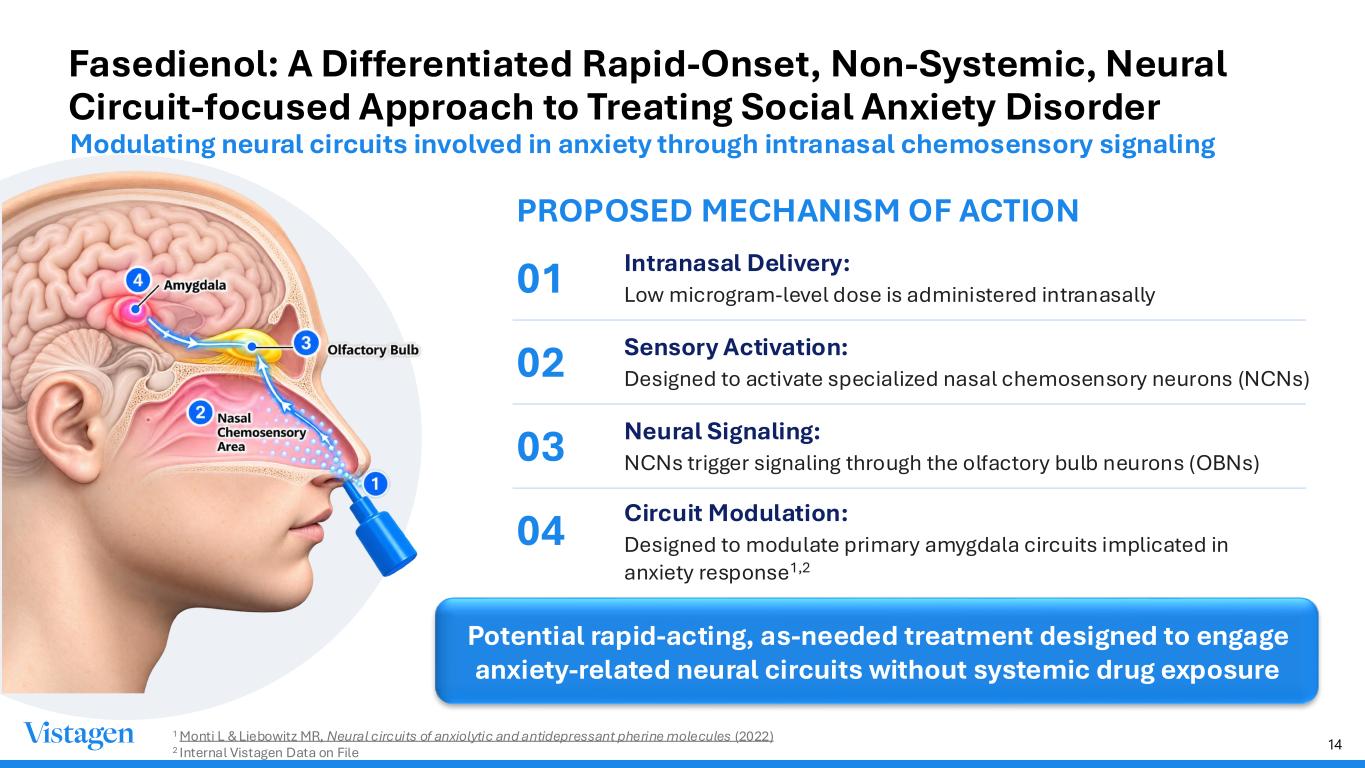
14 Fasedienol: A Differentiated Rapid-Onset, Non-Systemic, Neural Circuit-focused Approach to Treating Social Anxiety Disorder Modulating neural circuits involved in anxiety through intranasal chemosensory signaling PROPOSED MECHANISM OF ACTION 01 Intranasal Delivery: Low microgram-level dose is administered intranasally 02 Sensory Activation: Designed to activate specialized nasal chemosensory neurons (NCNs) 03 Neural Signaling: NCNs trigger signaling through the olfactory bulb neurons (OBNs) 04 Circuit Modulation: Designed to modulate primary amygdala circuits implicated in anxiety response1,2 1 Monti L & Liebowitz MR, Neural circuits of anxiolytic and antidepressant pherine molecules (2022) 2 Internal Vistagen Data on File Potential rapid-acting, as-needed treatment designed to engage anxiety-related neural circuits without systemic drug exposure
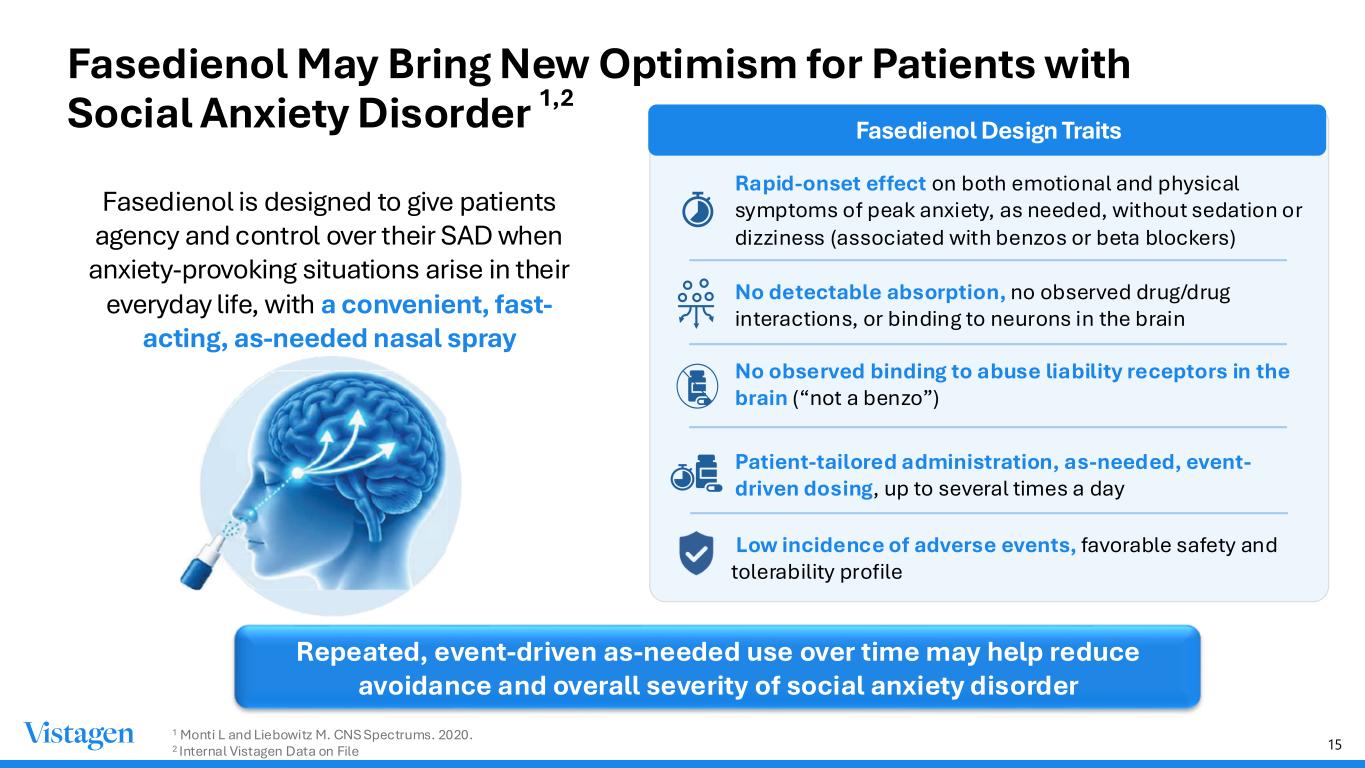
15 Fasedienol May Bring New Optimism for Patients with Social Anxiety Disorder Fasedienol is designed to give patients agency and control over their SAD when anxiety-provoking situations arise in their everyday life, with a convenient, fast- acting, as-needed nasal spray Fasedienol Design Traits Rapid-onset effect on both emotional and physical symptoms of peak anxiety, as needed, without sedation or dizziness (associated with benzos or beta blockers) No detectable absorption, no observed drug/drug interactions, or binding to neurons in the brain No observed binding to abuse liability receptors in the brain (“not a benzo”) Patient-tailored administration, as-needed, event- driven dosing, up to several times a day 1 Monti L and Liebowitz M. CNS Spectrums. 2020. 2 Internal Vistagen Data on File Potential to be the first FDA-approved acute treatment for adults with social anxiety disorder Low incidence of adverse events, favorable safety and tolerability profile 1,2 Repeated, event-driven as-need d use over time may help reduce avoidance and overall severity of social anxiety disorder
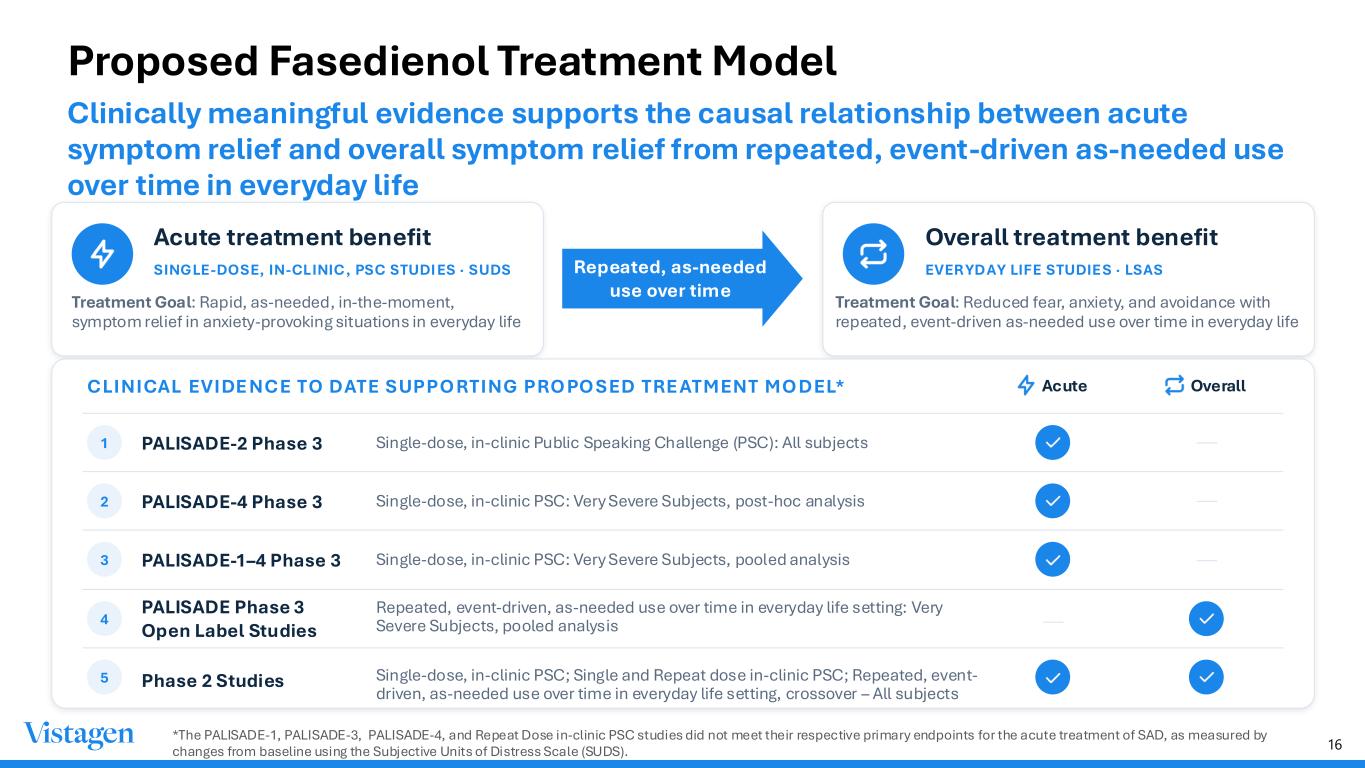
16 Proposed Fasedienol Treatment Model Clinically meaningful evidence supports the causal relationship between acute symptom relief and overall symptom relief from repeated, event-driven as-needed use over time in everyday life Acute treatment benefit SINGLE-DOSE, IN-CLINIC, PSC STUDI ES · SUDS Treatment Goal: Rapid, as-needed, in-the-moment, symptom relief in anxiety-provoking situations in everyday life Overall treatment benefit EVERYDAY LIFE STUDIES · LSAS Treatment Goal: Reduced fear, anxiety, and avoidance with repeated, event-driven as-needed use over time in everyday life CLINICAL EVIDE NCE TO DATE SUPPO RTING PRO PO SED TRE ATMENT MO DEL* Acute Overall 1 PALISADE-2 Phase 3 Single-dose, in-clinic Public Speaking Challenge (PSC): All subjects 2 PALISADE-4 Phase 3 Single-dose, in-clinic PSC: Very Severe Subjects, post-hoc analysis 3 PALISADE-1–4 Phase 3 Single-dose, in-clinic PSC: Very Severe Subjects, pooled analysis 4 Single-dose, in-clinic PSC; Single and Repeat dose in-clinic PSC; Repeated, event- driven, as-needed use over time in everyday life setting, crossover – All subjects 5 PALISADE Phase 3 Open Label Studies Repeated, event-driven, as-needed use over time in everyday life setting: Very Severe Subjects, pooled analysis Phase 2 Studies *The PALISADE-1, PALISADE-3, PALISADE-4, and Repeat Dose in-clinic PSC studies did not meet their respective primary endpoints for the acute treatment of SAD, as measured by changes from baseline using the Subjective Units of Distress Scale (SUDS). Repeated, as-needed use over time
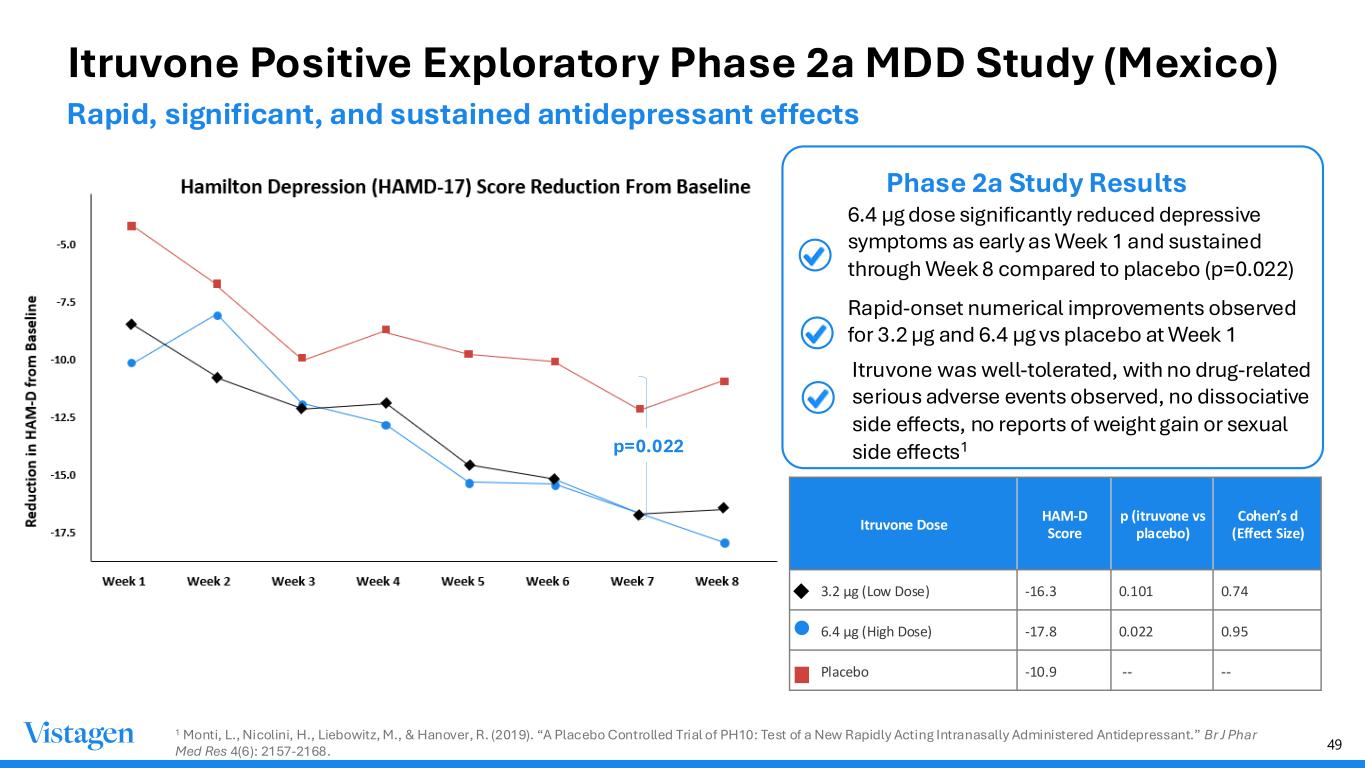
17 Single event, Public Speaking Challenge in a clinical setting Subjective Units of Distress Scale (SUDS) Fasedienol: Acute Treatment
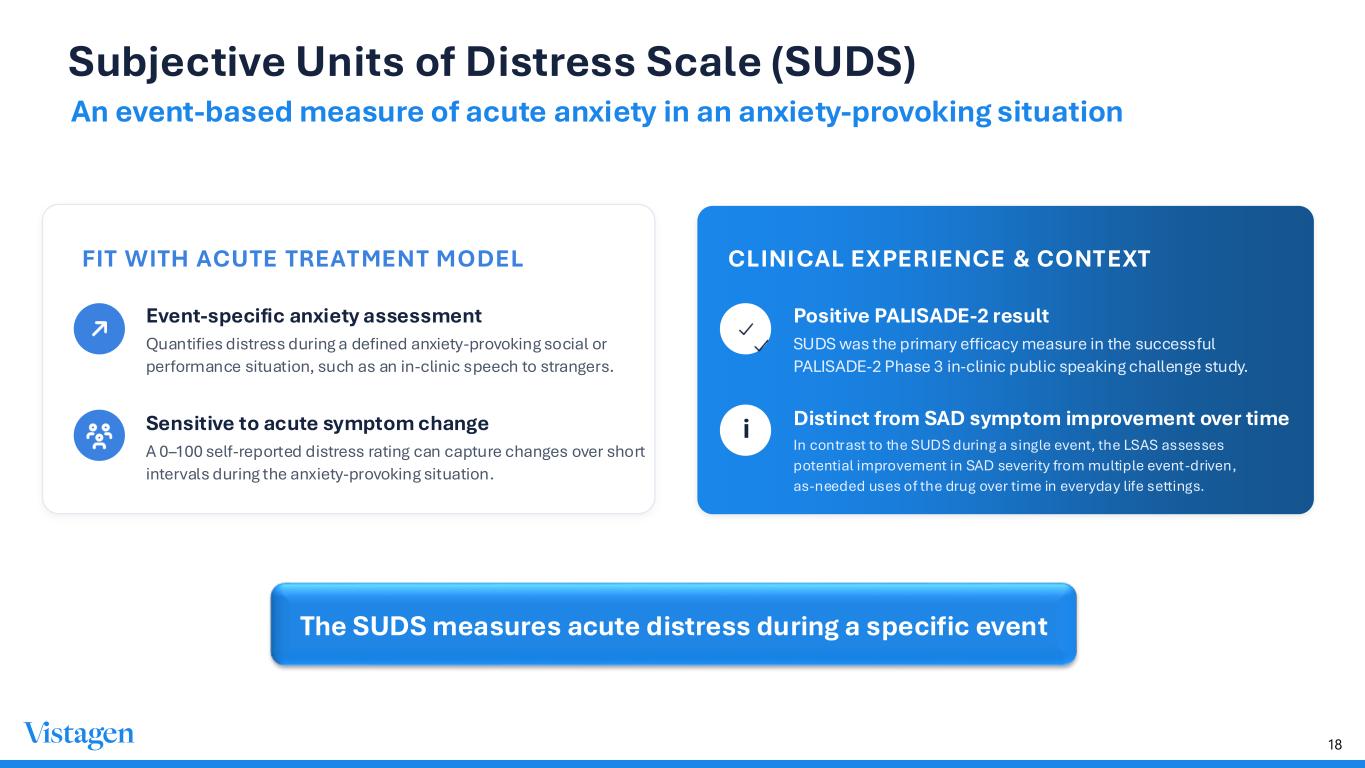
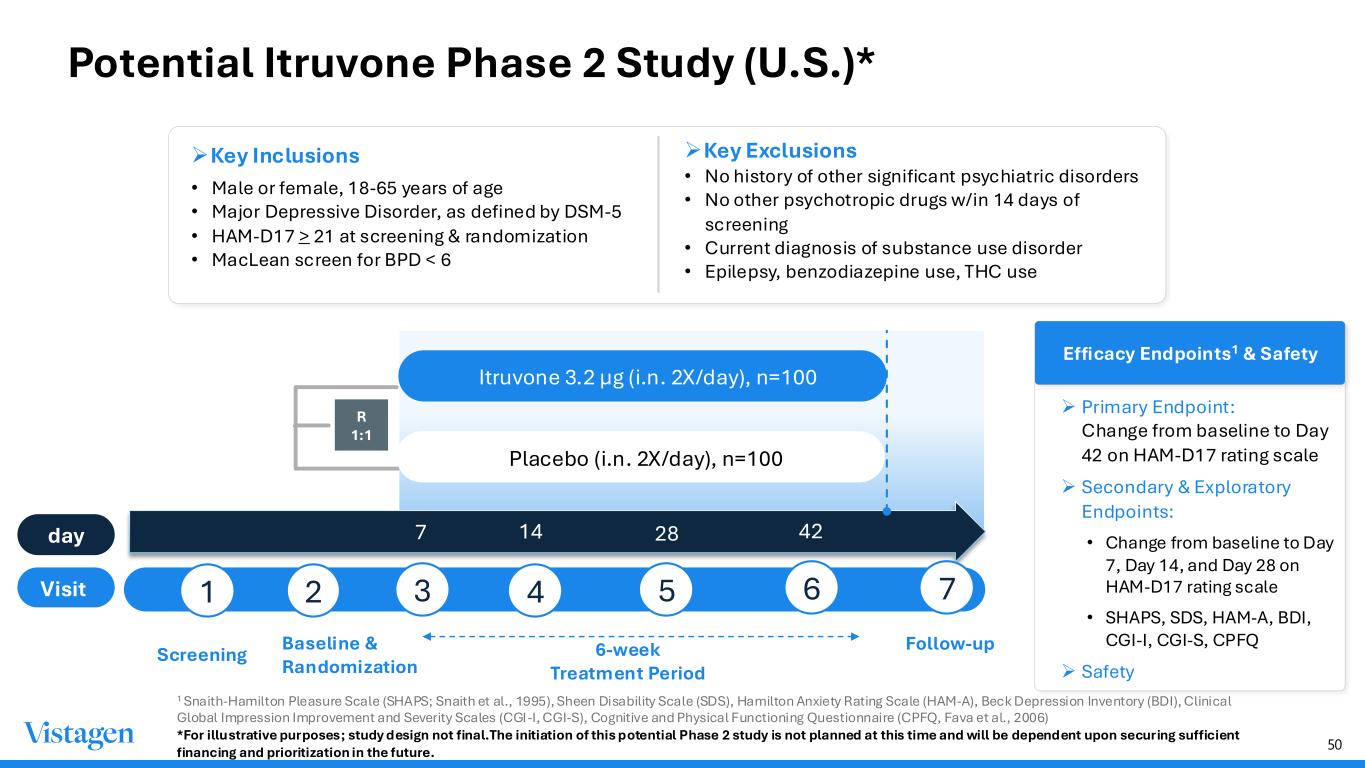
18 Subjective Units of Distress Scale (SUDS) An event-based measure of acute anxiety in an anxiety-provoking situation FIT WITH ACUTE TREATMENT MODEL Event-specific anxiety assessment Quantifies distress during a defined anxiety-provoking social or performance situation, such as an in-clinic speech to strangers. Sensitive to acute symptom change A 0–100 self-reported distress rating can capture changes over short intervals during the anxiety-provoking situation. CLINICAL EXPERIENCE & CONTEXT Positive PALISADE-2 result SUDS was the primary efficacy measure in the successful PALISADE-2 Phase 3 in-clinic public speaking challenge study. i Distinct from SAD symptom improvement over time In contrast to the SUDS during a single event, the LSAS assesses potential improvement in SAD severity from multiple event-driven, as-needed uses of the drug over time in everyday life settings. The SUDS measures acute distress during a specific event
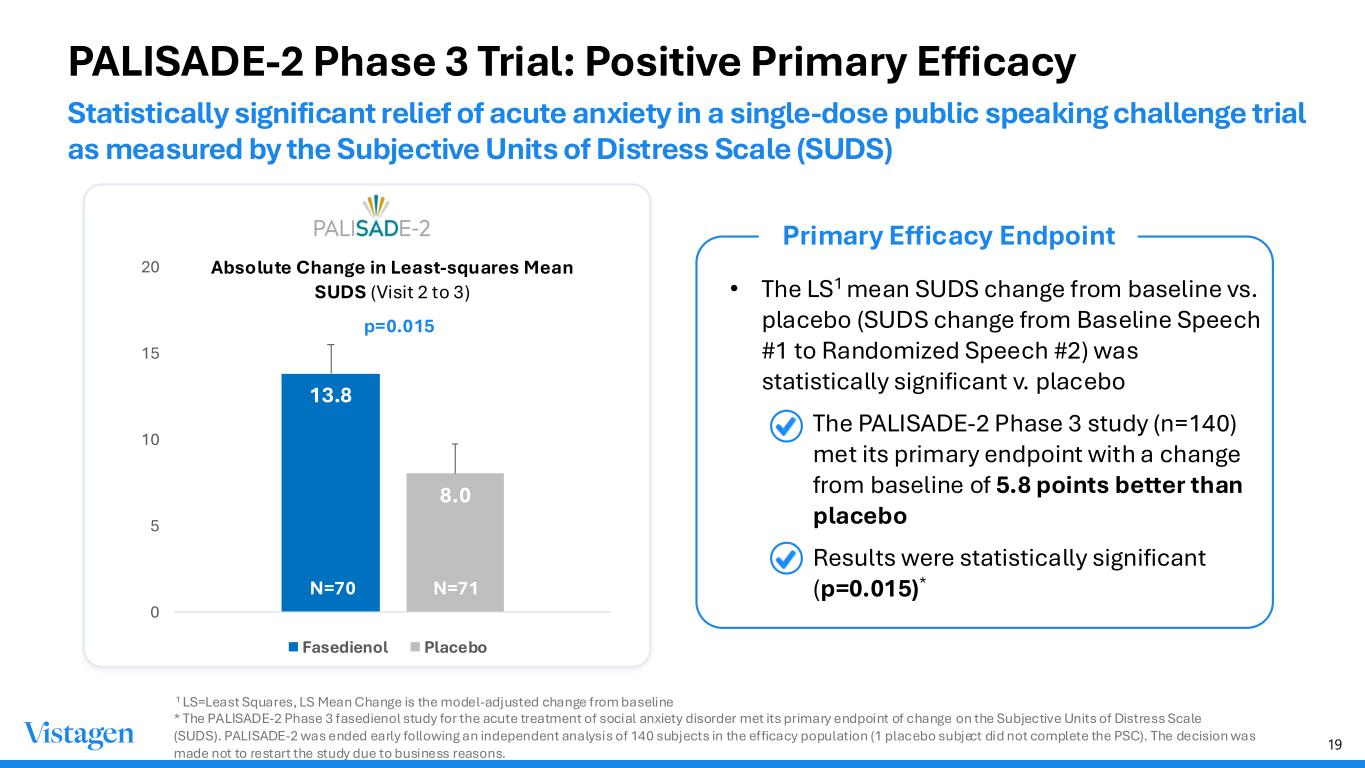
19 PALISADE-2 Phase 3 Trial: Positive Primary Efficacy 13.8 8.0 0 5 10 15 20 (p=0.015) Absolute Change in Least-squares Mean SUDS (Visit 2 to 3) Fasedienol Placebo • The LS1 mean SUDS change from baseline vs. placebo (SUDS change from Baseline Speech #1 to Randomized Speech #2) was statistically significant v. placebo • The PALISADE-2 Phase 3 study (n=140) met its primary endpoint with a change from baseline of 5.8 points better than placebo • Results were statistically significant (p=0.015)* Primary Efficacy Endpoint p=0.015 1 LS=Least Squares, LS Mean Change is the model-adjusted change from baseline * The PALISADE-2 Phase 3 fasedienol study for the acute treatment of social anxiety disorder met its primary endpoint of change on the Subjective Units of Distress Scale (SUDS). PALISADE-2 was ended early following an independent analysis of 140 subjects in the efficacy population (1 placebo subject did not complete the PSC). The decision was made not to restart the study due to business reasons. Statistically significant relief of acute anxiety in a single-dose public speaking challenge trial as measured by the Subjective Units of Distress Scale (SUDS) N=70 N=71
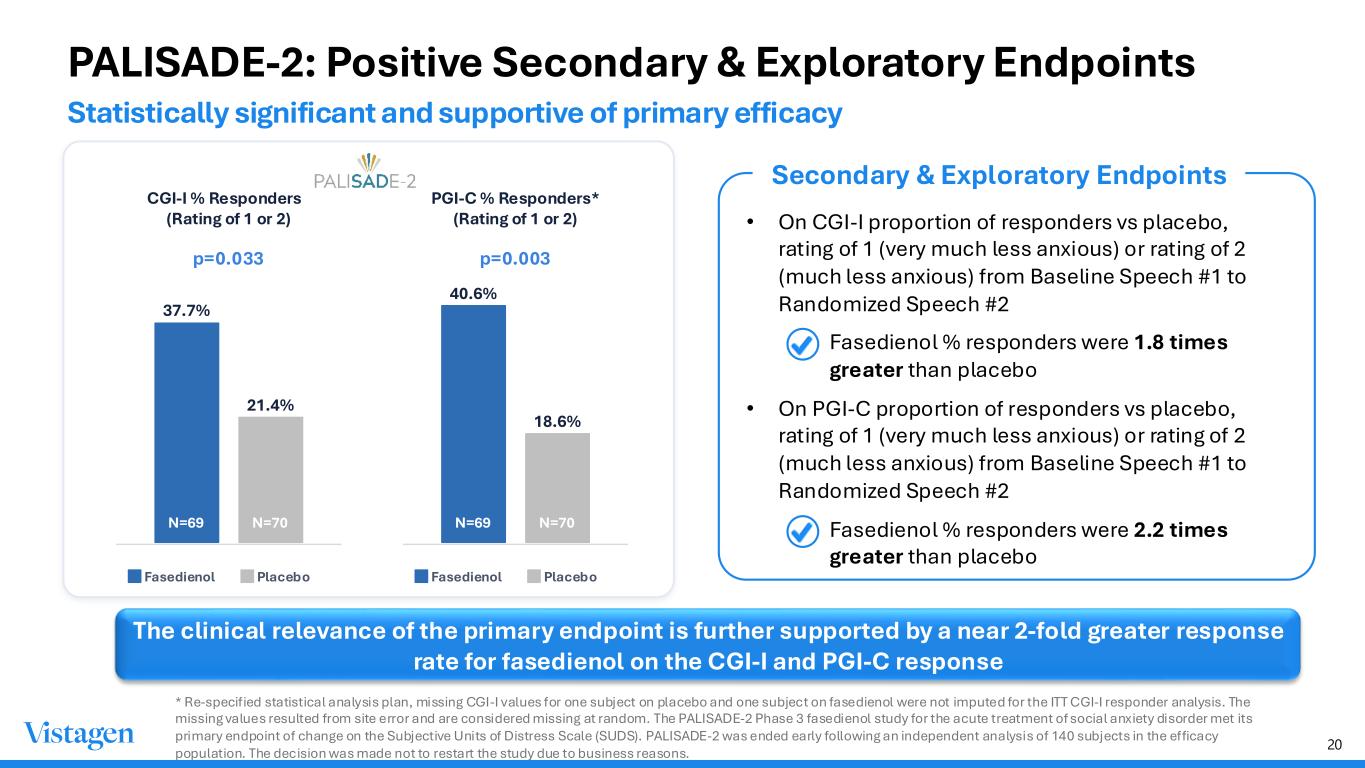
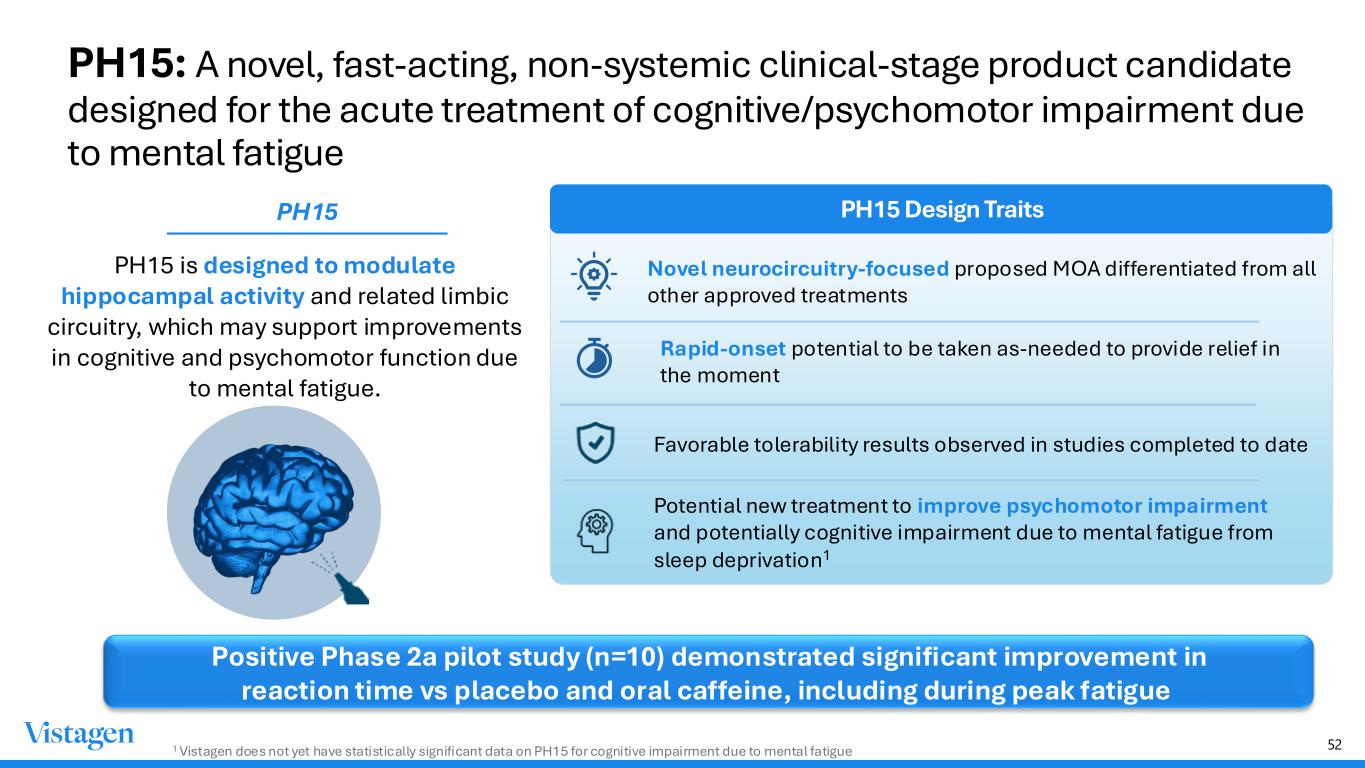
20 PALISADE-2: Positive Secondary & Exploratory Endpoints Statistically significant and supportive of primary efficacy • On CGI-I proportion of responders vs placebo, rating of 1 (very much less anxious) or rating of 2 (much less anxious) from Baseline Speech #1 to Randomized Speech #2 • Fasedienol % responders were 1.8 times greater than placebo • On PGI-C proportion of responders vs placebo, rating of 1 (very much less anxious) or rating of 2 (much less anxious) from Baseline Speech #1 to Randomized Speech #2 • Fasedienol % responders were 2.2 times greater than placebo The clinical relevance of the primary endpoint is further supported by a near 2-fold greater response rate for fasedienol on the CGI-I and PGI-C response Secondary & Exploratory Endpoints * Re-specified statistical analysis plan, missing CGI-I values for one subject on placebo and one subject on fasedienol were not imputed for the ITT CGI-I responder analysis. The missing values resulted from site error and are considered missing at random. The PALISADE-2 Phase 3 fasedienol study for the acute treatment of social anxiety disorder met its primary endpoint of change on the Subjective Units of Distress Scale (SUDS). PALISADE-2 was ended early following an independent analysis of 140 subjects in the efficacy population. The decision was made not to restart the study due to business reasons. CGI-I % Responders* (Rating of 1 or 2) p=0.033 37.7% N=69 21.4% N=70 Fasedienol Placebo PGI-C % Responders* (Rating of 1 or 2) p=0.003 40.6% N=69 18.6% N=70 Fasedienol Placebo
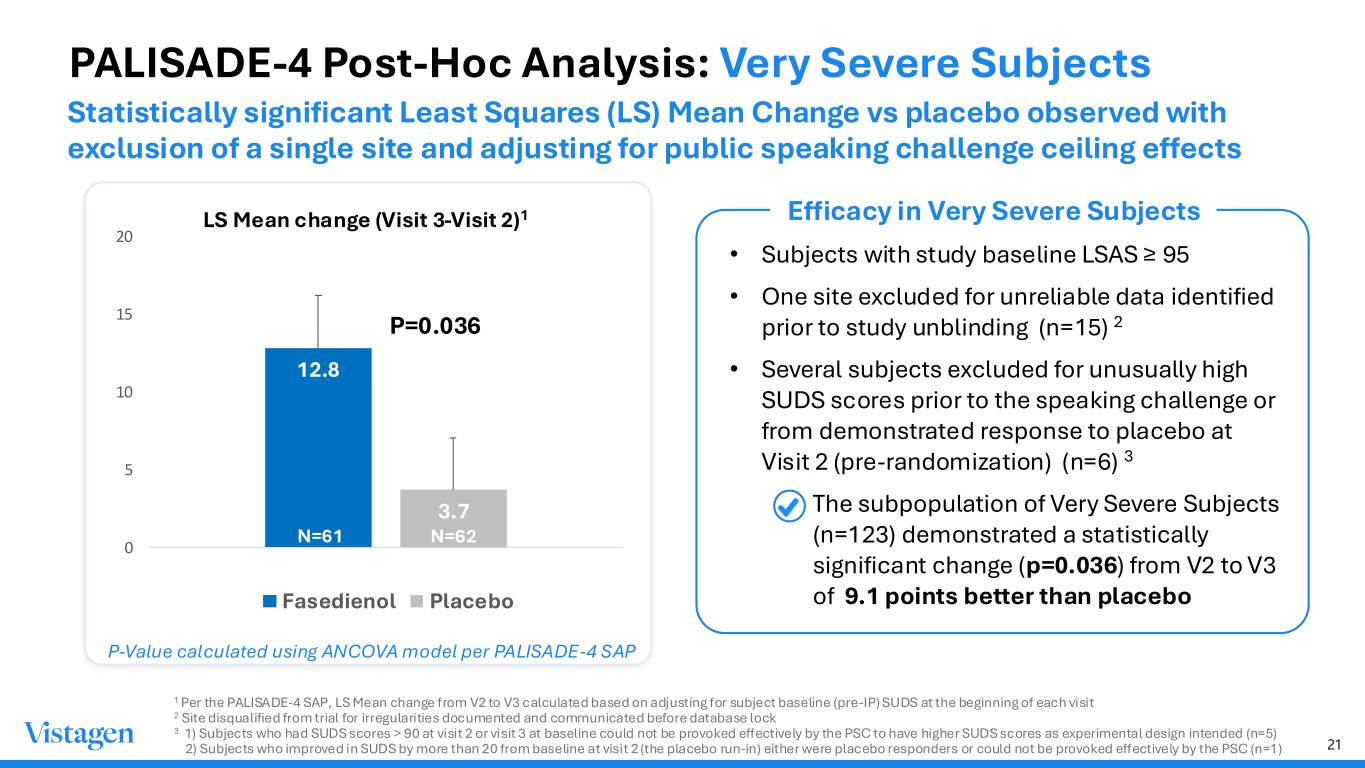
21 PALISADE-4 Post-Hoc Analysis: Very Severe Subjects V • Subjects with study baseline LSAS ≥ 95 • One site excluded for unreliable data identified prior to study unblinding (n=15) 2 • Several subjects excluded for unusually high SUDS scores prior to the speaking challenge or from demonstrated response to placebo at Visit 2 (pre-randomization) (n=6) 3 • The subpopulation of Very Severe Subjects (n=123) demonstrated a statistically significant change (p=0.036) from V2 to V3 of 9.1 points better than placebo Efficacy in Very Severe Subjects Statistically significant Least Squares (LS) Mean Change vs placebo observed with exclusion of a single site and adjusting for public speaking challenge ceiling effects 12.8 3.7 0 5 10 15 20 P=0.036 LS Mean change (Visit 3-Visit 2)1 Fasedienol Placebo N=61 N=62 P=0.036 1 Per the PALISADE-4 SAP, LS Mean change from V2 to V3 calculated based on adjusting for subject baseline (pre-IP) SUDS at the beginning of each visit 2 Site disqualified from trial for irregularities documented and communicated before database lock 3 1) Subjects who had SUDS scores > 90 at visit 2 or visit 3 at baseline could not be provoked effectively by the PSC to have higher SUDS scores as experimental design intended (n=5) 2) Subjects who improved in SUDS by more than 20 from baseline at visit 2 (the placebo run-in) either were placebo responders or could not be provoked effectively by the PSC (n=1) P-Value calculated using ANCOVA model per PALISADE-4 SAP
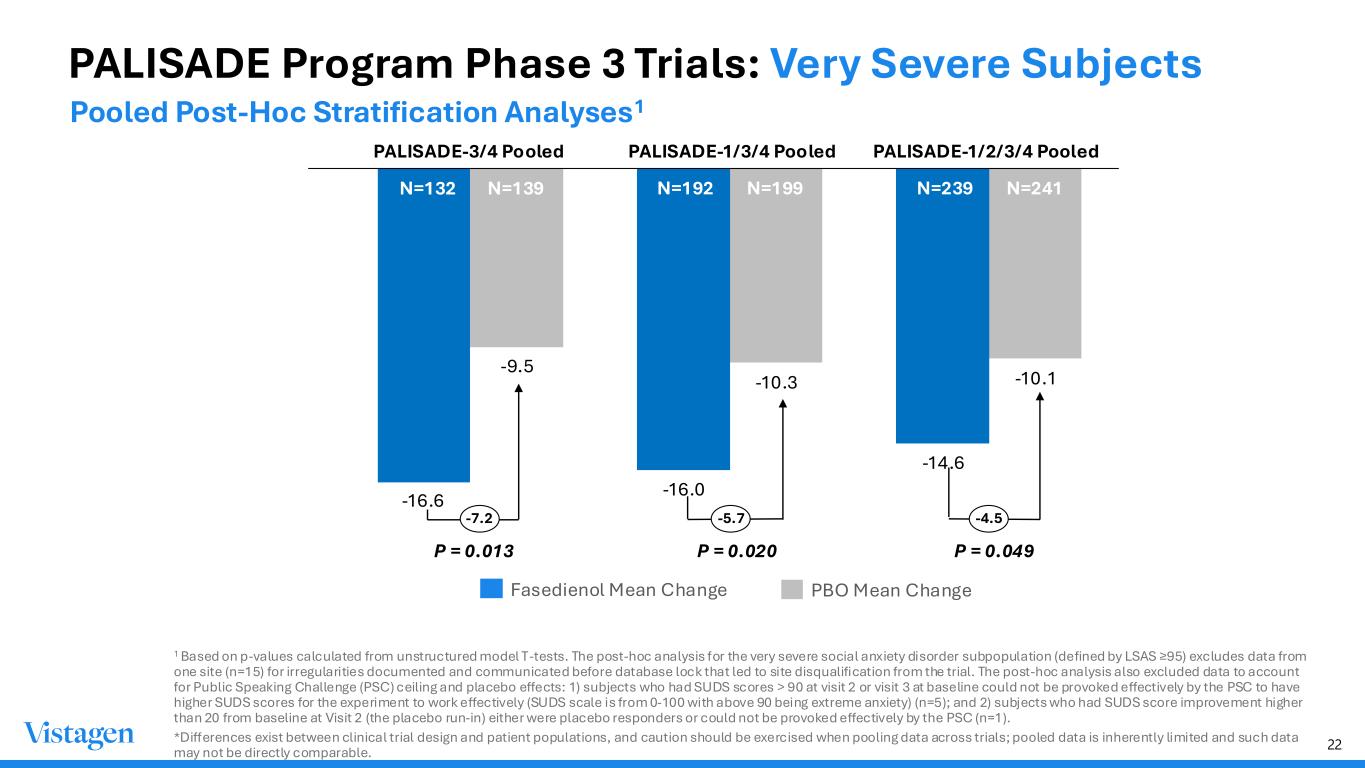
22 PALISADE Program Phase 3 Trials: Very Severe Subjects N=7 0 N=7 1-16.6 -16.0 -14.6 -9.5 -10.3 -10.1 PALISADE-1/3/4 PooledPALISADE-3/4 Pooled Fasedienol Mean Change PBO Mean Change -4.5 PALISADE-1/2/3/4 Pooled N=7 0 -5.7 N=132 N=139 N=192 N=199 N=239 N=241 P = 0.020 P = 0.049 -7.2 P = 0.013 1 Based on p-values calculated from unstructured model T-tests. The post-hoc analysis for the very severe social anxiety disorder subpopulation (defined by LSAS ≥95) excludes data from one site (n=15) for irregularities documented and communicated before database lock that led to site disqualification from the trial. The post-hoc analysis also excluded data to account for Public Speaking Challenge (PSC) ceiling and placebo effects: 1) subjects who had SUDS scores > 90 at visit 2 or visit 3 at baseline could not be provoked effectively by the PSC to have higher SUDS scores for the experiment to work effectively (SUDS scale is from 0-100 with above 90 being extreme anxiety) (n=5); and 2) subjects who had SUDS score improvement higher than 20 from baseline at Visit 2 (the placebo run-in) either were placebo responders or could not be provoked effectively by the PSC (n=1). *Differences exist between clinical trial design and patient populations, and caution should be exercised when pooling data across trials; pooled data is inherently limited and such data may not be directly comparable. Pooled Post-Hoc Stratification Analyses1
23 Multiple events, as-needed use over time in everyday life settings Liebowitz Social Anxiety Scale (LSAS) Fasedienol: Overall Treatment
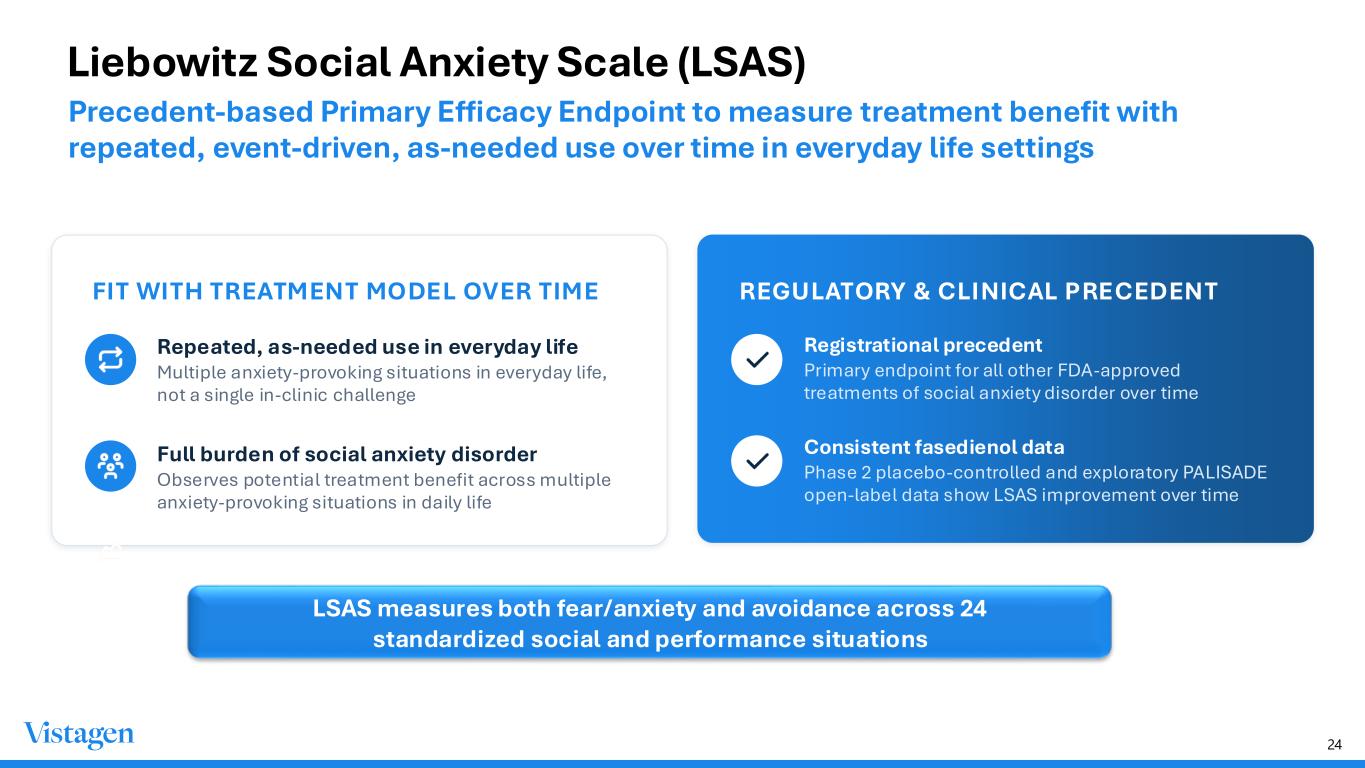
24 Liebowitz Social Anxiety Scale (LSAS) Precedent-based Primary Efficacy Endpoint to measure treatment benefit with repeated, event-driven, as-needed use over time in everyday life settings FIT WITH TREATMENT MODEL OVER TIME Repeated, as-needed use in everyday life Multiple anxiety-provoking situations in everyday life, not a single in-clinic challenge Full burden of social anxiety disorder Observes potential treatment benefit across multiple anxiety-provoking situations in daily life REGULATORY & CLINICAL PRECEDENT Registrational precedent Primary endpoint for all other FDA-approved treatments of social anxiety disorder over time Consistent fasedienol data Phase 2 placebo-controlled and exploratory PALISADE open-label data show LSAS improvement over time LSAS measures both fear/anxiety and avoidance across 24 standardized social and performance situations
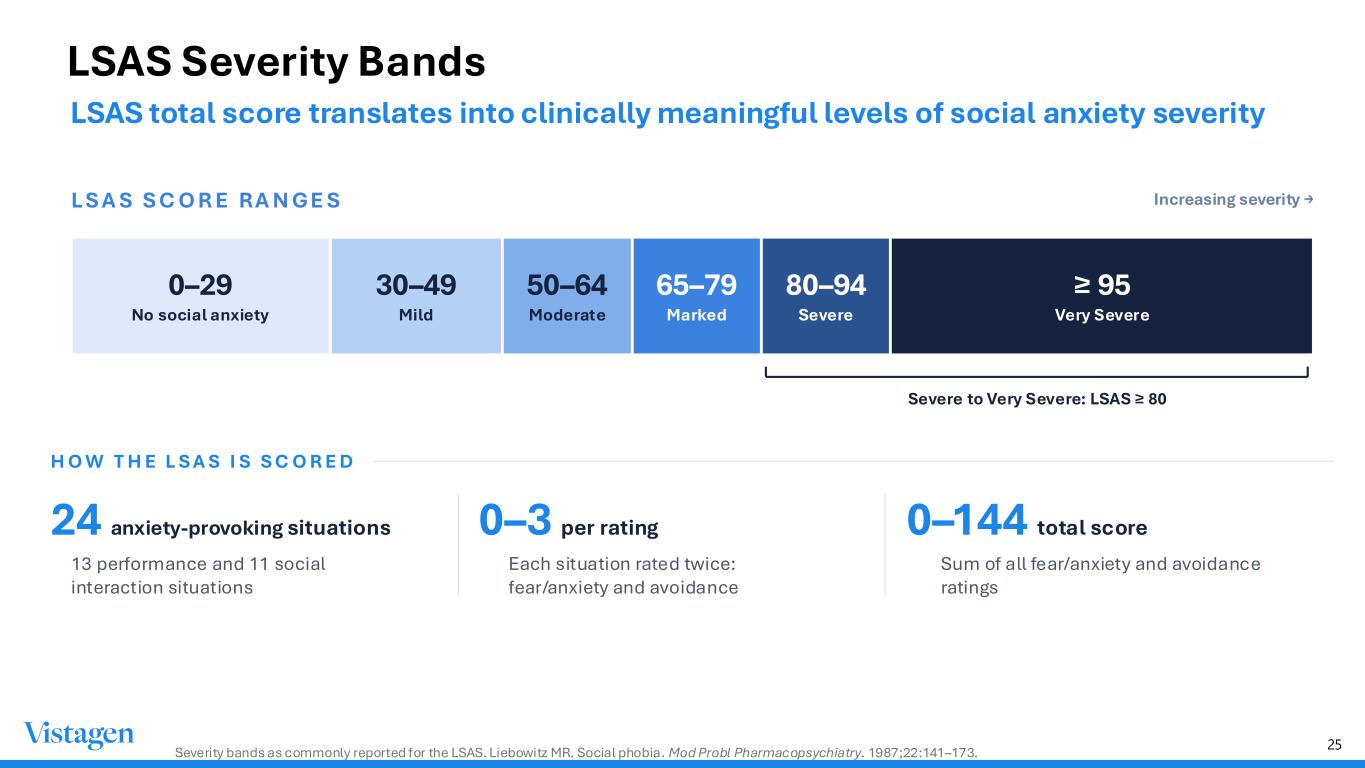
25 LSAS Severity Bands LSAS total score translates into clinically meaningful levels of social anxiety severity L S A S S C O R E RA N GE S Increasing severity → 0–29 No social anxiety 30–49 Mild 50–64 Moderate 65–79 Marked 80–94 Severe ≥ 95 Very Severe Severe to Very Severe: LSAS ≥ 80 H O W T H E L S A S I S S C O R E D 24 anxiety-provoking situations 13 performance and 11 social interaction situations 0–3 per rating Each situation rated twice: fear/anxiety and avoidance 0–144 total score Sum of all fear/anxiety and avoidance ratings Severity bands as commonly reported for the LSAS. Liebowitz MR. Social phobia. Mod Probl Pharmacopsychiatry. 1987;22:141–173.
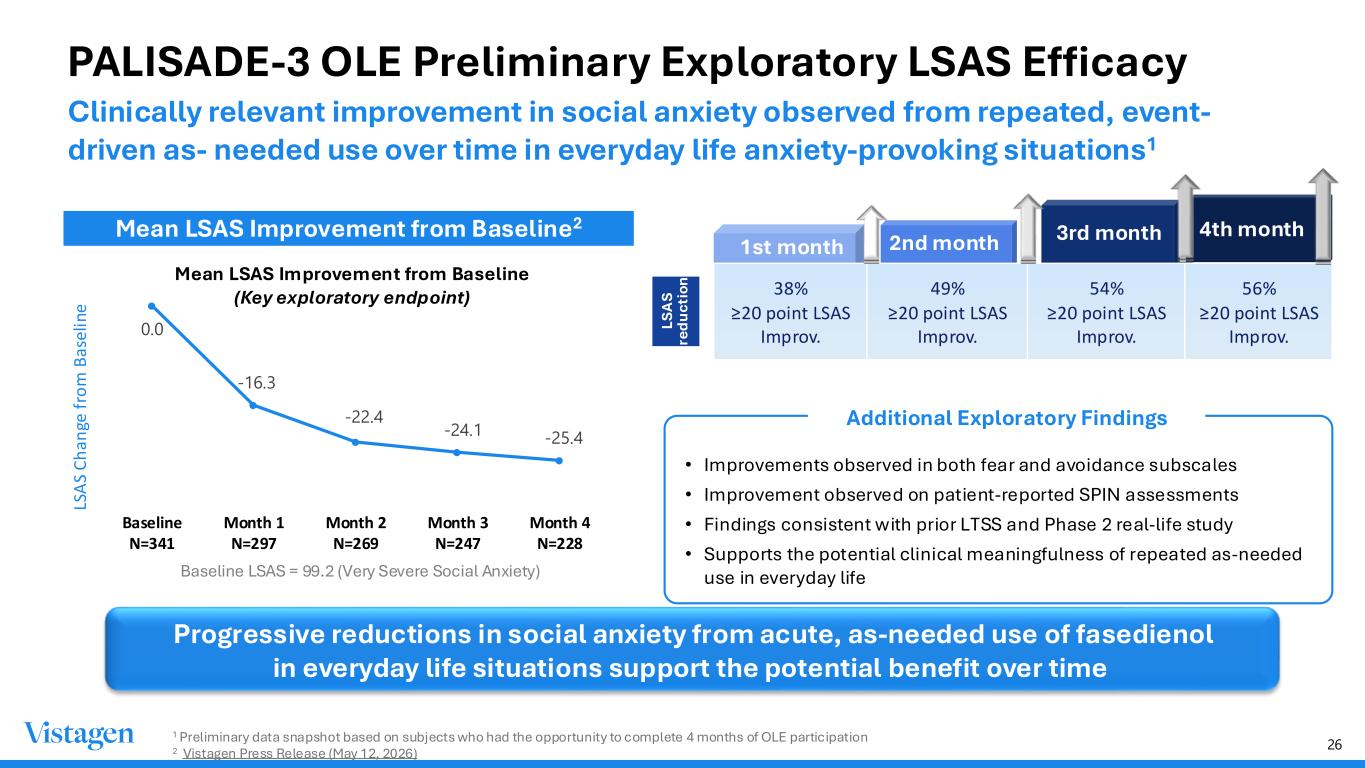
26 PALISADE-3 OLE Preliminary Exploratory LSAS Efficacy Clinically relevant improvement in social anxiety observed from repeated, event- driven as- needed use over time in everyday life anxiety-provoking situations1 Mean LSAS Improvement from Baseline2 Baseline LSAS = 99.2 (Very Severe Social Anxiety) 0.0 -16.3 -22.4 -24.1 -25.4 Baseline N=341 Month 1 N=297 Month 2 N=269 Month 3 N=247 Month 4 N=228 LS A S C h an ge f ro m B as el in e Mean LSAS Improvement from Baseline (Key exploratory endpoint) Your Title Here Vestibulum neque elit, Class apt tacit i sociosqu ad lit ora torquent. Vestibulum neque elit, Class apt tacit i sociosqu ad lit ora torquent. LS A S re du ct io n 38% ≥20 point LSAS Improv. 49% ≥20 point LSAS Improv. 54% ≥20 point LSAS Improv. 56% ≥20 point LSAS Improv. 1st month 2nd month 3rd month 4th month Additional Exploratory Findings • Improvements observed in both fear and avoidance subscales • Improvement observed on patient-reported SPIN assessments • Findings consistent with prior LTSS and Phase 2 real-life study • Supports the potential clinical meaningfulness of repeated as-needed use in everyday life 1 Preliminary data snapshot based on subjects who had the opportunity to complete 4 months of OLE participation 2 Vistagen Press Release (May 12, 2026) Progressive reductions in social anxiety from acute, as-needed use of fasedienol in everyday life situations support the potential benefit over time
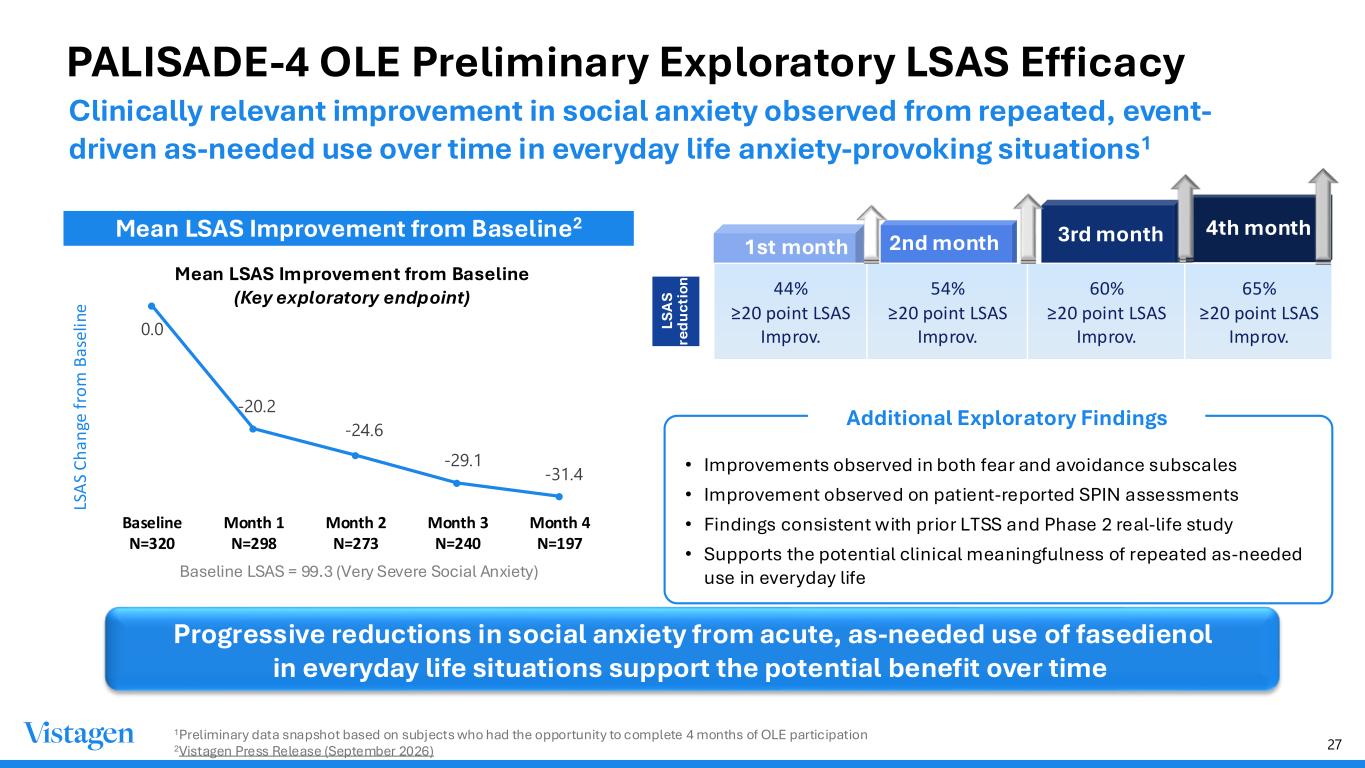
27 PALISADE-4 OLE Preliminary Exploratory LSAS Efficacy Clinically relevant improvement in social anxiety observed from repeated, event- driven as-needed use over time in everyday life anxiety-provoking situations1 Mean LSAS Improvement from Baseline2 Baseline LSAS = 99.3 (Very Severe Social Anxiety) 0.0 -20.2 -24.6 -29.1 -31.4 Baseline N=320 Month 1 N=298 Month 2 N=273 Month 3 N=240 Month 4 N=197 LS A S C h an ge f ro m B as el in e Mean LSAS Improvement from Baseline (Key exploratory endpoint) Your Title Here Vestibulum neque elit, Class apt tacit i sociosqu ad lit ora torquent. Vestibulum neque elit, Class apt tacit i sociosqu ad lit ora torquent. LS A S re du ct io n 44% ≥20 point LSAS Improv. 54% ≥20 point LSAS Improv. 60% ≥20 point LSAS Improv. 65% ≥20 point LSAS Improv. 1st month 2nd month 3rd month 4th month Progressive reductions in social anxiety from acute, as-needed use of fasedienol in everyday life situations support the potential benefit over time Additional Exploratory Findings • Improvements observed in both fear and avoidance subscales • Improvement observed on patient-reported SPIN assessments • Findings consistent with prior LTSS and Phase 2 real-life study • Supports the potential clinical meaningfulness of repeated as-needed use in everyday life 1Preliminary data snapshot based on subjects who had the opportunity to complete 4 months of OLE participation 2Vistagen Press Release (September 2026)
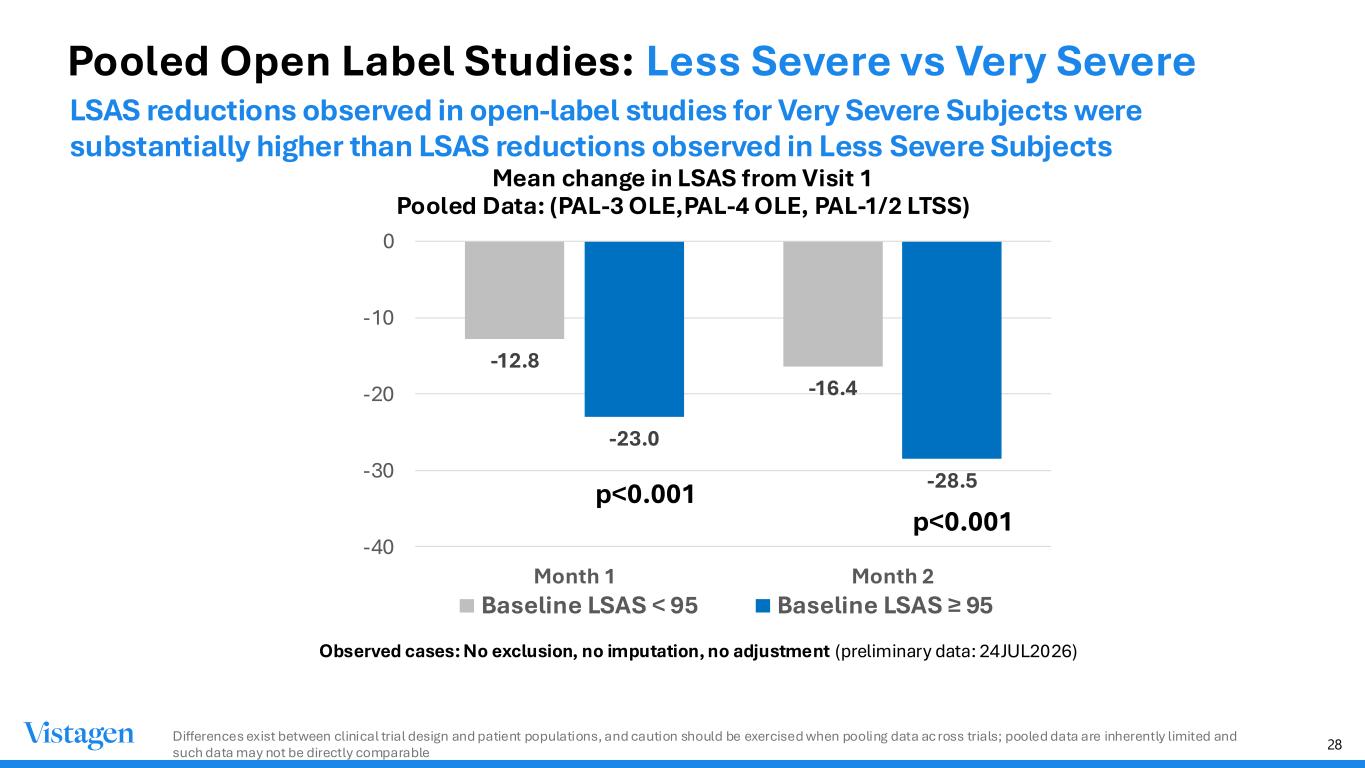
28 Mean change in LSAS from Visit 1 Pooled Data: (PAL-3 OLE,PAL-4 OLE, PAL-1/2 LTSS) Pooled Open Label Studies: Less Severe vs Very Severe LSAS reductions observed in open-label studies for Very Severe Subjects were substantially higher than LSAS reductions observed in Less Severe Subjects Observed cases: No exclusion, no imputation, no adjustment (preliminary data: 24JUL2026) N=455 N=533 N=404 N=462 -12.8 -16.4 -23.0 -28.5 -40 -30 -20 -10 0 Month 1 Month 2 Baseline LSAS < 95 Baseline LSAS ≥ 95 p<0.001 p<0.001 Differences exist between clinical trial design and patient populations, and caution should be exercised when pooling data across trials; pooled data are inherently limited and such data may not be directly comparable
29 Safety Results Overview Fasedienol
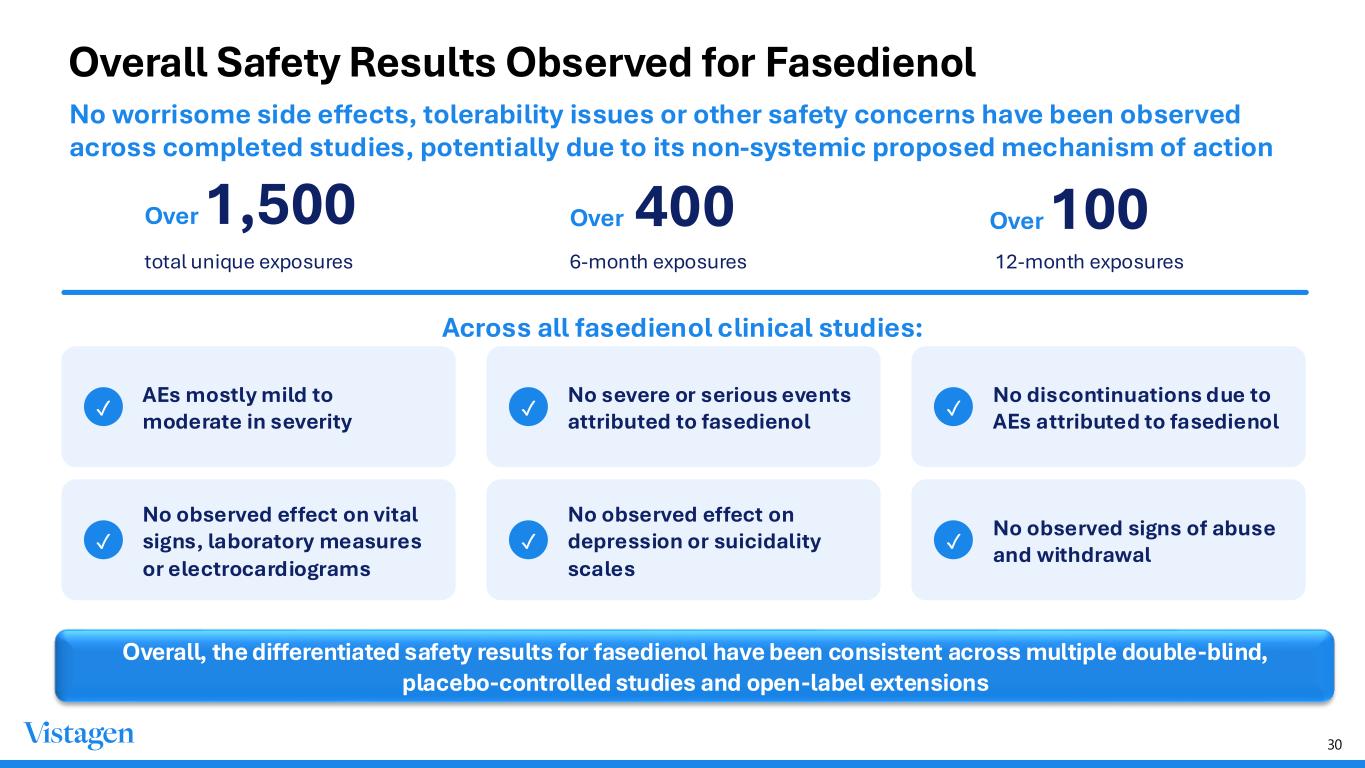
30 Overall Safety Results Observed for Fasedienol No worrisome side effects, tolerability issues or other safety concerns have been observed across completed studies, potentially due to its non-systemic proposed mechanism of action Over 1,500 total unique exposures 6-month exposures Over 100 12-month exposures ✓ AEs mostly mild to moderate in severity ✓ No severe or serious events attributed to fasedienol ✓ No discontinuations due to AEs attributed to fasedienol ✓ No observed effect on vital signs, laboratory measures or electrocardiograms ✓ No observed effect on depression or suicidality scales ✓ No observed signs of abuse and withdrawal Overall, the differentiated safety results for fasedienol have been consistent across multiple double-blind, placebo-controlled studies and open-label extensions Across all fasedienol clinical studies: Over 400
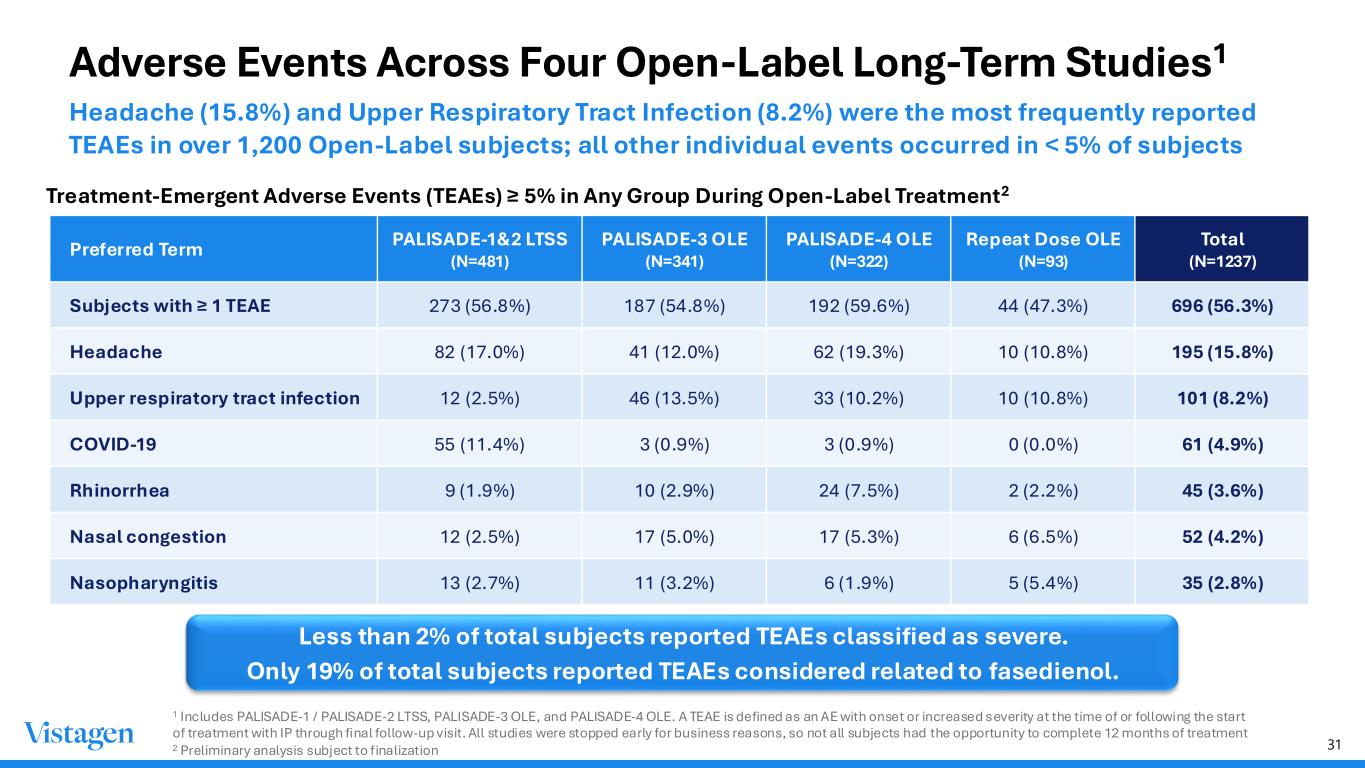
31 Adverse Events Across Four Open-Label Long-Term Studies1 Preferred Term PALISADE-1&2 LTSS (N=481) PALISADE-3 OLE (N=341) PALISADE-4 OLE (N=322) Repeat Dose OLE (N=93) Total (N=1237) Subjects with ≥ 1 TEAE 273 (56.8%) 187 (54.8%) 192 (59.6%) 44 (47.3%) 696 (56.3%) Headache 82 (17.0%) 41 (12.0%) 62 (19.3%) 10 (10.8%) 195 (15.8%) Upper respiratory tract infection 12 (2.5%) 46 (13.5%) 33 (10.2%) 10 (10.8%) 101 (8.2%) COVID-19 55 (11.4%) 3 (0.9%) 3 (0.9%) 0 (0.0%) 61 (4.9%) Rhinorrhea 9 (1.9%) 10 (2.9%) 24 (7.5%) 2 (2.2%) 45 (3.6%) Nasal congestion 12 (2.5%) 17 (5.0%) 17 (5.3%) 6 (6.5%) 52 (4.2%) Nasopharyngitis 13 (2.7%) 11 (3.2%) 6 (1.9%) 5 (5.4%) 35 (2.8%) Headache (15.8%) and Upper Respiratory Tract Infection (8.2%) were the most frequently reported TEAEs in over 1,200 Open-Label subjects; all other individual events occurred in < 5% of subjects Treatment-Emergent Adverse Events (TEAEs) ≥ 5% in Any Group During Open-Label Treatment2 Less than 2% of total subjects reported TEAEs classified as severe. Only 19% of total subjects reported TEAEs considered related to fasedienol. 1 Includes PALISADE-1 / PALISADE-2 LTSS, PALISADE-3 OLE, and PALISADE-4 OLE. A TEAE is defined as an AE with onset or increased severity at the time of or following the start of treatment with IP through final follow-up visit. All studies were stopped early for business reasons, so not all subjects had the opportunity to complete 12 months of treatment 2 Preliminary analysis subject to finalization
32 Potential U.S. LSAS-based Phase 3 Study FAS Forward
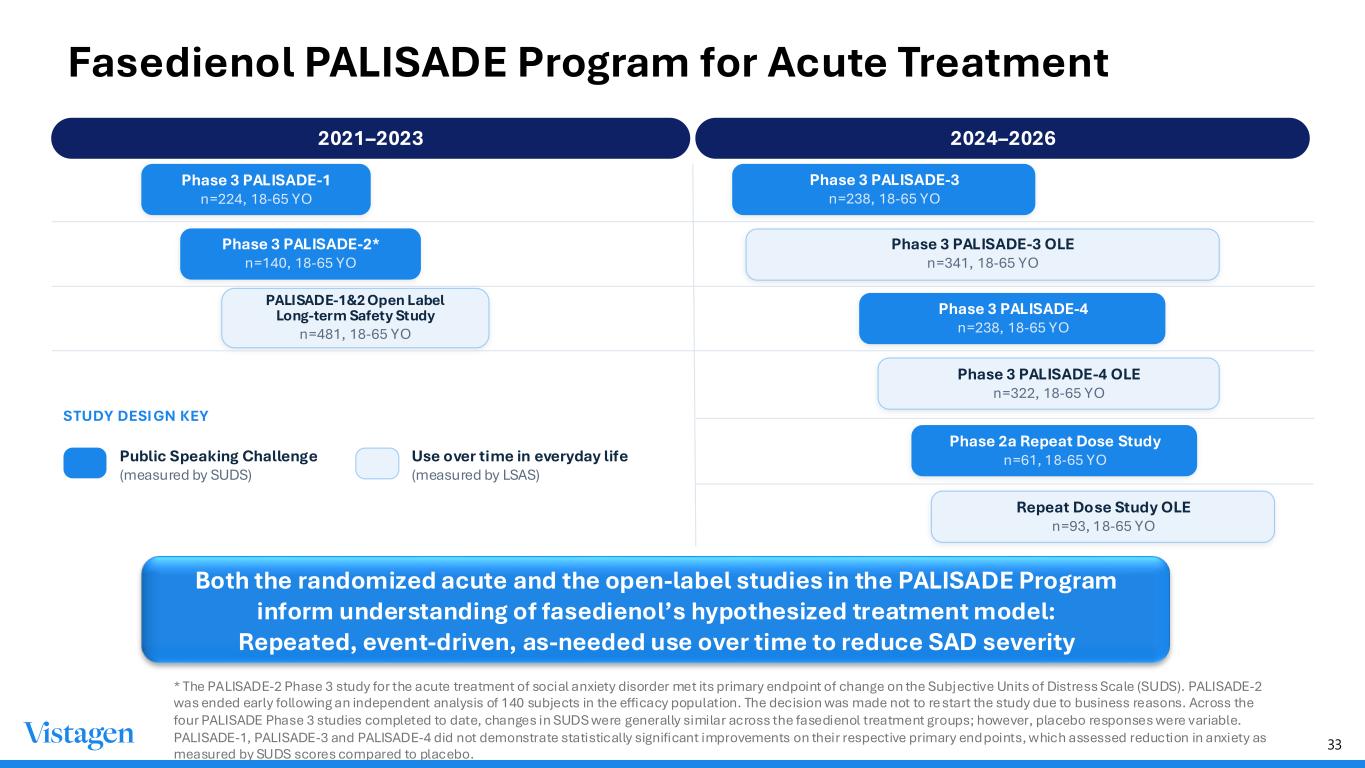
33 2021–2023 2024–2026 Phase 3 PALISADE-1 n=224, 18-65 YO Phase 3 PALISADE-2* n=140, 18-65 YO PALISADE-1&2 Open Label Long-term Safety Study n=481, 18-65 YO Phase 3 PALISADE-3 n=238, 18-65 YO Phase 3 PALISADE-3 OLE n=341, 18-65 YO Phase 3 PALISADE-4 n=238, 18-65 YO Phase 3 PALISADE-4 OLE n=322, 18-65 YO Phase 2a Repeat Dose Study n=61, 18-65 YO STUDY DESI GN KEY Public Speaking Challenge (measured by SUDS) Use over time in everyday life (measured by LSAS) * The PALISADE-2 Phase 3 study for the acute treatment of social anxiety disorder met its primary endpoint of change on the Subjective Units of Distress Scale (SUDS). PALISADE-2 was ended early following an independent analysis of 140 subjects in the efficacy population. The decision was made not to re start the study due to business reasons. Across the four PALISADE Phase 3 studies completed to date, changes in SUDS were generally similar across the fasedienol treatment groups; however, placebo responses were variable. PALISADE-1, PALISADE-3 and PALISADE-4 did not demonstrate statistically significant improvements on their respective primary endpoints, which assessed reduction in anxiety as measured by SUDS scores compared to placebo. Both the randomized acute and the open-label studies in the PALISADE Program inform understanding of fasedienol’s hypothesized treatment model: Repeated, event-driven, as-needed use over time to reduce SAD severity Fasedienol PALISADE Program for Acute Treatment Repeat Dose Study OLE n=93, 18-65 YO
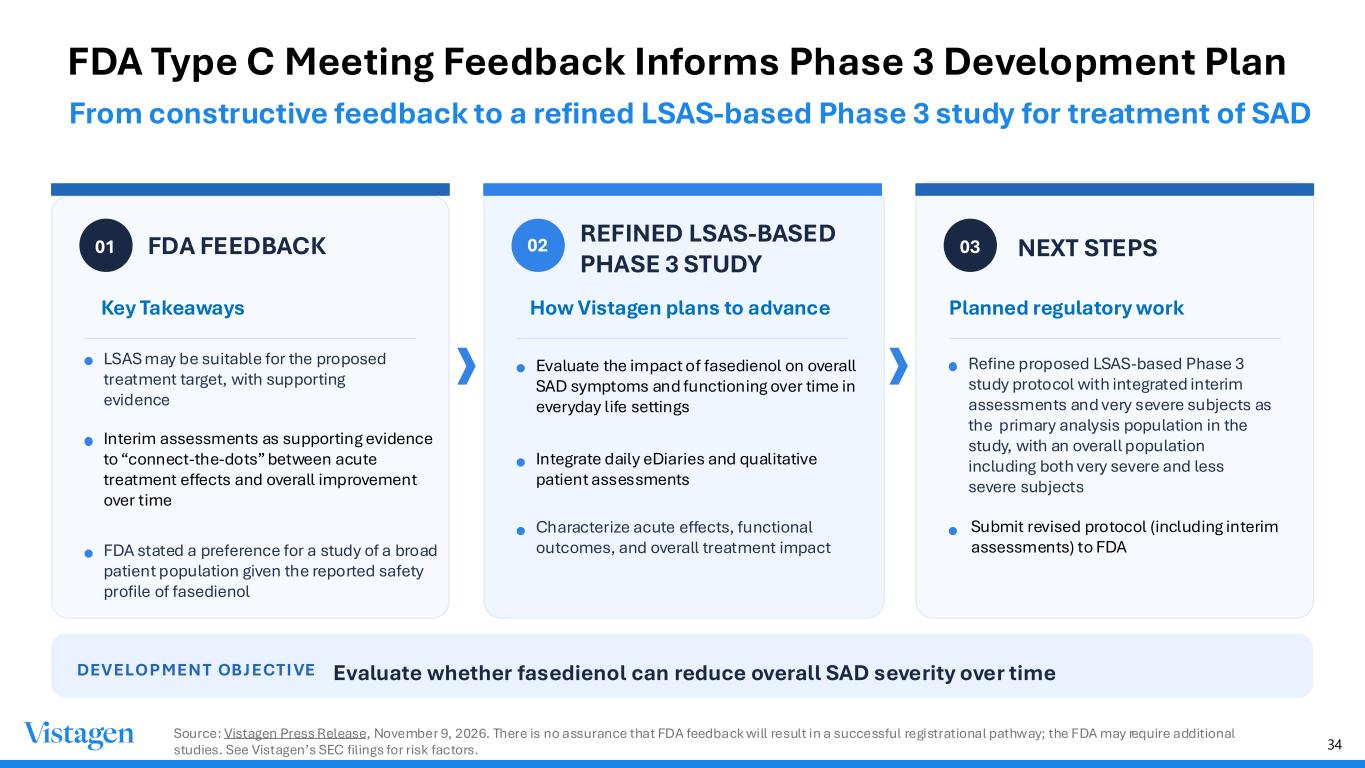
34 FDA Type C Meeting Feedback Informs Phase 3 Development Plan From constructive feedback to a refined LSAS-based Phase 3 study for treatment of SAD 01 FDA FEEDBACK Key Takeaways LSAS may be suitable for the proposed treatment target, with supporting evidence Interim assessments as supporting evidence to “connect-the-dots” between acute treatment effects and overall improvement over time FDA stated a preference for a study of a broad patient population given the reported safety profile of fasedienol 02 REFINED LSAS-BASED PHASE 3 STUDY How Vistagen plans to advance Evaluate the impact of fasedienol on overall SAD symptoms and functioning over time in everyday life settings Integrate daily eDiaries and qualitative patient assessments Characterize acute effects, functional outcomes, and overall treatment impact 03 NEXT STEPS Planned regulatory work Refine proposed LSAS-based Phase 3 study protocol with integrated interim assessments and very severe subjects as the primary analysis population in the study, with an overall population including both very severe and less severe subjects Submit revised protocol (including interim assessments) to FDA DEVELOPMENT OBJ ECTI VE Evaluate whether fasedienol can reduce overall SAD severity over time Source: Vistagen Press Release, November 9, 2026. There is no assurance that FDA feedback will result in a successful registrational pathway; the FDA may require additional studies. See Vistagen’s SEC filings for risk factors.
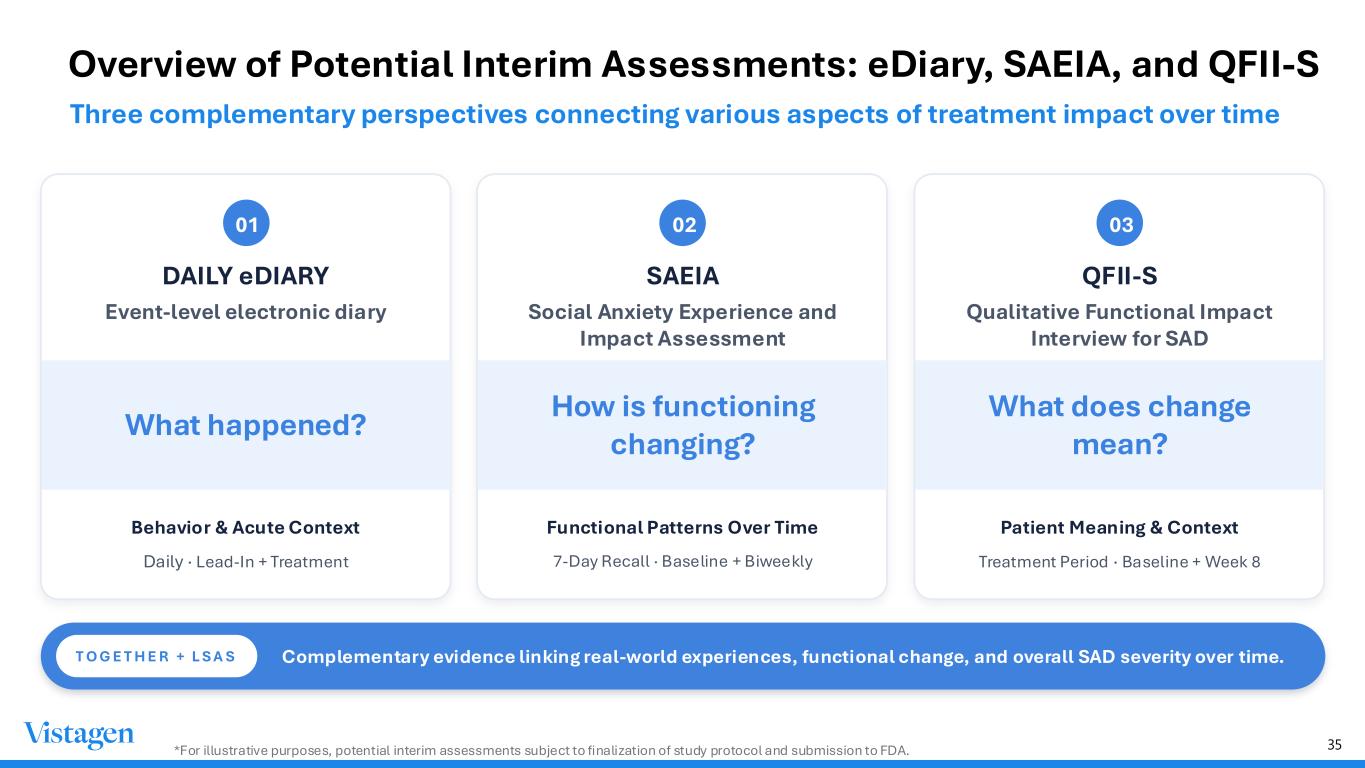
35 Overview of Potential Interim Assessments: eDiary, SAEIA, and QFII-S Three complementary perspectives connecting various aspects of treatment impact over time 01 DAILY eDIARY Event-level electronic diary What happened? Behavior & Acute Context Daily · Lead-In + Treatment 02 SAEIA Social Anxiety Experience and Impact Assessment How is functioning changing? Functional Patterns Over Time 7-Day Recall · Baseline + Biweekly 03 QFII-S Qualitative Functional Impact Interview for SAD What does change mean? Patient Meaning & Context Treatment Period · Baseline + Week 8 T O G E T H E R + L S A S Complementary evidence linking real-world experiences, functional change, and overall SAD severity over time. *For illustrative purposes, potential interim assessments subject to finalization of study protocol and submission to FDA.
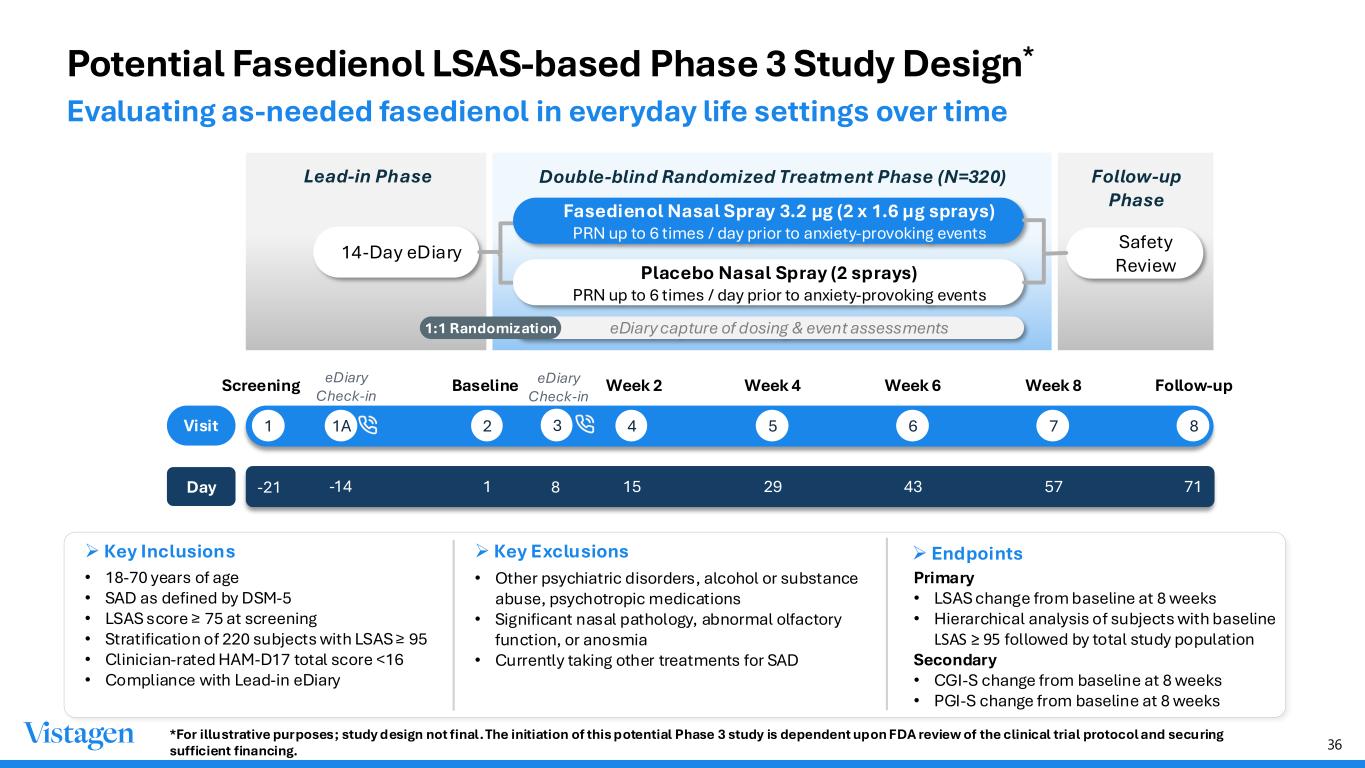
36 Potential Fasedienol LSAS-based Phase 3 Study Design* Evaluating as-needed fasedienol in everyday life settings over time *For illustrative purposes; study design not final.The initiation of this potential Phase 3 study is dependent upon FDA review of the clinical trial protocol and securing sufficient financing. \14-Day eDiary -21 1 29Day Visit 1 2 4 5 15 \ Fasedienol Nasal Spray 3.2 µg (2 x 1.6 µg sprays) PRN up to 6 times / day prior to anxiety-provoking events Placebo Nasal Spray (2 sprays) PRN up to 6 times / day prior to anxiety-provoking events Double-blind Randomized Treatment Phase (N=320) Screening Baseline Week 2 Week 4 43 6 Week 6 57 7 Week 8 71 8 Follow-up Lead-in Phase \ Safety Review Follow-up Phase ➢ Key Inclusions • 18-70 years of age • SAD as defined by DSM-5 • LSAS score ≥ 75 at screening • Stratification of 220 subjects with LSAS ≥ 95 • Clinician-rated HAM-D17 total score <16 • Compliance with Lead-in eDiary ➢ Key Exclusions • Other psychiatric disorders, alcohol or substance abuse, psychotropic medications • Significant nasal pathology, abnormal olfactory function, or anosmia • Currently taking other treatments for SAD ➢ Endpoints Primary • LSAS change from baseline at 8 weeks • Hierarchical analysis of subjects with baseline LSAS ≥ 95 followed by total study population Secondary • CGI-S change from baseline at 8 weeks • PGI-S change from baseline at 8 weeks eDiary capture of dosing & event assessments1:1 Randomization eDiary Check-in 1A -14 3 eDiary Check-in 8
37 Vasomotor Symptoms (Hot Flashes) due to Menopause Refisolone
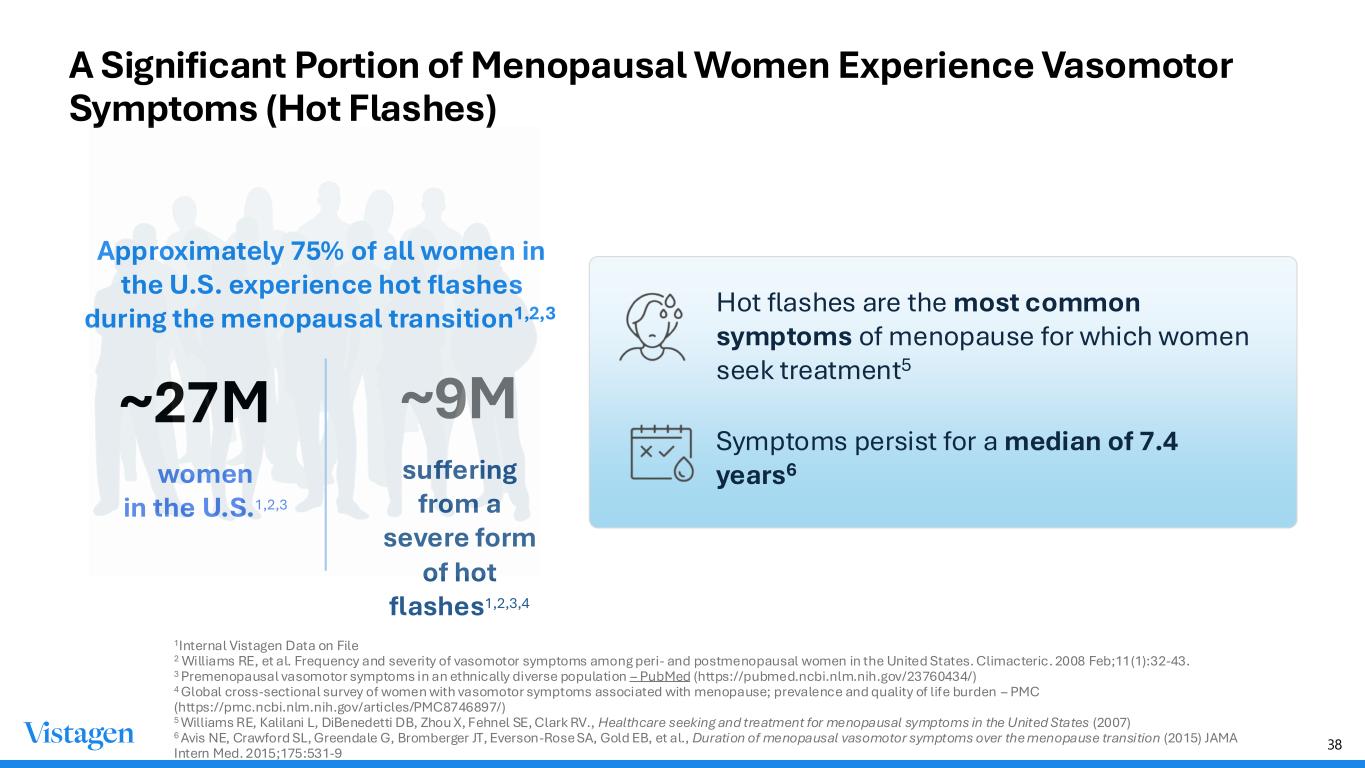
38 A Significant Portion of Menopausal Women Experience Vasomotor Symptoms (Hot Flashes) ~27M women in the U.S.1,2,3 ~9M suffering from a severe form of hot flashes1,2,3,4 Symptoms persist for a median of 7.4 years6 Hot flashes are the most common symptoms of menopause for which women seek treatment5 Approximately 75% of all women in the U.S. experience hot flashes during the menopausal transition1,2,3 1Internal Vistagen Data on File 2 Williams RE, et al. Frequency and severity of vasomotor symptoms among peri- and postmenopausal women in the United States. Climacteric. 2008 Feb;11(1):32-43. 3 Premenopausal vasomotor symptoms in an ethnically diverse population – PubMed (https://pubmed.ncbi.nlm.nih.gov/23760434/) 4 Global cross-sectional survey of women with vasomotor symptoms associated with menopause; prevalence and quality of life burden – PMC (https://pmc.ncbi.nlm.nih.gov/articles/PMC8746897/) 5 Williams RE, Kalilani L, DiBenedetti DB, Zhou X, Fehnel SE, Clark RV., Healthcare seeking and treatment for menopausal symptoms in the United States (2007) 6 Avis NE, Crawford SL, Greendale G, Bromberger JT, Everson-Rose SA, Gold EB, et al., Duration of menopausal vasomotor symptoms over the menopause transition (2015) JAMA Intern Med. 2015;175:531-9
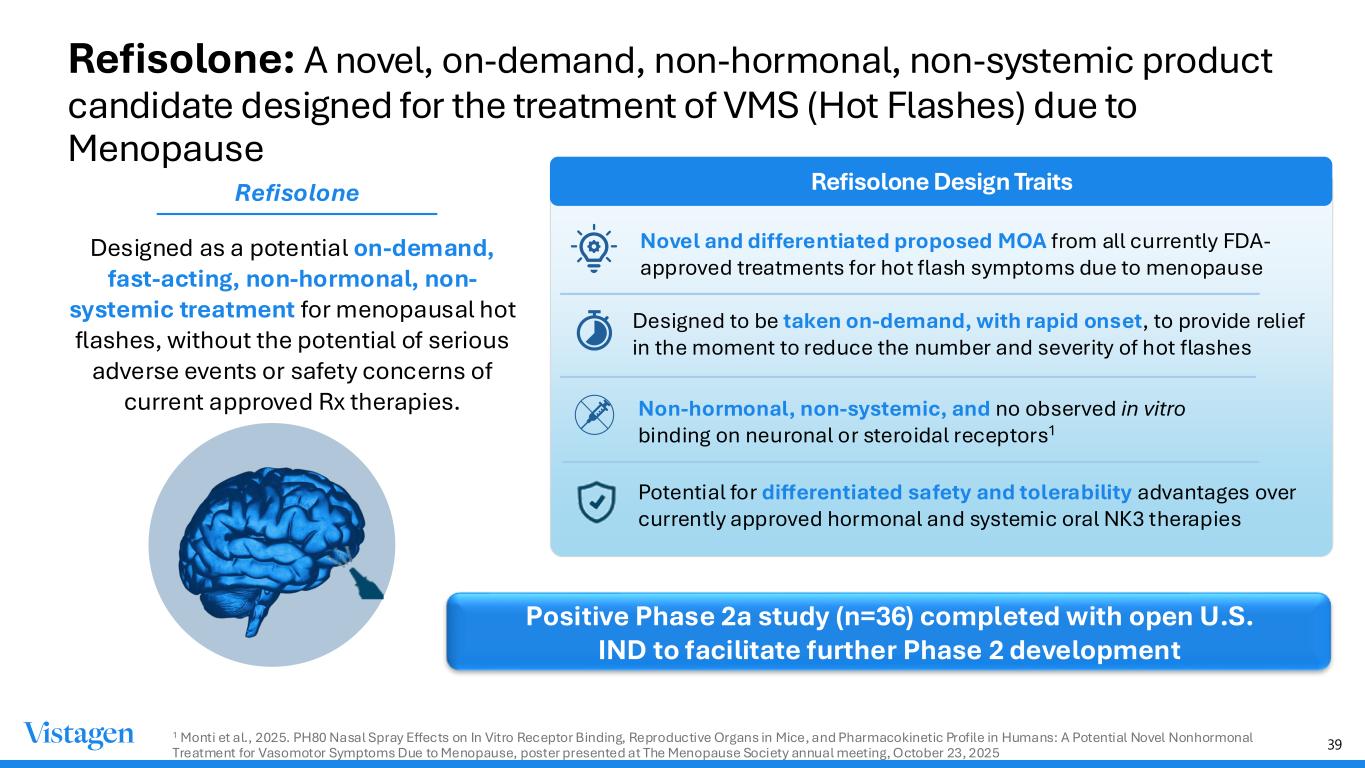
39 Refisolone: A novel, on-demand, non-hormonal, non-systemic product candidate designed for the treatment of VMS (Hot Flashes) due to Menopause Designed as a potential on-demand, fast-acting, non-hormonal, non- systemic treatment for menopausal hot flashes, without the potential of serious adverse events or safety concerns of current approved Rx therapies. Refisolone Design Traits Novel and differentiated proposed MOA from all currently FDA- approved treatments for hot flash symptoms due to menopause Designed to be taken on-demand, with rapid onset, to provide relief in the moment to reduce the number and severity of hot flashes Non-hormonal, non-systemic, and no observed in vitro binding on neuronal or steroidal receptors1 Potential for differentiated safety and tolerability advantages over currently approved hormonal and systemic oral NK3 therapies Refisolone Positive Phase 2a study (n=36) completed with open U.S. IND to facilitate further Phase 2 development 1 Monti et al., 2025. PH80 Nasal Spray Effects on In Vitro Receptor Binding, Reproductive Organs in Mice, and Pharmacokinetic Profile in Humans: A Potential Novel Nonhormonal Treatment for Vasomotor Symptoms Due to Menopause, poster presented at The Menopause Society annual meeting, October 23, 2025
40 Positive Refisolone Exploratory Phase 2a Study Results (Mexico) Exploratory Phase 2a Study Results1 • Refisolone was administered at 3.2 µg up to 5 times daily. • Significantly reduced the frequency of hot flashes after Week 1 of treatment, with sustained improvement to Week 4. • Reduced the severity of hot flashes after Week 1 of treatment, with sustained improvement to Week 4. • Statistical significance was demonstrated starting from Week 2. • Serious adverse events (SAEs) were low and comparable to placebo. 1 Monti, et al., PH80 Nasal Spray for Treatment of Vasomotor Symptoms (Hot Flashes) Associated with Menopause: a Phase 2 Randomized, Controlled Study Poster at The Menopause Society (TMS) Meeting in Chicago, IL (October 2024) Evaluating as-needed refisolone for the treatment of VMS over 4 weeks
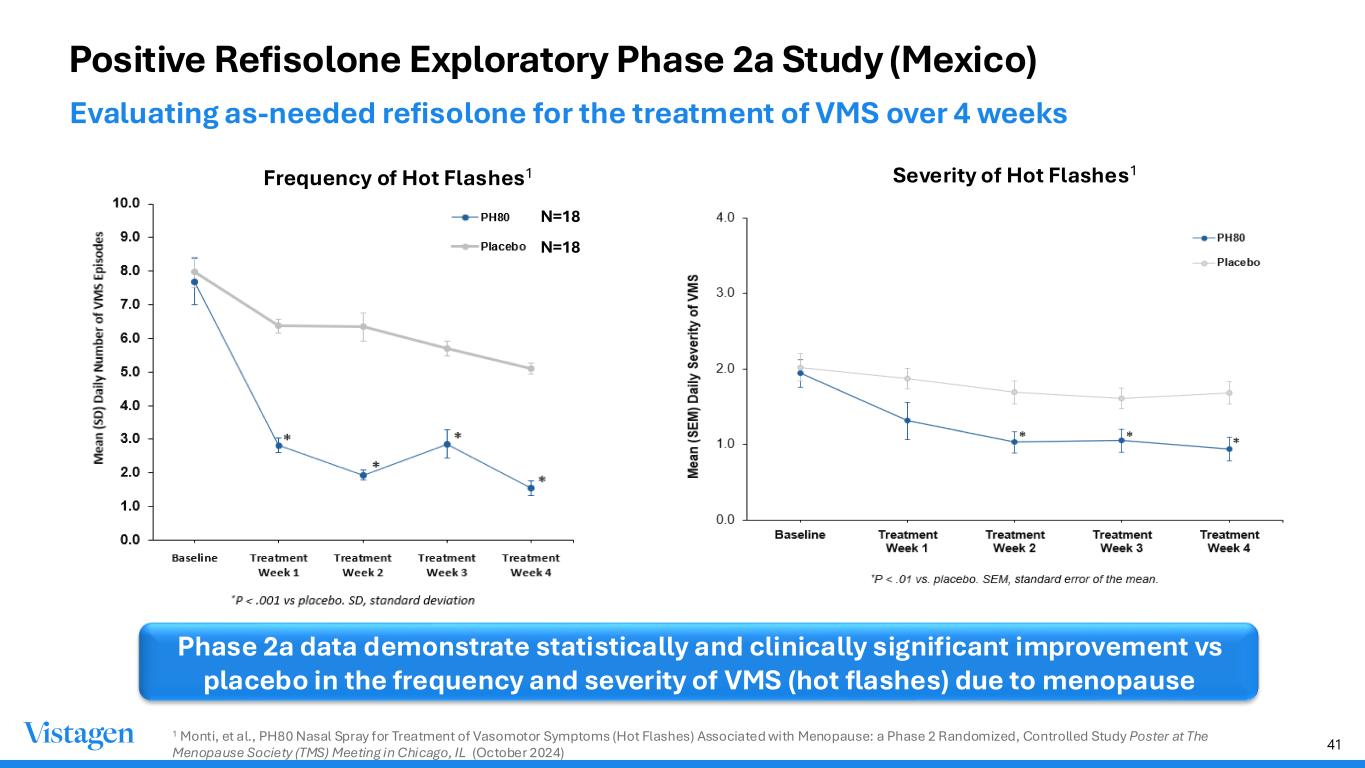
41 Positive Refisolone Exploratory Phase 2a Study (Mexico) Frequency of Hot Flashes1 Severity of Hot Flashes1 1 Monti, et al., PH80 Nasal Spray for Treatment of Vasomotor Symptoms (Hot Flashes) Associated with Menopause: a Phase 2 Randomized, Controlled Study Poster at The Menopause Society (TMS) Meeting in Chicago, IL (October 2024) Evaluating as-needed refisolone for the treatment of VMS over 4 weeks Phase 2a data demonstrate statistically and clinically significant improvement vs placebo in the frequency and severity of VMS (hot flashes) due to menopause N=18 N=18
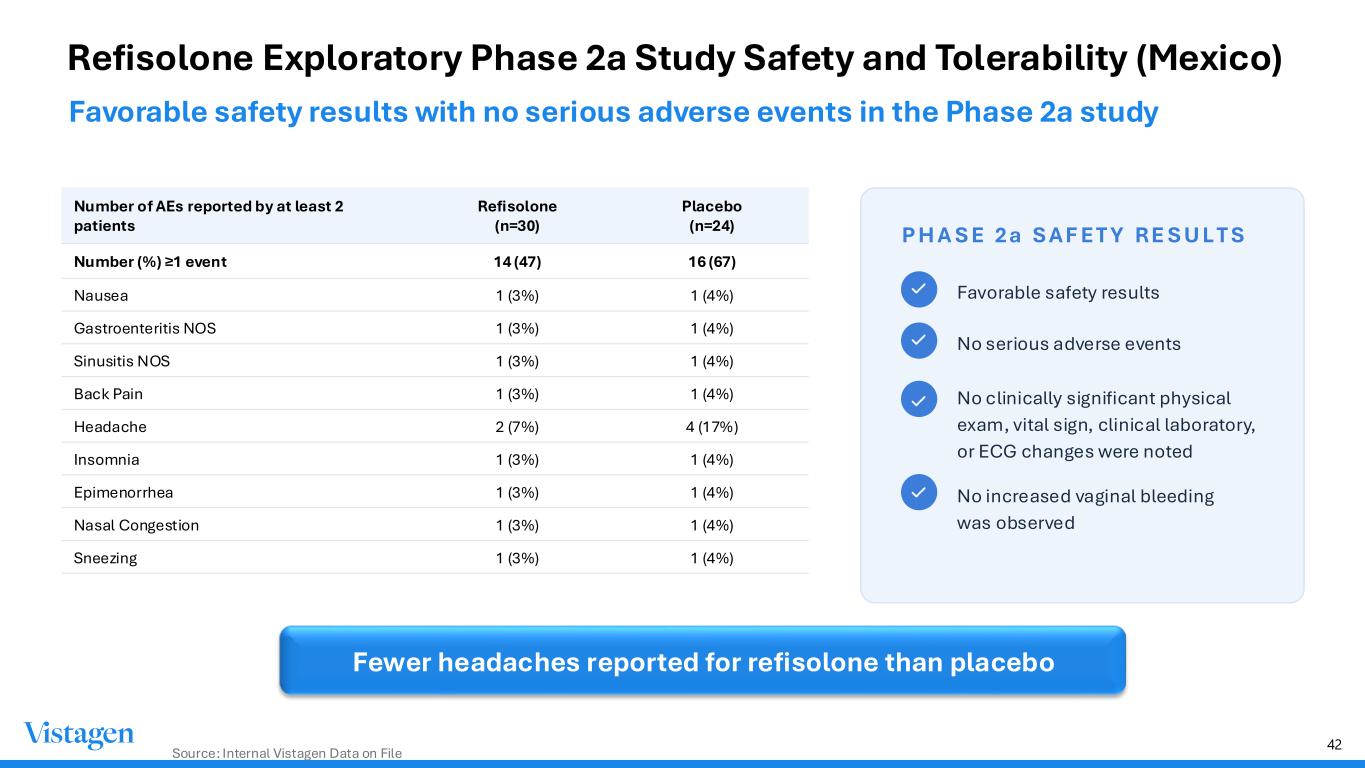
42 Refisolone Exploratory Phase 2a Study Safety and Tolerability (Mexico) Favorable safety results with no serious adverse events in the Phase 2a study Number of AEs reported by at least 2 patients Refisolone (n=30) Placebo (n=24) Number (%) ≥1 event 14 (47) 16 (67) Nausea 1 (3%) 1 (4%) Gastroenteritis NOS 1 (3%) 1 (4%) Sinusitis NOS 1 (3%) 1 (4%) Back Pain 1 (3%) 1 (4%) Headache 2 (7%) 4 (17%) Insomnia 1 (3%) 1 (4%) Epimenorrhea 1 (3%) 1 (4%) Nasal Congestion 1 (3%) 1 (4%) Sneezing 1 (3%) 1 (4%) P H A S E 2a S A F E T Y RE S U L T S Favorable safety results No serious adverse events No clinically significant physical exam, vital sign, clinical laboratory, or ECG changes were noted No increased vaginal bleeding was observed Source: Internal Vistagen Data on File Fewer headaches reported for refisolone than placebo
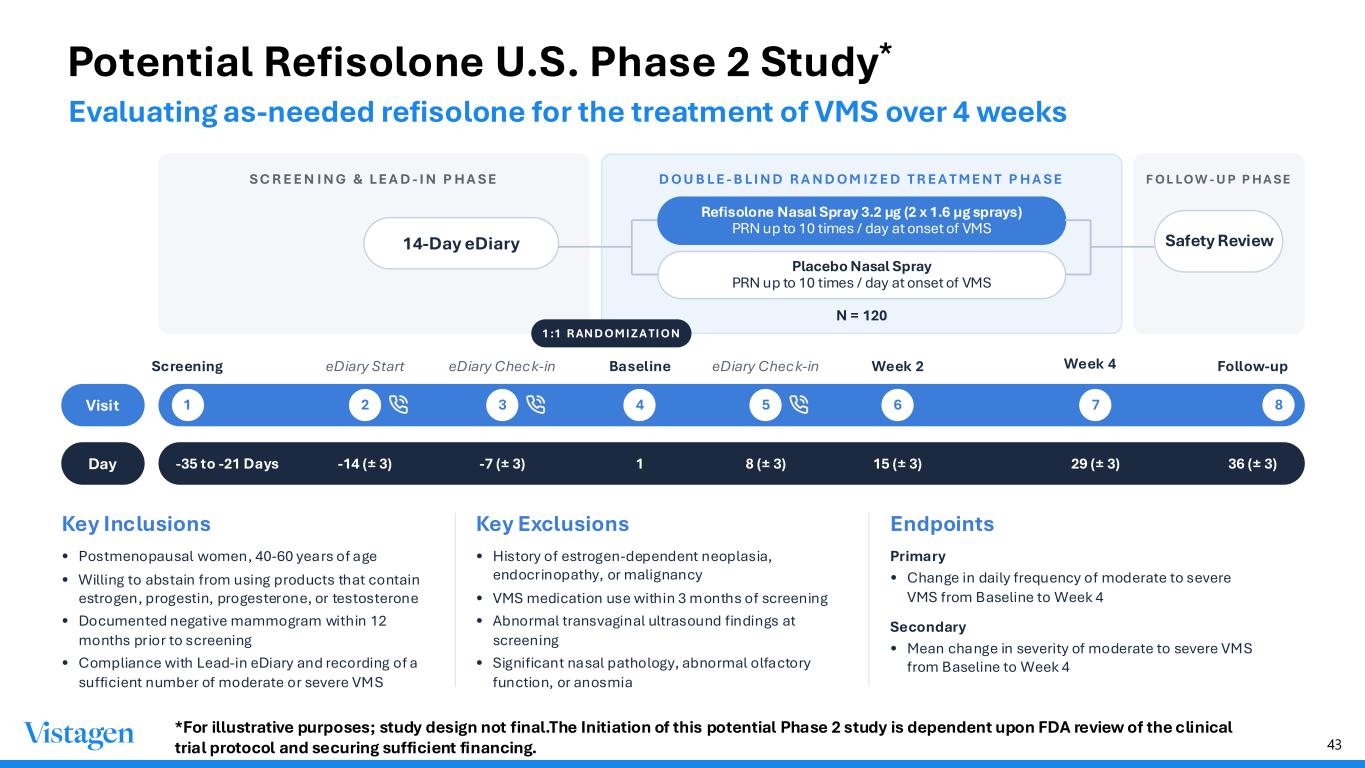
43 Potential Refisolone U.S. Phase 2 Study* Evaluating as-needed refisolone for the treatment of VMS over 4 weeks S C R E E N I N G & L E A D - I N P H A S E D O U B L E - B L I N D R A N D O M I Z E D T R E A T M E N T P H A S E F O L LO W - U P P H A SE 14-Day eDiary Refisolone Nasal Spray 3.2 µg (2 x 1.6 µg sprays) PRN up to 10 times / day at onset of VMS Placebo Nasal Spray PRN up to 10 times / day at onset of VMS Safety Review 1 :1 R AN D OMI Z A TI ON N = 120 Visit Day Screening 1 -35 to -21 Days eDiary Start 2 -14 (± 3) eDiary Check-in 3 -7 (± 3) Baseline 4 1 eDiary Check-in 5 8 (± 3) Week 2 6 15 (± 3) Week 4 7 29 (± 3) Follow-up 8 36 (± 3) Key Inclusions • Postmenopausal women, 40-60 years of age • Willing to abstain from using products that contain estrogen, progestin, progesterone, or testosterone • Documented negative mammogram within 12 months prior to screening • Compliance with Lead-in eDiary and recording of a sufficient number of moderate or severe VMS Key Exclusions • History of estrogen-dependent neoplasia, endocrinopathy, or malignancy • VMS medication use within 3 months of screening • Abnormal transvaginal ultrasound findings at screening • Significant nasal pathology, abnormal olfactory function, or anosmia Endpoints Primary • Change in daily frequency of moderate to severe VMS from Baseline to Week 4 Secondary • Mean change in severity of moderate to severe VMS from Baseline to Week 4 *For illustrative purposes; study design not final.The Initiation of this potential Phase 2 study is dependent upon FDA review of the clinical trial protocol and securing sufficient financing.
44 Refisolone Premenstrual Dysphoric Disorder (PMDD)
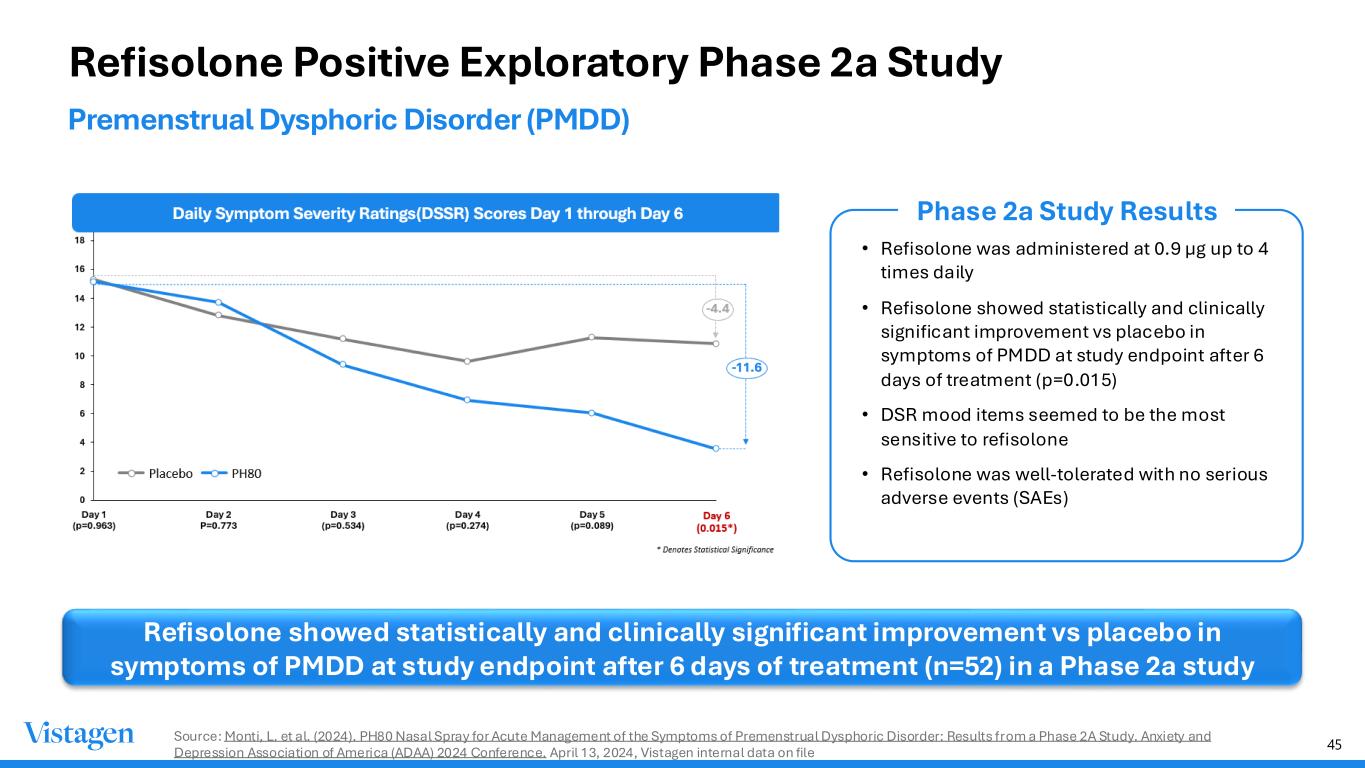
45 Refisolone Positive Exploratory Phase 2a Study Premenstrual Dysphoric Disorder (PMDD) Refisolone showed statistically and clinically significant improvement vs placebo in symptoms of PMDD at study endpoint after 6 days of treatment (n=52) in a Phase 2a study Phase 2a Study Results • Refisolone was administered at 0.9 µg up to 4 times daily • Refisolone showed statistically and clinically significant improvement vs placebo in symptoms of PMDD at study endpoint after 6 days of treatment (p=0.015) • DSR mood items seemed to be the most sensitive to refisolone • Refisolone was well-tolerated with no serious adverse events (SAEs) Source: Monti, L. et al. (2024). PH80 Nasal Spray for Acute Management of the Symptoms of Premenstrual Dysphoric Disorder: Results from a Phase 2A Study. Anxiety and Depression Association of America (ADAA) 2024 Conference. April 13, 2024, Vistagen internal data on file
46 Major Depressive Disorder Itruvone
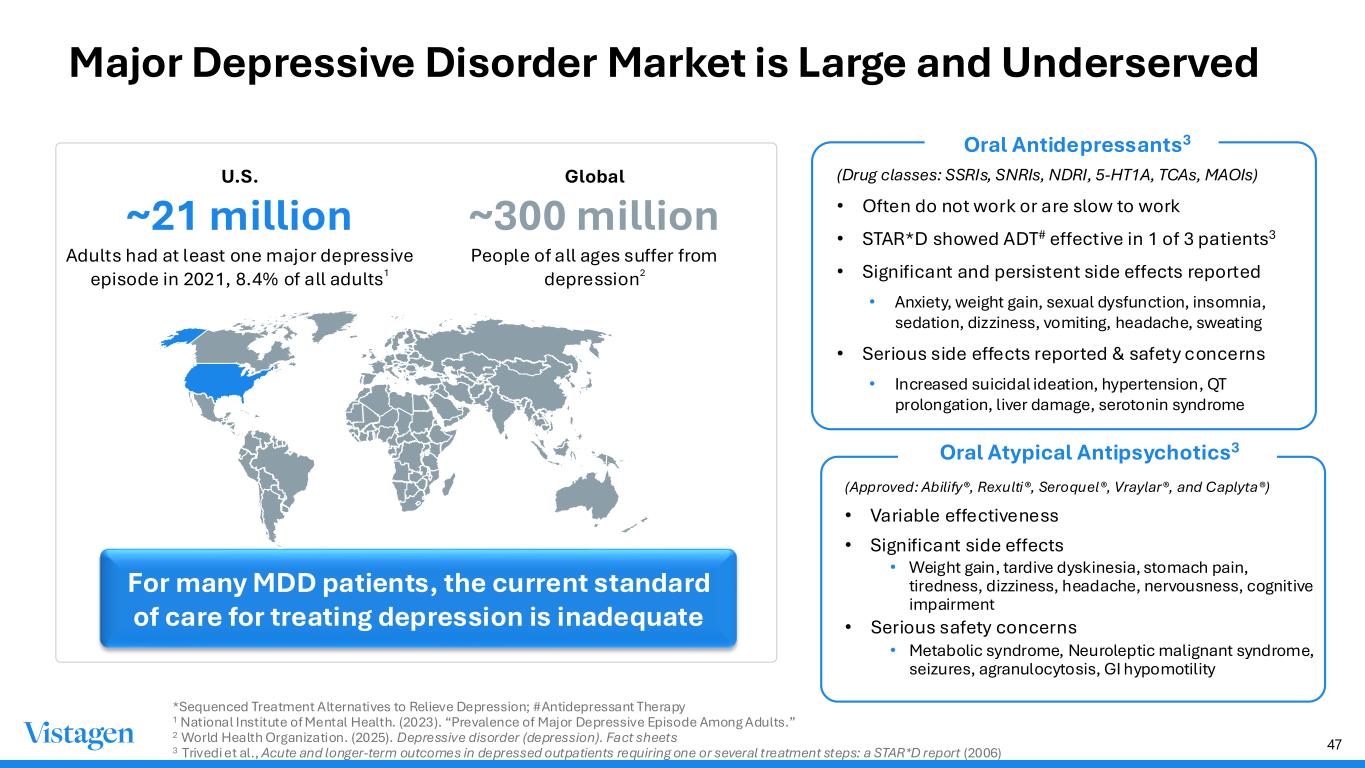
47 Major Depressive Disorder Market is Large and Underserved (Drug classes: SSRIs, SNRIs, NDRI, 5-HT1A, TCAs, MAOIs) • Often do not work or are slow to work • STAR*D showed ADT# effective in 1 of 3 patients3 • Significant and persistent side effects reported • Anxiety, weight gain, sexual dysfunction, insomnia, sedation, dizziness, vomiting, headache, sweating • Serious side effects reported & safety concerns • Increased suicidal ideation, hypertension, QT prolongation, liver damage, serotonin syndrome For many MDD patients, the current standard of care for treating depression is inadequate U.S. ~21 million Adults had at least one major depressive episode in 2021, 8.4% of all adults1 Global ~300 million People of all ages suffer from depression2 *Sequenced Treatment Alternatives to Relieve Depression; #Antidepressant Therapy 1 National Institute of Mental Health. (2023). “Prevalence of Major Depressive Episode Among Adults.” 2 World Health Organization. (2025). Depressive disorder (depression). Fact sheets 3 Trivedi et al., Acute and longer-term outcomes in depressed outpatients requiring one or several treatment steps: a STAR*D report (2006) Oral Antidepressants3 (Approved: Abilify®, Rexulti®, Seroquel®, Vraylar®, and Caplyta®) • Variable effectiveness • Significant side effects • Weight gain, tardive dyskinesia, stomach pain, tiredness, dizziness, headache, nervousness, cognitive impairment • Serious safety concerns • Metabolic syndrome, Neuroleptic malignant syndrome, seizures, agranulocytosis, GI hypomotility Oral Atypical Antipsychotics3
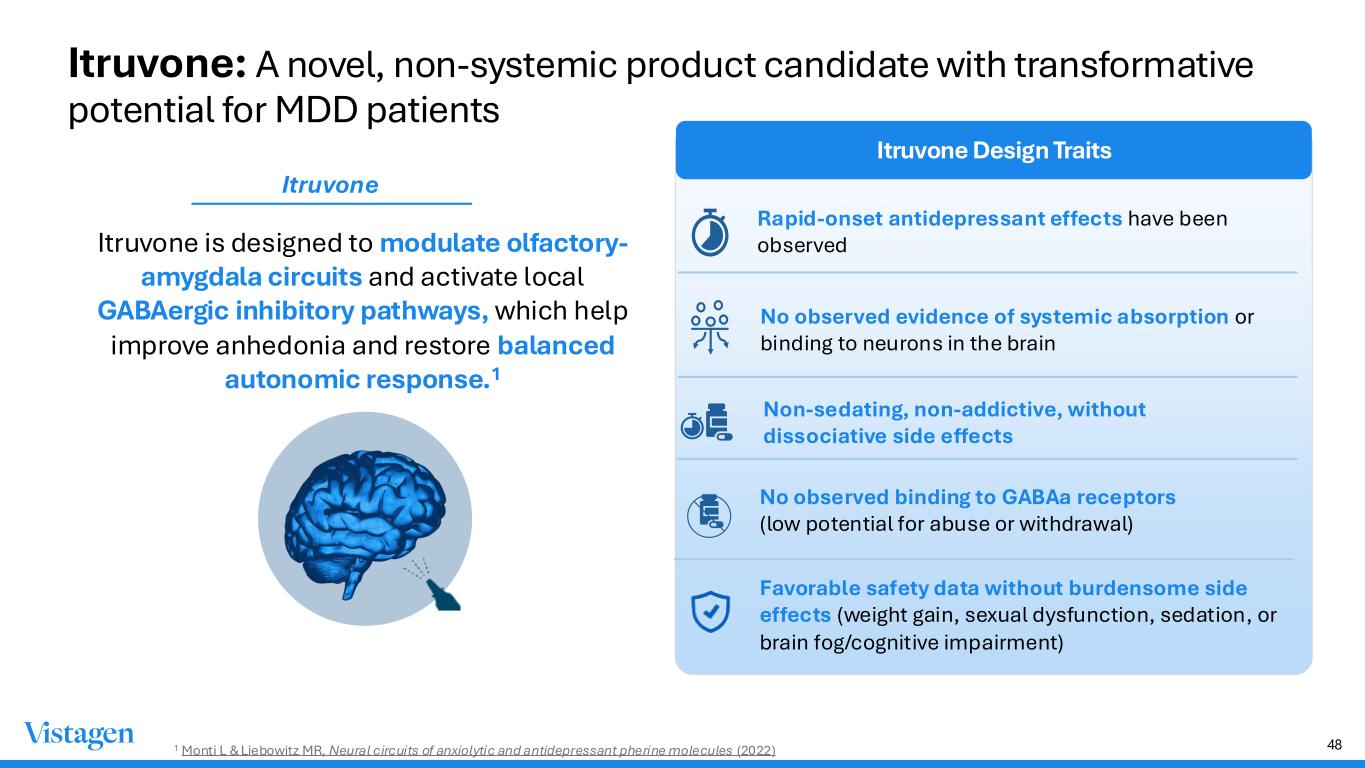
48 Itruvone is designed to modulate olfactory- amygdala circuits and activate local GABAergic inhibitory pathways, which help improve anhedonia and restore balanced autonomic response.1 Itruvone Design Traits Rapid-onset antidepressant effects have been observed No observed evidence of systemic absorption or binding to neurons in the brain 1 Monti L & Liebowitz MR, Neural circuits of anxiolytic and antidepressant pherine molecules (2022) No observed binding to GABAa receptors (low potential for abuse or withdrawal) Favorable safety data without burdensome side effects (weight gain, sexual dysfunction, sedation, or brain fog/cognitive impairment) Non-sedating, non-addictive, without dissociative side effects Itruvone Itruvone: A novel, non-systemic product candidate with transformative potential for MDD patients
49 Itruvone Positive Exploratory Phase 2a MDD Study (Mexico) • 6.4 µg dose significantly reduced depressive symptoms as early as Week 1 and sustained through Week 8 compared to placebo (p=0.022) • Rapid-onset numerical improvements observed for 3.2 µg and 6.4 µg vs placebo at Week 1 Phase 2a Study Results Itruvone Dose HAM-D Score p (itruvone vs placebo) Cohen’s d (Effect Size) 3.2 µg (Low Dose) -16.3 0.101 0.74 6.4 µg (High Dose) -17.8 0.022 0.95 Placebo -10.9 -- -- p=0.022 1 Monti, L., Nicolini, H., Liebowitz, M., & Hanover, R. (2019). “A Placebo Controlled Trial of PH10: Test of a New Rapidly Acting Intranasally Administered Antidepressant.” Br J Phar Med Res 4(6): 2157-2168. • Itruvone was well-tolerated, with no drug-related serious adverse events observed, no dissociative side effects, no reports of weight gain or sexual side effects1 Rapid, significant, and sustained antidepressant effects
50 6-week Treatment Period Potential Itruvone Phase 2 Study (U.S.)* ➢Key Inclusions • Male or female, 18-65 years of age • Major Depressive Disorder, as defined by DSM-5 • HAM-D17 > 21 at screening & randomization • MacLean screen for BPD < 6 ➢Key Exclusions • No history of other significant psychiatric disorders • No other psychotropic drugs w/in 14 days of screening • Current diagnosis of substance use disorder • Epilepsy, benzodiazepine use, THC use Baseline & Randomization 7 R 1:1 day Visit Screening Follow-up Itruvone 3.2 µg (i.n. 2X/day), n=100 Placebo (i.n. 2X/day), n=100 Efficacy Endpoints1 & Safety ➢ Primary Endpoint: Change from baseline to Day 42 on HAM-D17 rating scale ➢ Secondary & Exploratory Endpoints: • Change from baseline to Day 7, Day 14, and Day 28 on HAM-D17 rating scale • SHAPS, SDS, HAM-A, BDI, CGI-I, CGI-S, CPFQ ➢ Safety 1 Snaith-Hamilton Pleasure Scale (SHAPS; Snaith et al., 1995), Sheen Disability Scale (SDS), Hamilton Anxiety Rating Scale (HAM-A), Beck Depression Inventory (BDI), Clinical Global Impression Improvement and Severity Scales (CGI-I, CGI-S), Cognitive and Physical Functioning Questionnaire (CPFQ, Fava et al., 2006) *For illustrative purposes; study design not final.The initiation of this potential Phase 2 study is not planned at this time and will be dependent upon securing sufficient financing and prioritization in the future. 1 2 3 4 5 6 14 28 42 7
51 Psychomotor / Cognitive Impairment due to Mental Fatigue PH15
52 PH15: A novel, fast-acting, non-systemic clinical-stage product candidate designed for the acute treatment of cognitive/psychomotor impairment due to mental fatigue PH15 is designed to modulate hippocampal activity and related limbic circuitry, which may support improvements in cognitive and psychomotor function due to mental fatigue. PH15 Design Traits Novel neurocircuitry-focused proposed MOA differentiated from all other approved treatments Rapid-onset potential to be taken as-needed to provide relief in the moment Favorable tolerability results observed in studies completed to date Potential new treatment to improve psychomotor impairment and potentially cognitive impairment due to mental fatigue from sleep deprivation1 PH15 Positive Phase 2a pilot study (n=10) demonstrated significant improvement in reaction time vs placebo and oral caffeine, including during peak fatigue 1 Vistagen does not yet have statistically significant data on PH15 for cognitive impairment due to mental fatigue
53 Cancer Cachexia (Cancer Supportive Care) PH284
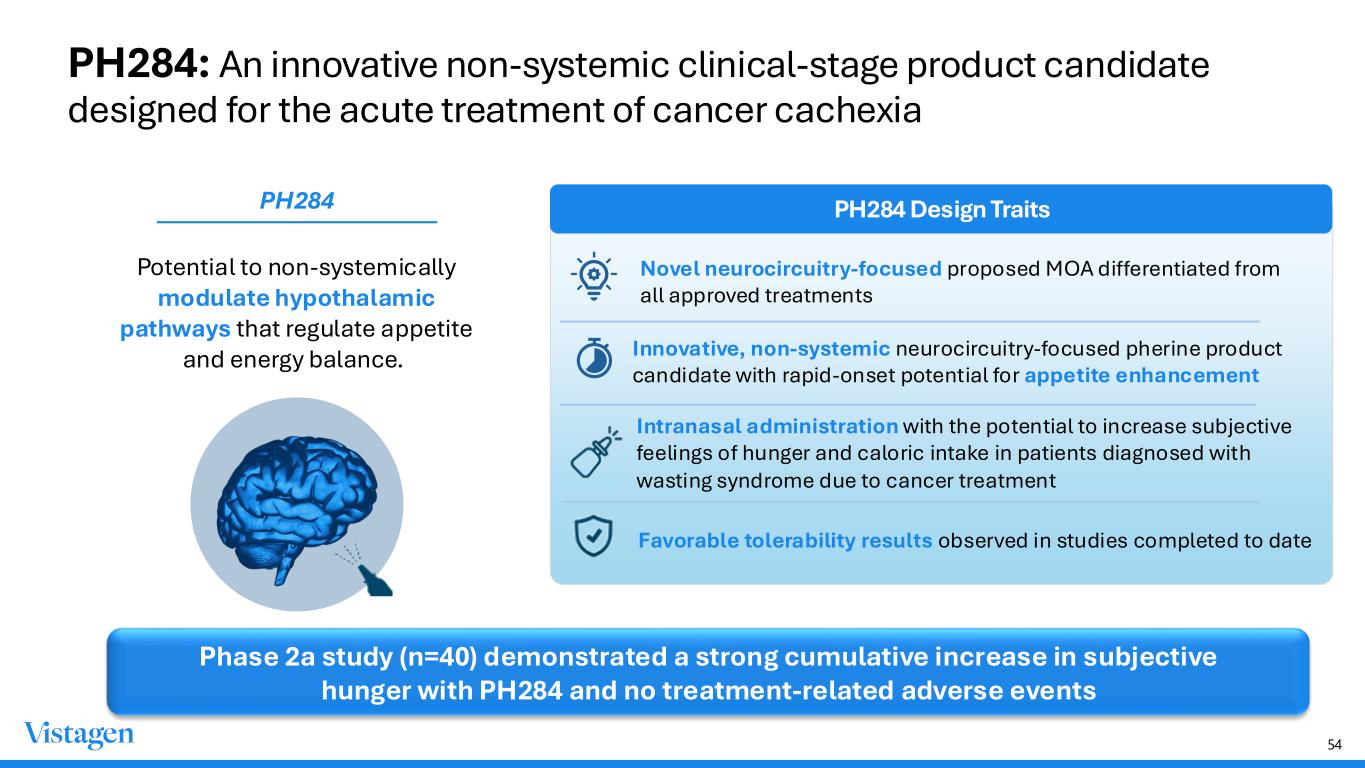
54 PH284: An innovative non-systemic clinical-stage product candidate designed for the acute treatment of cancer cachexia Potential to non-systemically modulate hypothalamic pathways that regulate appetite and energy balance. PH284 Design Traits Novel neurocircuitry-focused proposed MOA differentiated from all approved treatments Innovative, non-systemic neurocircuitry-focused pherine product candidate with rapid-onset potential for appetite enhancement Intranasal administration with the potential to increase subjective feelings of hunger and caloric intake in patients diagnosed with wasting syndrome due to cancer treatment Favorable tolerability results observed in studies completed to date PH284 Phase 2a study (n=40) demonstrated a strong cumulative increase in subjective hunger with PH284 and no treatment-related adverse events
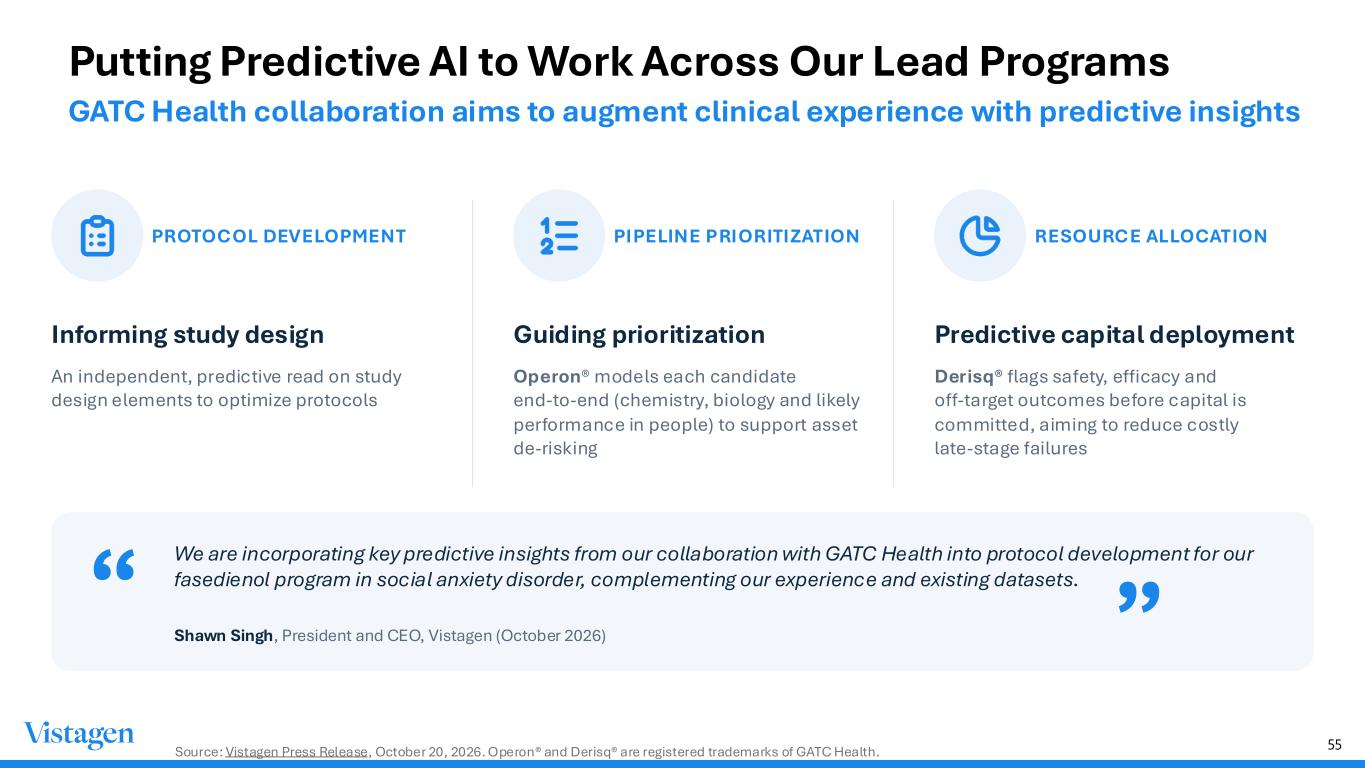
55 Putting Predictive AI to Work Across Our Lead Programs GATC Health collaboration aims to augment clinical experience with predictive insights PROTOCOL DEVELOPMENT Informing study design An independent, predictive read on study design elements to optimize protocols PIPELINE PRIORITIZATION Guiding prioritization Operon® models each candidate end-to-end (chemistry, biology and likely performance in people) to support asset de-risking RESOURCE ALLOCATION Predictive capital deployment Derisq® flags safety, efficacy and off-target outcomes before capital is committed, aiming to reduce costly late-stage failures “ We are incorporating key predictive insights from our collaboration with GATC Health into protocol development for our fasedienol program in social anxiety disorder, complementing our experience and existing datasets. Shawn Singh, President and CEO, Vistagen (October 2026) Source: Vistagen Press Release, October 20, 2026. Operon® and Derisq® are registered trademarks of GATC Health. “
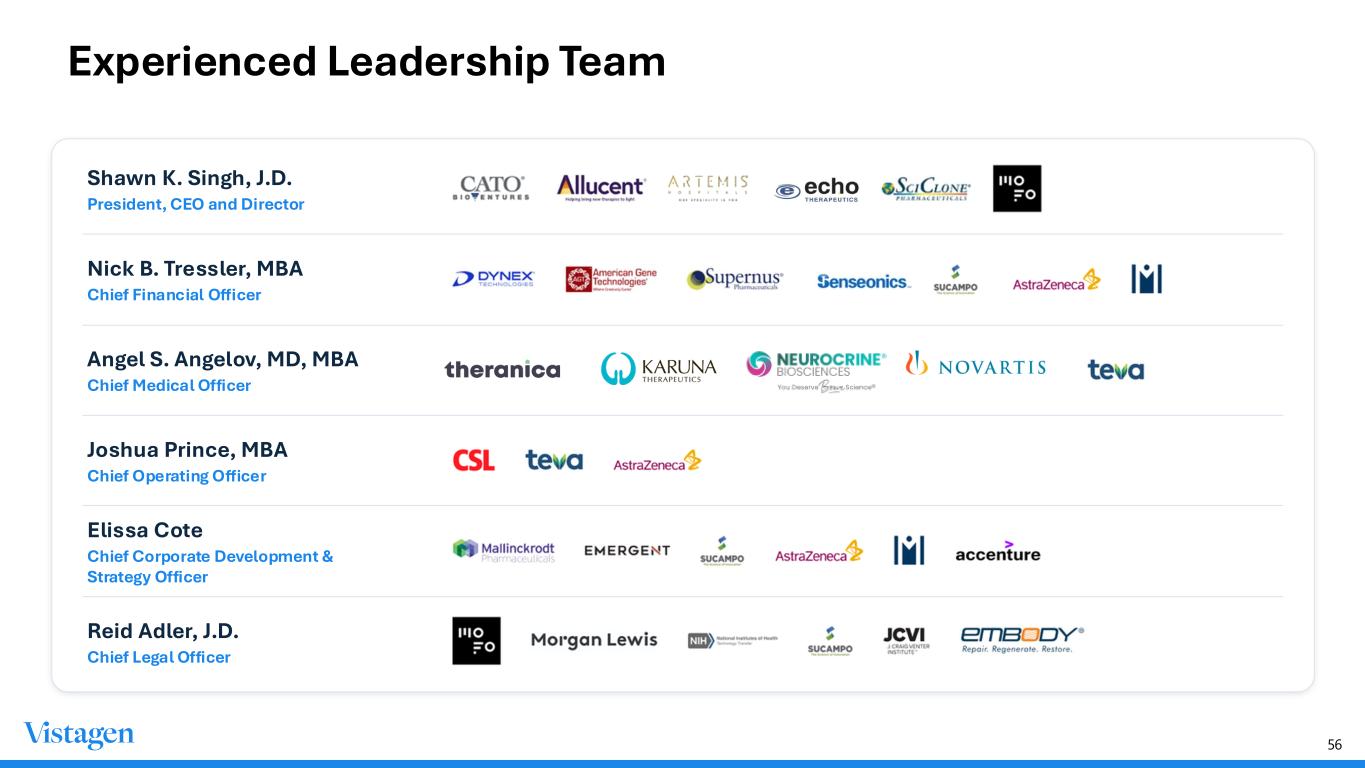
56 Experienced Leadership Team Shawn K. Singh, J.D. President, CEO and Director Nick B. Tressler, MBA Chief Financial Officer Angel S. Angelov, MD, MBA Chief Medical Officer Joshua Prince, MBA Chief Operating Officer Elissa Cote Chief Corporate Development & Strategy Officer Reid Adler, J.D. Chief Legal Officer
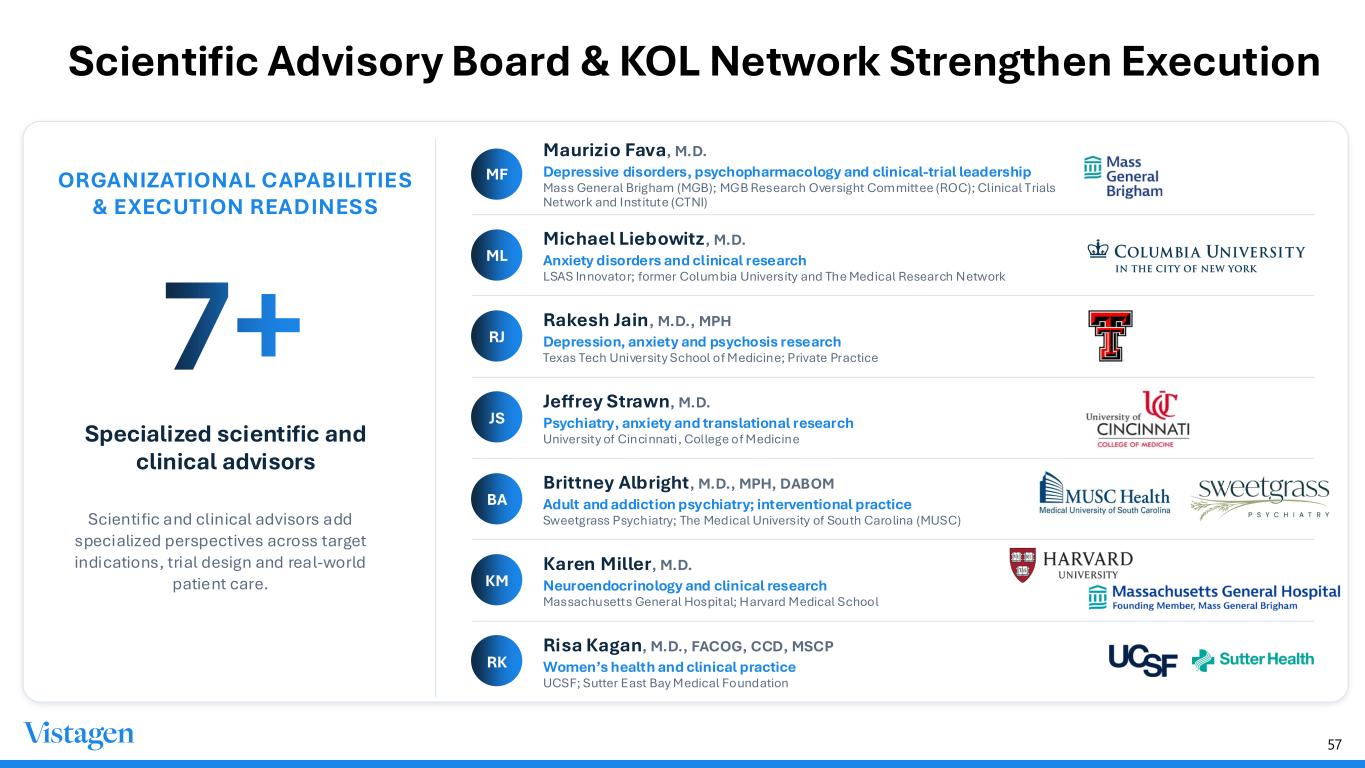
57 Scientific Advisory Board & KOL Network Strengthen Execution ORGANIZATIONAL CAPABILITIES & EXECUTION READINESS 7+ Specialized scientific and clinical advisors Scientific and clinical advisors add specialized perspectives across target indications, trial design and real-world patient care. MF Maurizio Fava, M.D. Depressive disorders, psychopharmacology and clinical-trial leadership Mass General Brigham (MGB); MGB Research Oversight Committee (ROC); Clinical Trials Network and Institute (CTNI) ML Michael Liebowitz, M.D. Anxiety disorders and clinical research LSAS Innovator; former Columbia University and The Medical Research Network RJ Rakesh Jain, M.D., MPH Depression, anxiety and psychosis research Texas Tech University School of Medicine; Private Practice JS Jeffrey Strawn, M.D. Psychiatry, anxiety and translational research University of Cincinnati, College of Medicine BA Brittney Albright, M.D., MPH, DABOM Adult and addiction psychiatry; interventional practice Sweetgrass Psychiatry; The Medical University of South Carolina (MUSC) KM Karen Miller, M.D. Neuroendocrinology and clinical research Massachusetts General Hospital; Harvard Medical School RK Risa Kagan, M.D., FACOG, CCD, MSCP Women’s health and clinical practice UCSF; Sutter East Bay Medical Foundation
58 Nasdaq: VTGN Thank You Harnessing the therapeutic power and potential of brain regulation with nose-to-brain neurocircuitry CONFIDENTIAL

59 Appendix
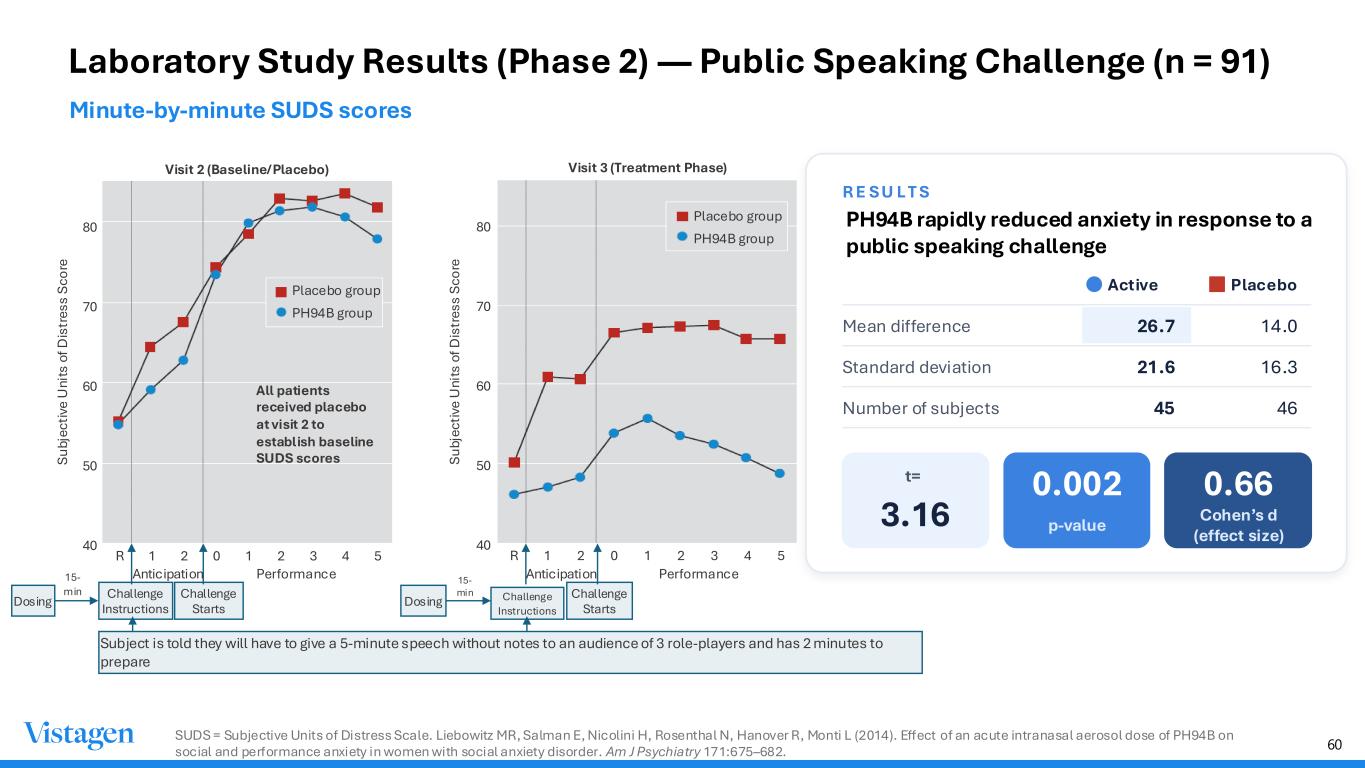
60 Laboratory Study Results (Phase 2) — Public Speaking Challenge (n = 91) R E S U L T S PH94B rapidly reduced anxiety in response to a public speaking challenge Active Placebo Mean difference 26.7 14.0 Standard deviation 21.6 16.3 Number of subjects 45 46 3.16 t= 0.002 p-value 0.66 Cohen’s d (effect size) SUDS = Subjective Units of Distress Scale. Liebowitz MR, Salman E, Nicolini H, Rosenthal N, Hanover R, Monti L (2014). Effect of an acute intranasal aerosol dose of PH94B on social and performance anxiety in women with social anxiety disorder. Am J Psychiatry 171:675–682. Minute-by-minute SUDS scores Subject is told they will have to give a 5-minute speech without notes to an audience of 3 role-players and has 2 minutes to prepare Dosing Challenge Instructions Challenge Starts 15- min Visit 2 (Baseline/Placebo) 80 70 60 50 40 Su bj ec tiv e U ni ts o f D is tr es s Sc or e All patients received placebo at visit 2 to establish baseline SUDS scores R 1 2 0 1 2 3 4 5 PerformanceAnticipation Placebo group PH94B group Dosing Challenge Instructions Challenge Starts 15- min Visit 3 (Treatment Phase) 80 70 60 50 40 Su bj ec tiv e U ni ts o f D is tr es s Sc or e R 1 2 0 1 2 3 4 5 Anticipation Performance Placebo group PH94B group
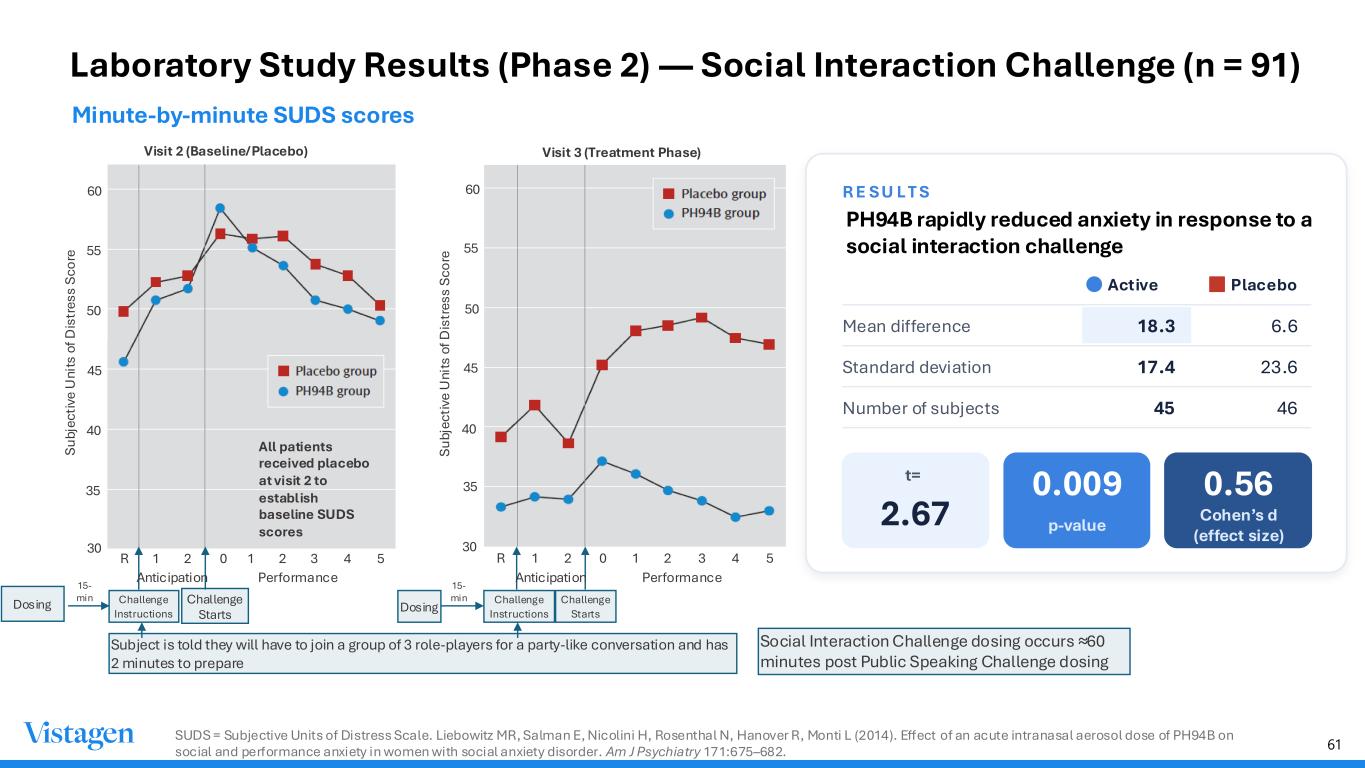
61 Laboratory Study Results (Phase 2) — Social Interaction Challenge (n = 91) R E S U L T S PH94B rapidly reduced anxiety in response to a social interaction challenge Active Placebo Mean difference 18.3 6.6 Standard deviation 17.4 23.6 Number of subjects 45 46 2.67 t= 0.009 p-value 0.56 Cohen’s d (effect size) SUDS = Subjective Units of Distress Scale. Liebowitz MR, Salman E, Nicolini H, Rosenthal N, Hanover R, Monti L (2014). Effect of an acute intranasal aerosol dose of PH94B on social and performance anxiety in women with social anxiety disorder. Am J Psychiatry 171:675–682. Minute-by-minute SUDS scores Visit 2 (Baseline/Placebo) 45 40 35 30 Su bj ec tiv e U ni ts o f D is tr es s Sc or e 50 55 60 Visit 3 (Treatment Phase) 45 40 35 30 Su bj ec tiv e U ni ts o f D is tr es s Sc or e 50 55 60 Dosing Challenge Instructions 15- min R 1 2 0 1 2 3 4 5 PerformanceAnticipation Subject is told they will have to join a group of 3 role-players for a party-like conversation and has 2 minutes to prepare Challenge Starts Dosing Challenge Instructions Challenge Starts 15- min R 1 2 0 1 2 3 4 5 Anticipation Performance All patients received placebo at visit 2 to establish baseline SUDS scores Social Interaction Challenge dosing occurs ≈60 minutes post Public Speaking Challenge dosing
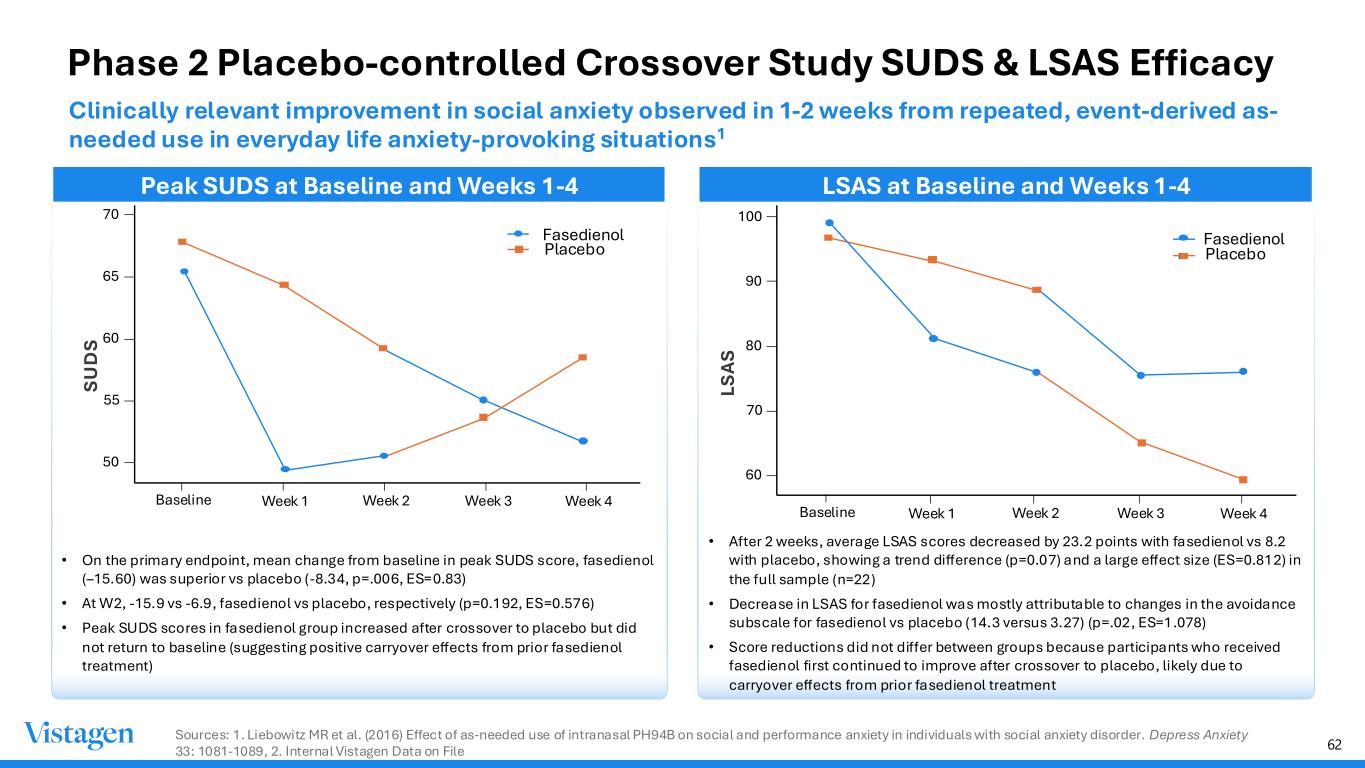
62 • On the primary endpoint, mean change from baseline in peak SUDS score, fasedienol (–15.60) was superior vs placebo (-8.34, p=.006, ES=0.83) • At W2, -15.9 vs -6.9, fasedienol vs placebo, respectively (p=0.192, ES=0.576) • Peak SUDS scores in fasedienol group increased after crossover to placebo but did not return to baseline (suggesting positive carryover effects from prior fasedienol treatment) • After 2 weeks, average LSAS scores decreased by 23.2 points with fasedienol vs 8.2 with placebo, showing a trend difference (p=0.07) and a large effect size (ES=0.812) in the full sample (n=22) • Decrease in LSAS for fasedienol was mostly attributable to changes in the avoidance subscale for fasedienol vs placebo (14.3 versus 3.27) (p=.02, ES=1.078) • Score reductions did not differ between groups because participants who received fasedienol first continued to improve after crossover to placebo, likely due to carryover effects from prior fasedienol treatment Sources: 1. Liebowitz MR et al. (2016) Effect of as‐needed use of intranasal PH94B on social and performance anxiety in individuals with social anxiety disorder. Depress Anxiety 33: 1081-1089, 2. Internal Vistagen Data on File Phase 2 Placebo-controlled Crossover Study SUDS & LSAS Efficacy Peak SUDS at Baseline and Weeks 1-4 LSAS at Baseline and Weeks 1-4 Clinically relevant improvement in social anxiety observed in 1-2 weeks from repeated, event-derived as- needed use in everyday life anxiety-provoking situations1 100 90 80 70 60 LS A S Fasedienol Placebo Baseline Week 1 Week 2 Week 3 Week 4 70 65 60 55 50 Baseline Week 1 Week 2 Week 3 Week 4 S U D S Fasedienol Placebo