
UNITED STATES
SECURITIES AND EXCHANGE COMMISSION
Washington, D.C. 20549
FORM 8-K
CURRENT REPORT
PURSUANT TO SECTION 13 OR 15(d) of the SECURITIES EXCHANGE ACT OF 1934
Date of Report (Date of earliest event reported): September 25, 2026
(Exact name of registrant as specified in its charter)
(State or other jurisdiction of incorporation) | (Commission File Number) | (IRS Employer Identification Number) | ||||||
(Address of principal executive offices)
(650 ) 577-3600
(Registrant’s telephone number, including area code)
Not Applicable
(Former name or former address, if changed since last report)
Check the appropriate box below if the Form 8-K filing is intended to simultaneously satisfy the filing obligation of the registrant under any of the following provisions:
Securities registered pursuant to Section 12(b) of the Act:
| Title of each class | Trading Symbol(s) | Name of each exchange on which registered | ||||||
Indicate by check mark whether the registrant is an emerging growth company as defined in Rule 405 of the Securities Act of 1933 (17 CFR 230.405) or Rule 12b-2 of the Securities Exchange Act of 1934 (17 CFR 240.12b-2)
Emerging Growth Company o
If an emerging growth company, indicate by check mark if the registrant has elected not to use the extended transition period for complying with any new or revised financial accounting standards provided pursuant to Section 13(a) of the Exchange Act o
Item 7.01 Regulation FD Disclosure.
On September 25, 2026, Vistagen Therapeutics, Inc. (the “Company”) began utilizing a new corporate presentation, a copy of which is attached to this Current Report on Form 8-K as Exhibit 99.1.
The information under this Item 7.01 and Exhibit 99.1 attached hereto are intended to be furnished and shall not be deemed “filed” for purposes of Section 18 of the Securities Exchange Act of 1934, as amended (the “Exchange Act”), or otherwise subject to the liabilities of that section, nor shall such information be deemed incorporated by reference in any filing under the Securities Act of 1933, as amended, or the Exchange Act, except as expressly set forth by specific reference in such a filing.
Item 9.01 Financial Statements and Exhibits.
(d)Exhibits Index
| Exhibit No. | Description | |||||||
| 99.1 | ||||||||
| 104 | Cover Page Interactive Data File (embedded within the Inline XBRL document) | |||||||
Signatures
Pursuant to the requirements of the Securities Exchange Act of 1934, the registrant has duly caused this report to be signed on its behalf by the undersigned thereunto duly authorized.
| Vistagen Therapeutics, Inc. | ||||||||
| Date: September 25, 2026 | By: | /s/ Shawn K. Singh | ||||||
| Shawn K. Singh President and Chief Executive Officer | ||||||||
1 Nasdaq: VTGN Corporate Presentation Harnessing the therapeutic power and potential of brain regulation with nose-to-brain neurocircuitry September 2026
2 Forward-looking Statements This presentation contains certain forward-looking statements within the meaning of the Private Securities Litigation Reform Act of 1995 that are within the meaning of federal securities laws. These forward-looking statements involve known and unknown risks that are difficult to predict and include all matters that are not historical facts. In some cases, you can identify forward-looking statements by the use of words such as “may,” “could,” “expect,” “project,” “outlook,” “strategy,” “intend,” “plan,” “seek,” “anticipate,” “believe,” “estimate,” “predict,” “potential,” “strive,” “goal,” “continue,” “likely,” “will,” “would” and variations of these terms and similar expressions, or the negative of these terms or similar expressions. Such forward-looking statements are necessarily based upon estimates and assumptions that, while considered reasonable by Vistagen Therapeutics, Inc. (Vistagen or the Company) and its management, are inherently uncertain. As with all pharmaceutical products, development and commercialization involve substantial risks and uncertainties, and actual results or developments may differ materially from those projected or implied in these forward-looking statements. There can be no guarantee that any of Vistagen’s product candidates, including fasedienol, will successfully complete future clinical trials within estimated timelines or at all, receive regulatory approval or be commercially successful. Because the Repeat Dose Study was not powered to demonstrate statistical significance, there can be no assurance that the numerical trends and nominally significant findings described in this presentation will be replicated in future, adequately powered clinical trials, or that the U.S. Food and Drug Administration (FDA) will view such findings as supportive of a registrational pathway for fasedienol. Other factors that may cause such a difference include, without limitation, risks and uncertainties relating to conducting future clinical trials as currently expected or at all; Vistagen’s ability to replicate numerical trends and nominally significant findings from studies in the PALISADE Program or that the FDA will view such findings as supportive of a registrational pathway for fasedienol; Vistagen’s ability to successfully employ cash preservation measures and/or secure adequate financing for its operations, including financing or collaborative support for continued clinical development of its product candidates; Vistagen's dependence on third-party collaborators for the development, regulatory approval, and/or commercialization of its product candidates and other aspects of its business, which are outside of Vistagen's full control; the scope and enforceability of Vistagen’s patents, including patents related to Vistagen’s pherine product candidates; fluctuating costs of materials and other resources and services required to conduct Vistagen’s ongoing and/or planned clinical and non-clinical trials; market conditions; the impact of general economic, industry or political conditions in the United States or internationally; and other technical and unexpected hurdles in the development, manufacture and commercialization of Vistagen’s product candidates. These risks are more fully discussed in the section entitled “Risk Factors” in Vistagen’s Annual Report on Form 10-K for the fiscal year ended March 31, 2026, and Quarterly Report on Form 10-Q for the period ended June 30, 2026, as well as discussions of potential risks, uncertainties, and other important factors in our other filings with the U.S. Securities and Exchange Commission (SEC). The Company’s SEC filings are available on the SEC’s website at www.sec.gov. Given these uncertainties, you should not place undue reliance on these forward-looking statements, which apply only as of the date of this presentation and should not be relied upon as representing the Company’s views as of any subsequent date. The Company explicitly disclaims any obligation to update any forward-looking statements other than as may be required by law. If the Company does update one or more forward-looking statements, no inference should be made that we will make additional updates with respect to those or other forward-looking statements. Be aware that our development and commercialization plans may change at any time, without public notice, based on the kinds of risk factors described above. This presentation discusses certain product candidates that have not yet received marketing authorization or clearance by the FDA. No representation is made as to the safety, effectiveness or likelihood of marketing authorization or clearance of these product candidates. Certain clinical data for fasedienol in this presentation are based on separate studies and include pooled data between such studies. Differences exist between clinical trial design and patient populations, and caution should be exercised when pooling and/or comparing data across trials as pooled data and cross-study comparisons are inherently limited and such data may not be directly comparable. This presentation also contains estimates and other statistical data made by independent parties and by us relating to market size and growth and other data about our industry. These data involve numerous assumptions and limitations, and you are cautioned not to give undue weight to such estimates and data. Neither we nor any other person makes any representation as to the accuracy or completeness of such data or undertakes any obligation to update such data after the date of this presentation.
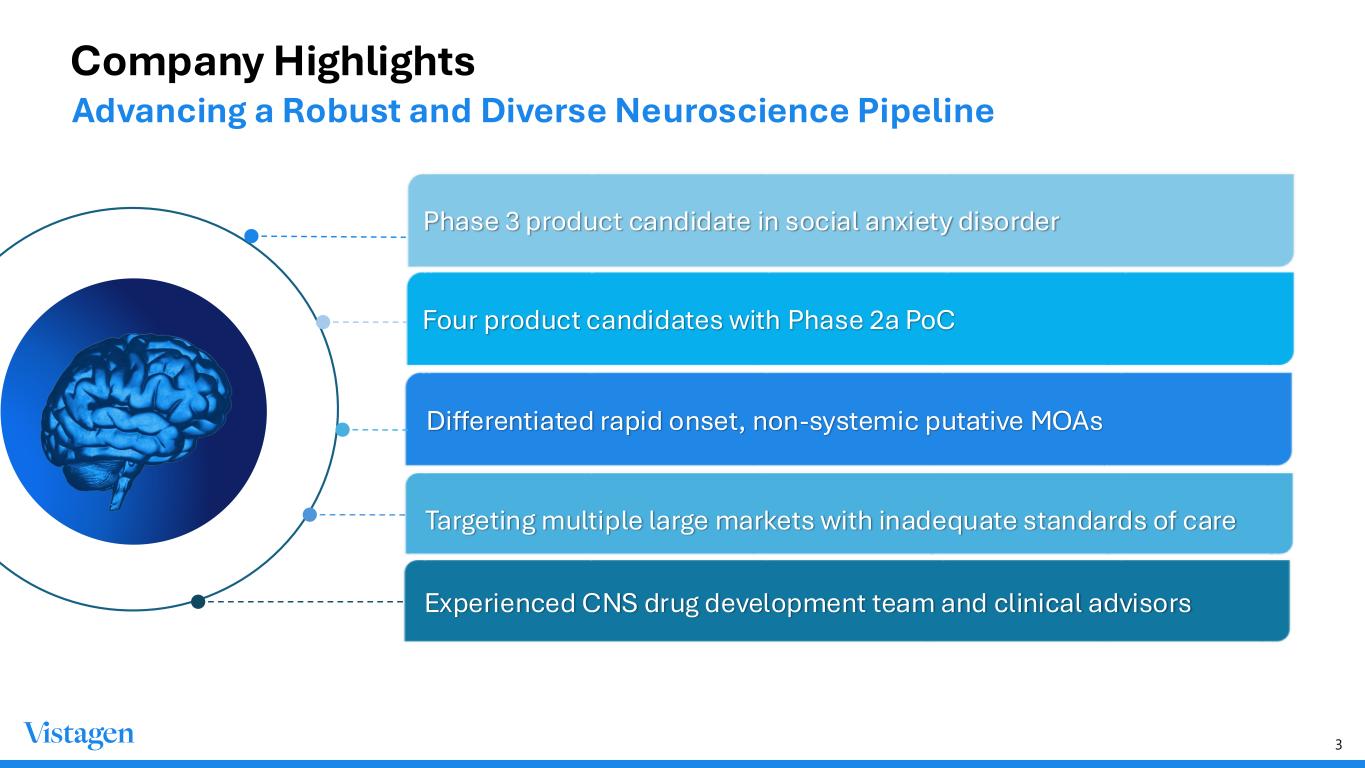
3 Company Highlights Differentiated rapid onset, non-systemic putative MOAs Phase 3 product candidate in social anxiety disorder Four product candidates with Phase 2a PoC Experienced CNS drug development team and clinical advisors Targeting multiple large markets with inadequate standards of care Advancing a Robust and Diverse Neuroscience Pipeline
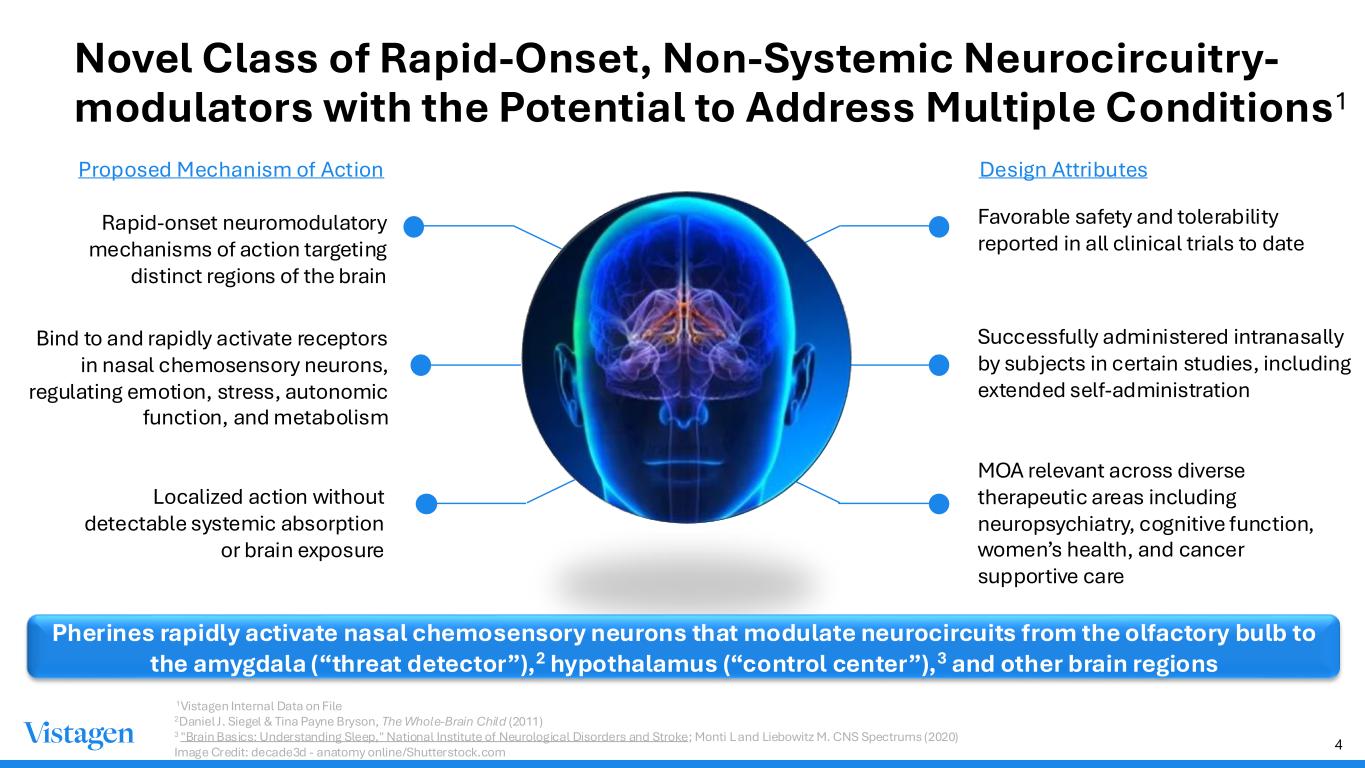
4 Favorable safety and tolerability reported in all clinical trials to date Bind to and rapidly activate receptors in nasal chemosensory neurons, regulating emotion, stress, autonomic function, and metabolism Successfully administered intranasally by subjects in certain studies, including extended self-administration MOA relevant across diverse therapeutic areas including neuropsychiatry, cognitive function, women’s health, and cancer supportive care Novel Class of Rapid-Onset, Non-Systemic Neurocircuitry- modulators with the Potential to Address Multiple Conditions1 Pherines rapidly activate nasal chemosensory neurons that modulate neurocircuits from the olfactory bulb to the amygdala (“threat detector”),2 hypothalamus (“control center”),3 and other brain regions Localized action without detectable systemic absorption or brain exposure Proposed Mechanism of Action Design Attributes Rapid-onset neuromodulatory mechanisms of action targeting distinct regions of the brain 1Vistagen Internal Data on File 2Daniel J. Siegel & Tina Payne Bryson, The Whole-Brain Child (2011) 3 "Brain Basics: Understanding Sleep," National Institute of Neurological Disorders and Stroke; Monti L and Liebowitz M. CNS Spectrums (2020) Image Credit: decade3d - anatomy online/Shutterstock.com
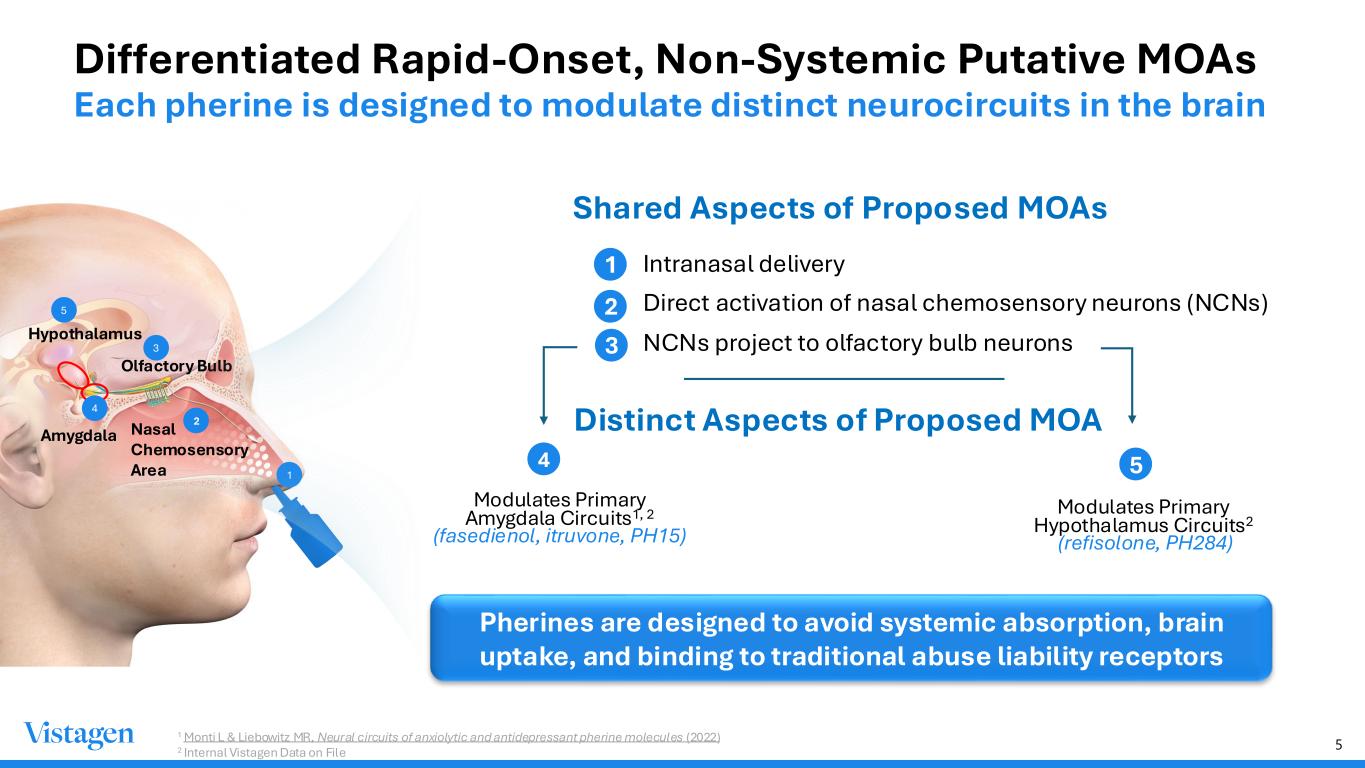
5 Differentiated Rapid-Onset, Non-Systemic Putative MOAs 1 Monti L & Liebowitz MR, Neural circuits of anxiolytic and antidepressant pherine molecules (2022) 2 Internal Vistagen Data on File 1 Olfactory Bulb Nasal Chemosensory Area 2 Hypothalamus Amygdala 4 3 5 Intranasal delivery Direct activation of nasal chemosensory neurons (NCNs) NCNs project to olfactory bulb neurons Shared Aspects of Proposed MOAs 1 2 3 Modulates Primary Amygdala Circuits1, 2 (fasedienol, itruvone, PH15) Modulates Primary Hypothalamus Circuits2 (refisolone, PH284) 4 5 Pherines are designed to avoid systemic absorption, brain uptake, and binding to traditional abuse liability receptors Distinct Aspects of Proposed MOA Each pherine is designed to modulate distinct neurocircuits in the brain
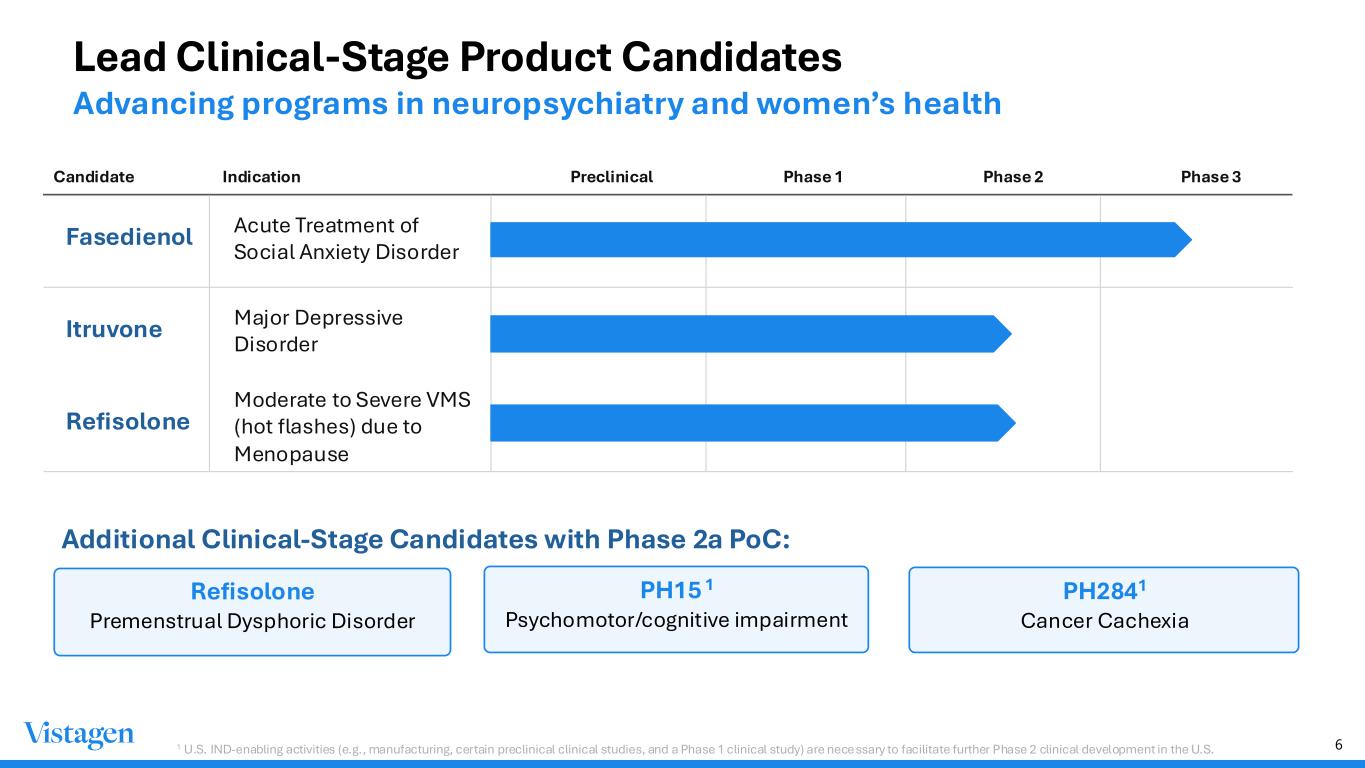
6 Lead Clinical-Stage Product Candidates Advancing programs in neuropsychiatry and women’s health Candidate Indication Preclinical Phase 1 Phase 2 Phase 3 Fasedienol Acute Treatment of Social Anxiety Disorder Itruvone Major Depressive Disorder Refisolone Moderate to Severe VMS (hot flashes) due to Menopause Additional Clinical-Stage Candidates with Phase 2a PoC: Refisolone Premenstrual Dysphoric Disorder PH15 1 Psychomotor/cognitive impairment PH2841 Cancer Cachexia 1 U.S. IND-enabling activities (e.g., manufacturing, certain preclinical clinical studies, and a Phase 1 clinical study) are necessary to facilitate further Phase 2 clinical development in the U.S.
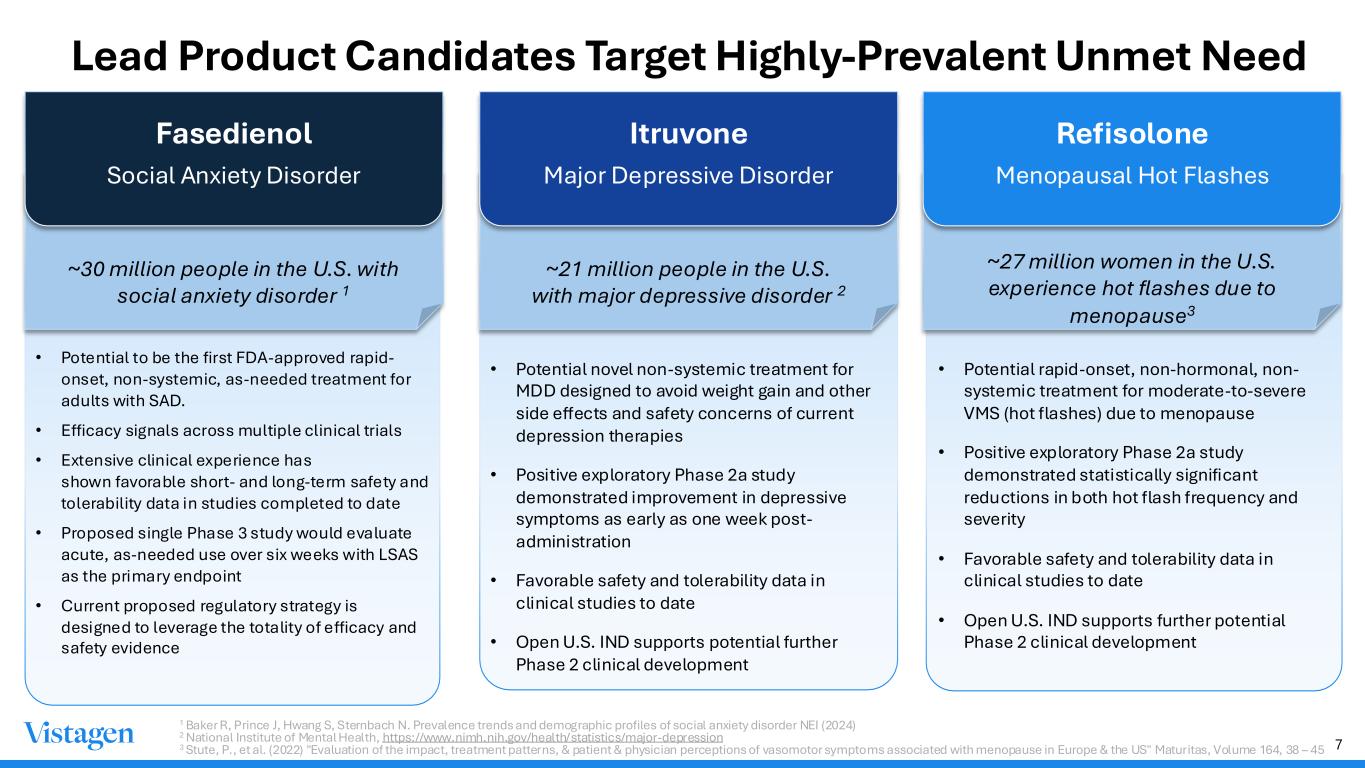
7 Lead Product Candidates Target Highly-Prevalent Unmet Need Fasedienol Social Anxiety Disorder ~30 million people in the U.S. with social anxiety disorder 1 • Potential to be the first FDA-approved rapid- onset, non-systemic, as-needed treatment for adults with SAD. • Efficacy signals across multiple clinical trials • Extensive clinical experience has shown favorable short- and long-term safety and tolerability data in studies completed to date • Proposed single Phase 3 study would evaluate acute, as-needed use over six weeks with LSAS as the primary endpoint • Current proposed regulatory strategy is designed to leverage the totality of efficacy and safety evidence Itruvone Major Depressive Disorder ~21 million people in the U.S. with major depressive disorder 2 • Potential novel non-systemic treatment for MDD designed to avoid weight gain and other side effects and safety concerns of current depression therapies • Positive exploratory Phase 2a study demonstrated improvement in depressive symptoms as early as one week post- administration • Favorable safety and tolerability data in clinical studies to date • Open U.S. IND supports potential further Phase 2 clinical development Refisolone Menopausal Hot Flashes ~27 million women in the U.S. experience hot flashes due to menopause3 • Potential rapid-onset, non-hormonal, non- systemic treatment for moderate-to-severe VMS (hot flashes) due to menopause • Positive exploratory Phase 2a study demonstrated statistically significant reductions in both hot flash frequency and severity • Favorable safety and tolerability data in clinical studies to date • Open U.S. IND supports further potential Phase 2 clinical development 1 Baker R, Prince J, Hwang S, Sternbach N. Prevalence trends and demographic profiles of social anxiety disorder NEI (2024) 2 National Institute of Mental Health, https://www.nimh.nih.gov/health/statistics/major-depression 3 Stute, P., et al. (2022) "Evaluation of the impact, treatment patterns, & patient & physician perceptions of vasomotor symptoms associated with menopause in Europe & the US" Maturitas, Volume 164, 38 – 45
8 Acute Treatment of Social Anxiety Disorder Fasedienol
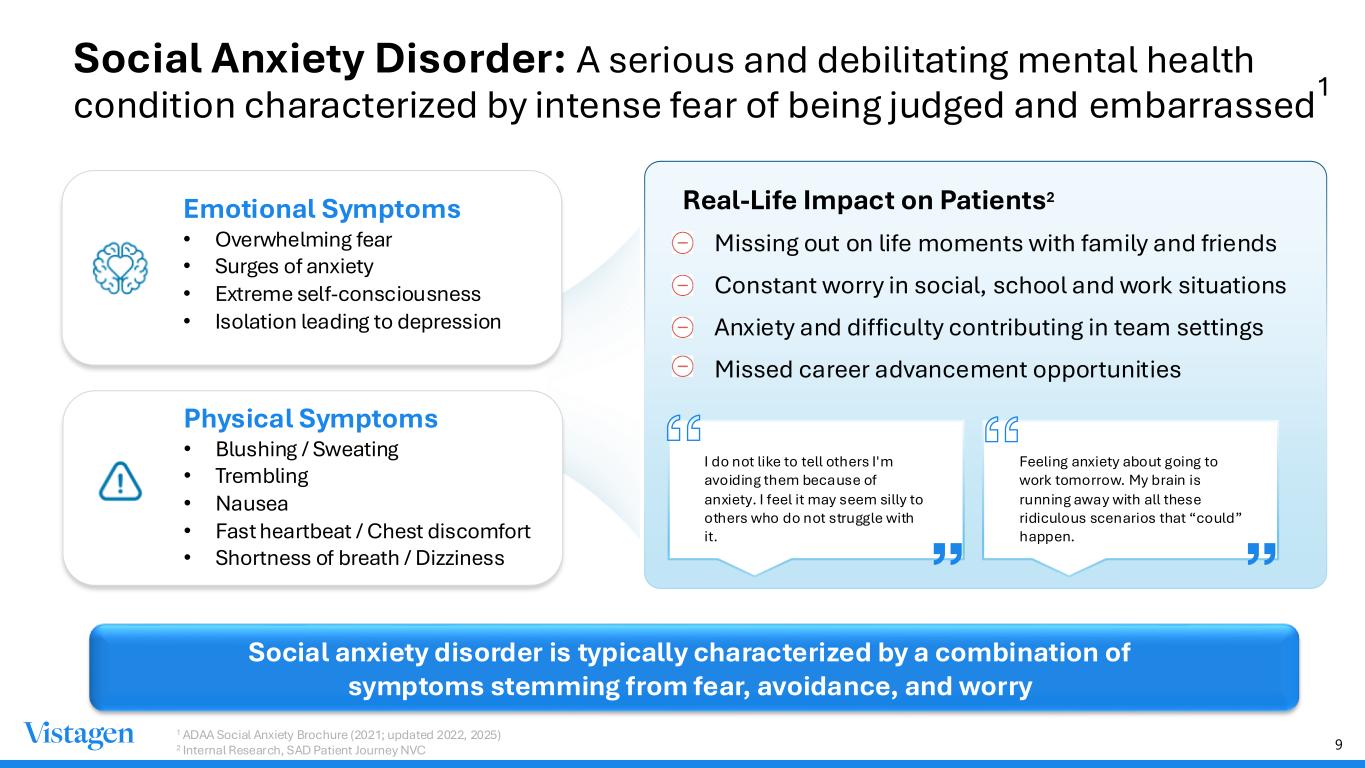
9 Social Anxiety Disorder: A serious and debilitating mental health condition characterized by intense fear of being judged and embarrassed Social anxiety disorder is typically characterized by a combination of symptoms stemming from fear, avoidance, and worry Emotional Symptoms • Overwhelming fear • Surges of anxiety • Extreme self-consciousness • Isolation leading to depression Physical Symptoms • Blushing / Sweating • Trembling • Nausea • Fast heartbeat / Chest discomfort • Shortness of breath / Dizziness Real-Life Impact on Patients2 • Missing out on life moments with family and friends • Constant worry in social, school and work situations • Anxiety and difficulty contributing in team settings • Missed career advancement opportunities I do not like to tell others I'm avoiding them because of anxiety. I feel it may seem silly to others who do not struggle with it. Feeling anxiety about going to work tomorrow. My brain is running away with all these ridiculous scenarios that “could” happen. 1 ADAA Social Anxiety Brochure (2021; updated 2022, 2025) 2 Internal Research, SAD Patient Journey NVC 1
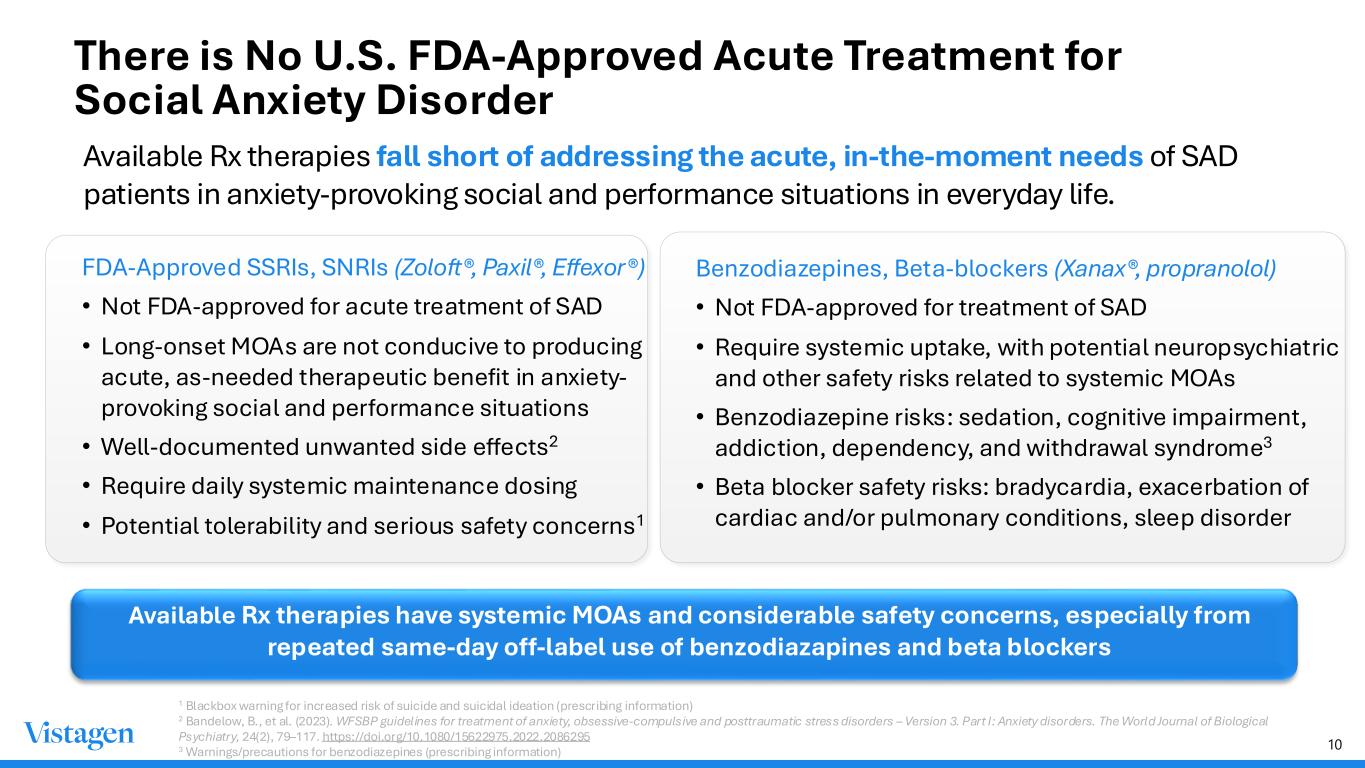
10 There is No U.S. FDA-Approved Acute Treatment for Social Anxiety Disorder Available Rx therapies fall short of addressing the acute, in-the-moment needs of SAD patients in anxiety-provoking social and performance situations in everyday life. 1 Blackbox warning for increased risk of suicide and suicidal ideation (prescribing information) 2 Bandelow, B., et al. (2023). WFSBP guidelines for treatment of anxiety, obsessive-compulsive and posttraumatic stress disorders – Version 3. Part I: Anxiety disorders. The World Journal of Biological Psychiatry, 24(2), 79–117. https://doi.org/10.1080/15622975.2022.2086295 3 Warnings/precautions for benzodiazepines (prescribing information) FDA-Approved SSRIs, SNRIs (Zoloft®, Paxil®, Effexor®) • Not FDA-approved for acute treatment of SAD • Long-onset MOAs are not conducive to producing acute, as-needed therapeutic benefit in anxiety- provoking social and performance situations • Well-documented unwanted side effects2 • Require daily systemic maintenance dosing • Potential tolerability and serious safety concerns1 Benzodiazepines, Beta-blockers (Xanax®, propranolol) • Not FDA-approved for treatment of SAD • Require systemic uptake, with potential neuropsychiatric and other safety risks related to systemic MOAs • Benzodiazepine risks: sedation, cognitive impairment, addiction, dependency, and withdrawal syndrome3 • Beta blocker safety risks: bradycardia, exacerbation of cardiac and/or pulmonary conditions, sleep disorder Available Rx therapies have systemic MOAs and considerable safety concerns, especially from repeated same-day off-label use of benzodiazapines and beta blockers
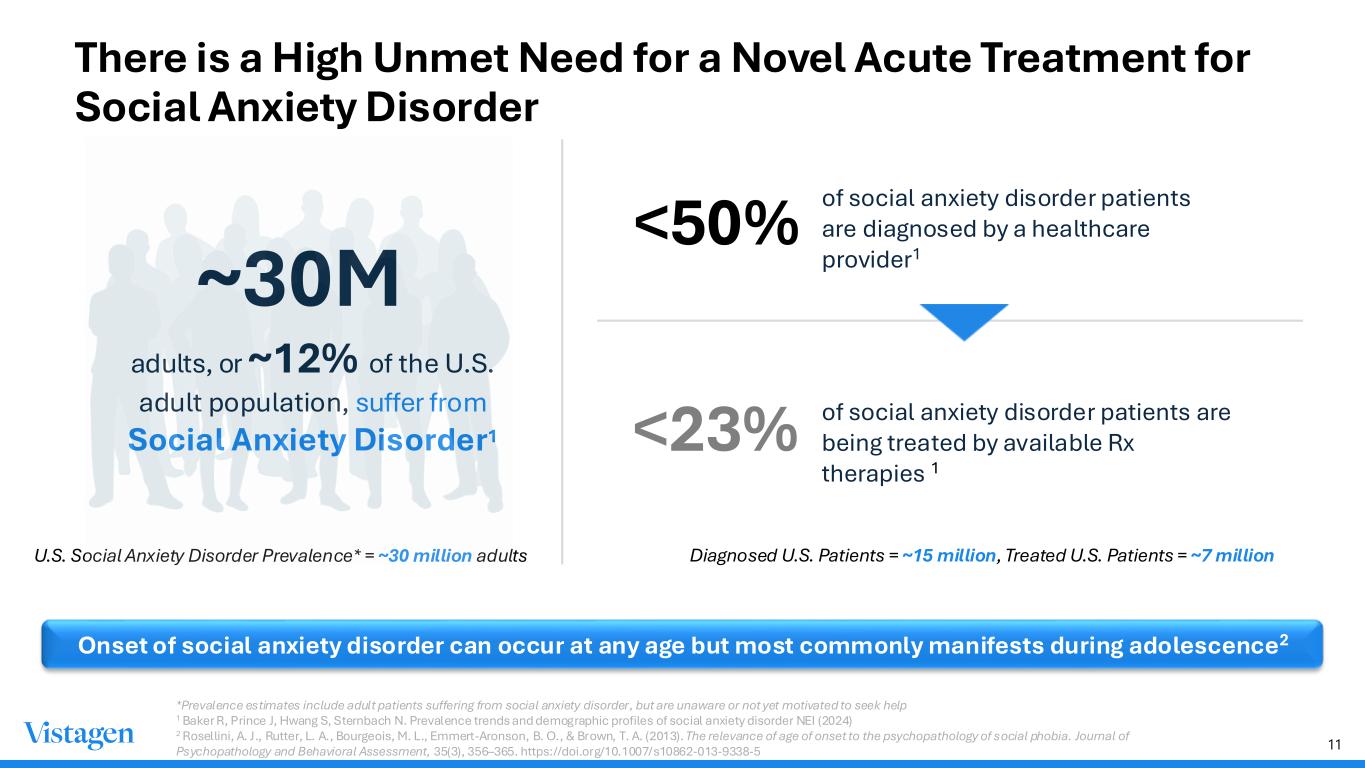
11 Onset of social anxiety disorder can occur at any age but most commonly manifests during adolescence2 ~30M adults, or ~12% of the U.S. adult population, suffer from Social Anxiety Disorder1 U.S. Social Anxiety Disorder Prevalence* = ~30 million adults <50% of social anxiety disorder patients are diagnosed by a healthcare provider1 <23% of social anxiety disorder patients are being treated by available Rx therapies 1 Diagnosed U.S. Patients = ~15 million, Treated U.S. Patients = ~7 million There is a High Unmet Need for a Novel Acute Treatment for Social Anxiety Disorder *Prevalence estimates include adult patients suffering from social anxiety disorder, but are unaware or not yet motivated to seek help 1 Baker R, Prince J, Hwang S, Sternbach N. Prevalence trends and demographic profiles of social anxiety disorder NEI (2024) 2 Rosellini, A. J., Rutter, L. A., Bourgeois, M. L., Emmert-Aronson, B. O., & Brown, T. A. (2013). The relevance of age of onset to the psychopathology of social phobia. Journal of Psychopathology and Behavioral Assessment, 35(3), 356–365. https://doi.org/10.1007/s10862-013-9338-5
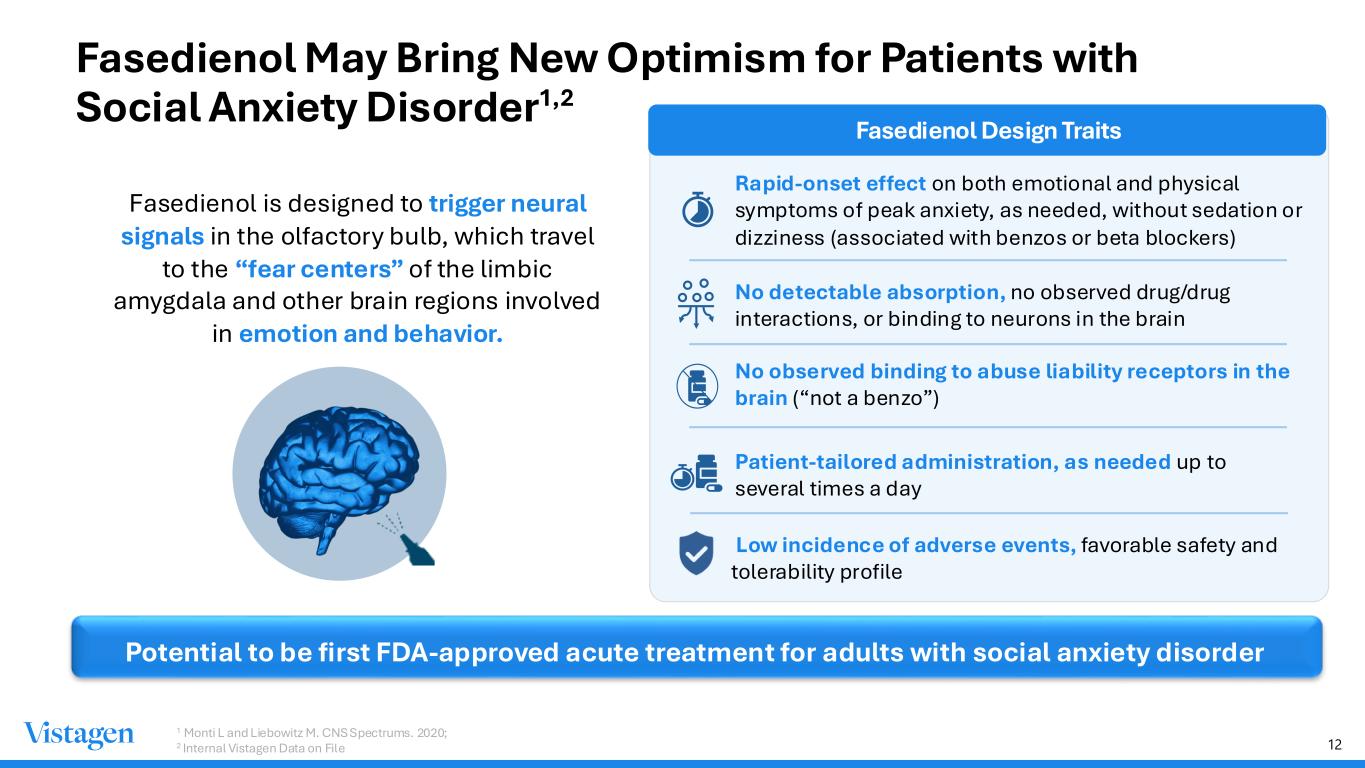
12 Fasedienol May Bring New Optimism for Patients with Social Anxiety Disorder Fasedienol is designed to trigger neural signals in the olfactory bulb, which travel to the “fear centers” of the limbic amygdala and other brain regions involved in emotion and behavior. Fasedienol Design Traits Rapid-onset effect on both emotional and physical symptoms of peak anxiety, as needed, without sedation or dizziness (associated with benzos or beta blockers) No detectable absorption, no observed drug/drug interactions, or binding to neurons in the brain No observed binding to abuse liability receptors in the brain (“not a benzo”) Patient-tailored administration, as needed up to several times a day 1 Monti L and Liebowitz M. CNS Spectrums. 2020; 2 Internal Vistagen Data on File Potential to be first FDA-approved acute treatment for adults with social anxiety disorder Low incidence of adverse events, favorable safety and tolerability profile 1,2
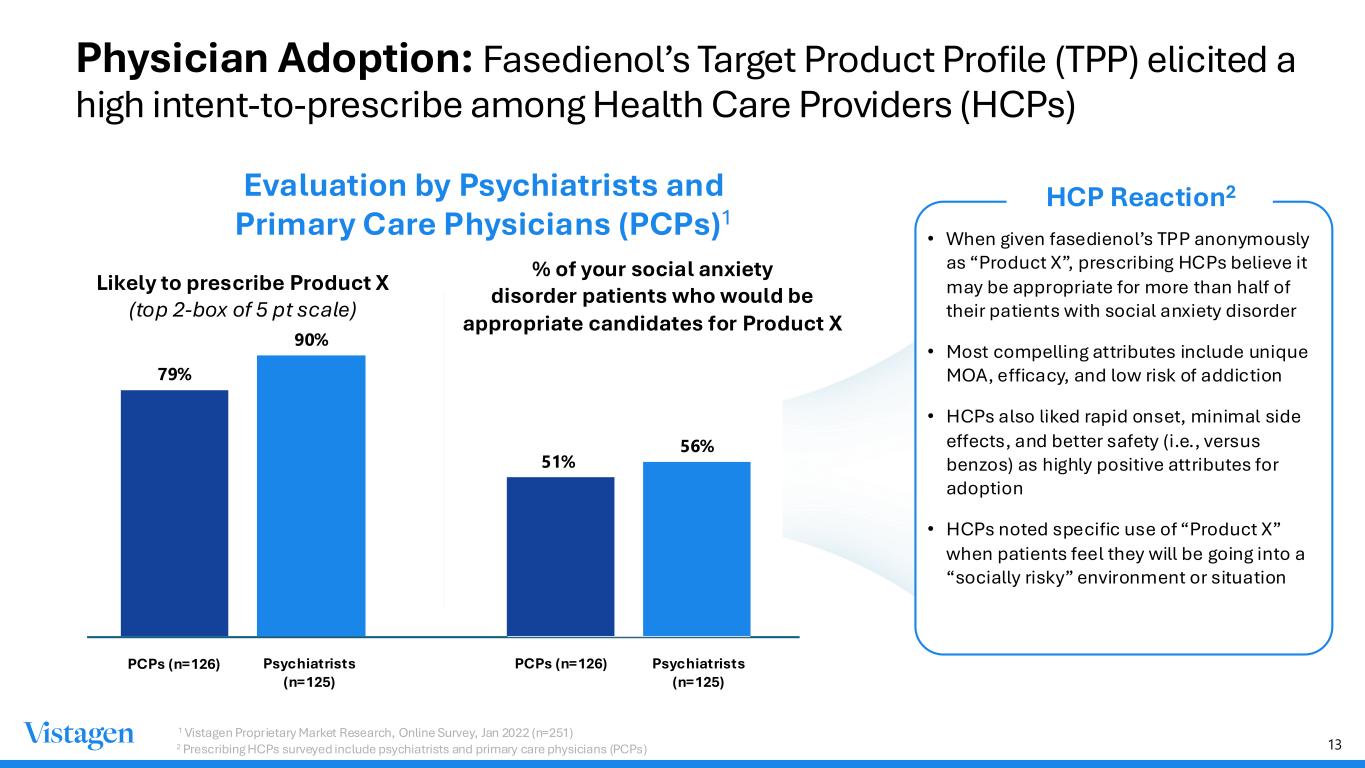
13 Physician Adoption: Fasedienol’s Target Product Profile (TPP) elicited a high intent-to-prescribe among Health Care Providers (HCPs) Evaluation by Psychiatrists and Primary Care Physicians (PCPs)1 Likely to prescribe Product X (top 2-box of 5 pt scale) % of your social anxiety disorder patients who would be appropriate candidates for Product X 79% 90% • When given fasedienol’s TPP anonymously as “Product X”, prescribing HCPs believe it may be appropriate for more than half of their patients with social anxiety disorder • Most compelling attributes include unique MOA, efficacy, and low risk of addiction • HCPs also liked rapid onset, minimal side effects, and better safety (i.e., versus benzos) as highly positive attributes for adoption • HCPs noted specific use of “Product X” when patients feel they will be going into a “socially risky” environment or situation HCP Reaction2 Psychiatrists (n=125) Psychiatrists (n=125) PCPs (n=126) PCPs (n=126) 1 Vistagen Proprietary Market Research, Online Survey, Jan 2022 (n=251) 2 Prescribing HCPs surveyed include psychiatrists and primary care physicians (PCPs) 51% 56%
14 Clinical Development Program Fasedienol
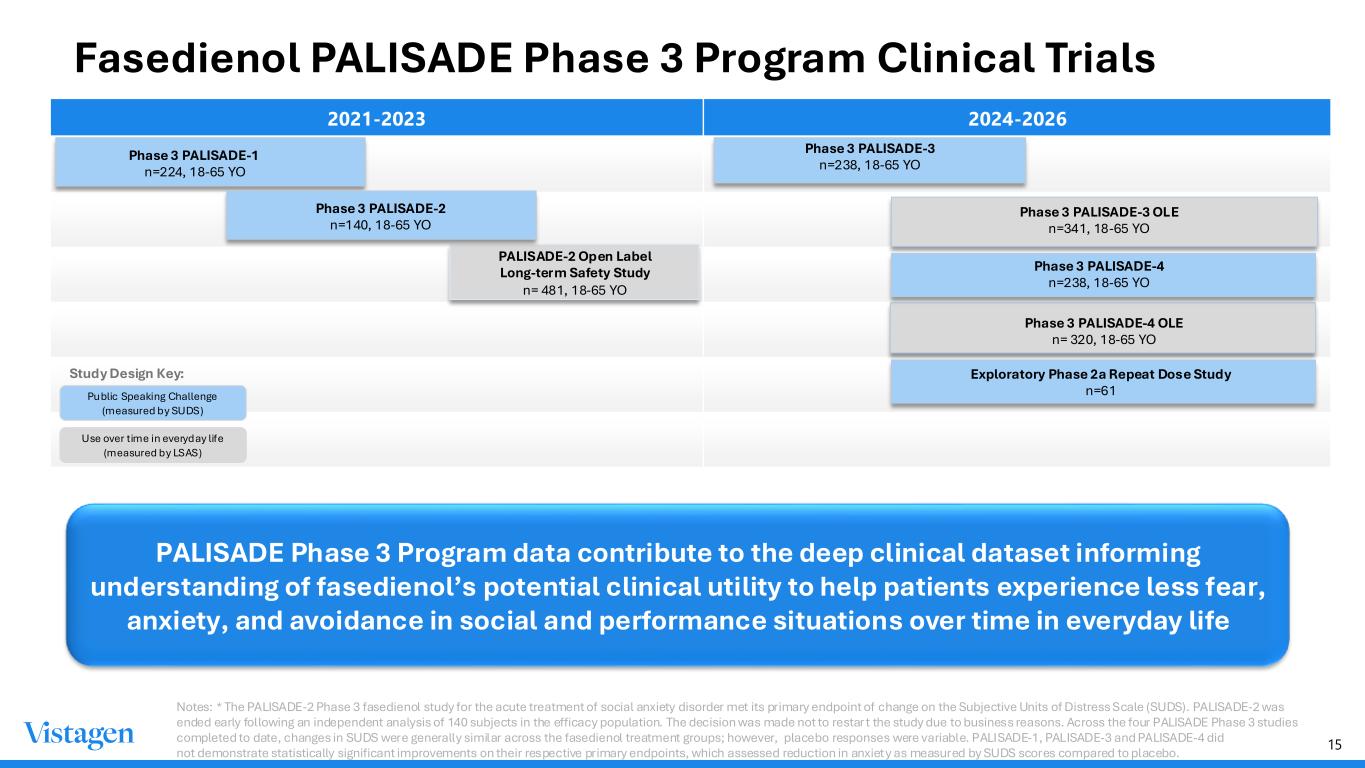
15 Fasedienol PALISADE Phase 3 Program Clinical Trials 2021-2023 2024-2026 Phase 3 PALISADE-1 n=224, 18-65 YO PALISADE-2 Open Label Long-term Safety Study n= 481, 18-65 YO Phase 3 PALISADE-3 n=238, 18-65 YO Public Speaking Challenge (measured by SUDS) Phase 3 PALISADE-4 OLE n= 320, 18-65 YO Phase 3 PALISADE-3 OLE n=341, 18-65 YO Use over time in everyday life (measured by LSAS) PALISADE Phase 3 Program data contribute to the deep clinical dataset informing understanding of fasedienol’s potential clinical utility to help patients experience less fear, anxiety, and avoidance in social and performance situations over time in everyday life Study Design Key: Notes: * The PALISADE-2 Phase 3 fasedienol study for the acute treatment of social anxiety disorder met its primary endpoint of change on the Subjective Units of Distress Scale (SUDS). PALISADE-2 was ended early following an independent analysis of 140 subjects in the efficacy population. The decision was made not to restar t the study due to business reasons. Across the four PALISADE Phase 3 studies completed to date, changes in SUDS were generally similar across the fasedienol treatment groups; however, placebo responses were variable. PALISADE-1, PALISADE-3 and PALISADE-4 did not demonstrate statistically significant improvements on their respective primary endpoints, which assessed reduction in anxiety as measured by SUDS scores compared to placebo. Phase 3 PALISADE-4 n=238, 18-65 YO Exploratory Phase 2a Repeat Dose Study n=61 Phase 3 PALISADE-2 n=140, 18-65 YO
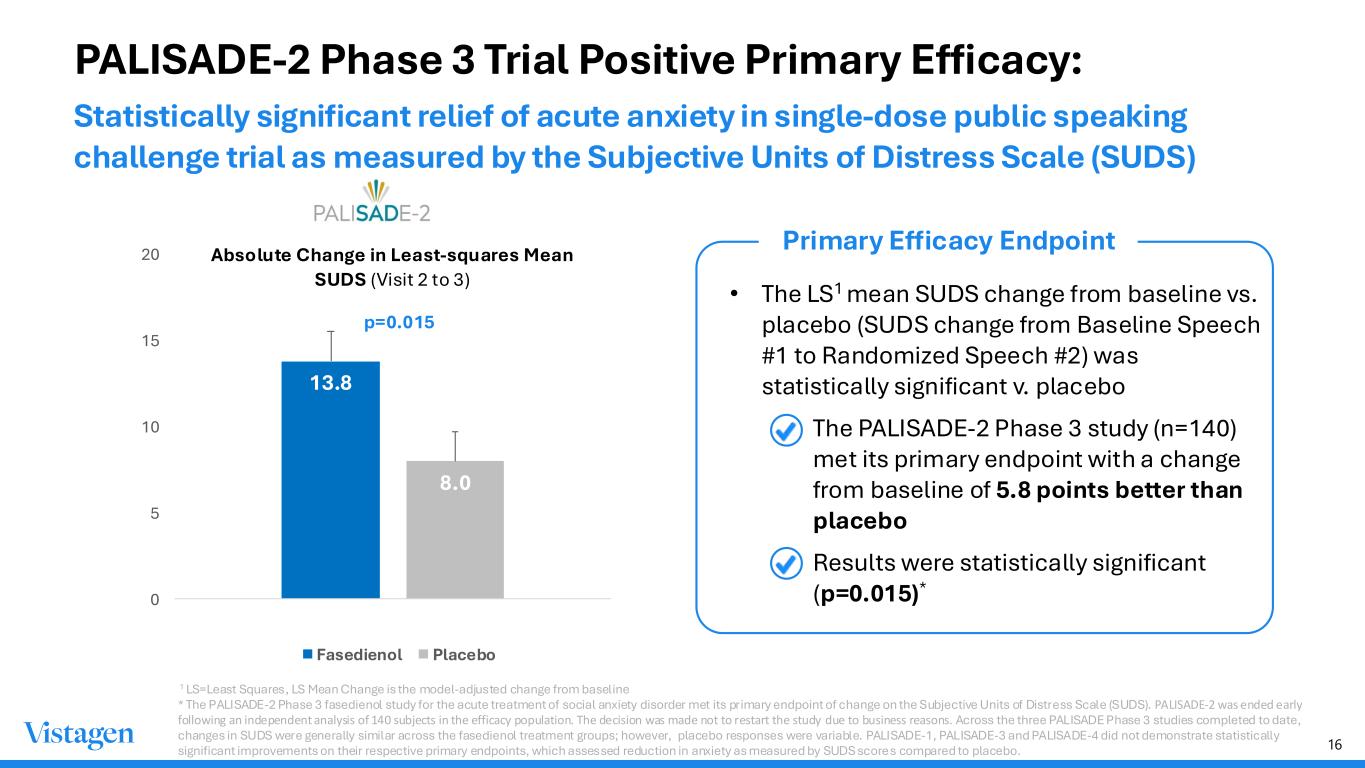
16 PALISADE-2 Phase 3 Trial Positive Primary Efficacy: 13.8 8.0 0 5 10 15 20 (p=0.015) Absolute Change in Least-squares Mean SUDS (Visit 2 to 3) Fasedienol Placebo • The LS1 mean SUDS change from baseline vs. placebo (SUDS change from Baseline Speech #1 to Randomized Speech #2) was statistically significant v. placebo • The PALISADE-2 Phase 3 study (n=140) met its primary endpoint with a change from baseline of 5.8 points better than placebo • Results were statistically significant (p=0.015)* Primary Efficacy Endpoint p=0.015 1 LS=Least Squares, LS Mean Change is the model-adjusted change from baseline * The PALISADE-2 Phase 3 fasedienol study for the acute treatment of social anxiety disorder met its primary endpoint of change on the Subjective Units of Distress Scale (SUDS). PALISADE-2 was ended early following an independent analysis of 140 subjects in the efficacy population. The decision was made not to restart the study due to business reasons. Across the three PALISADE Phase 3 studies completed to date, changes in SUDS were generally similar across the fasedienol treatment groups; however, placebo responses were variable. PALISADE-1, PALISADE-3 and PALISADE-4 did not demonstrate statistically significant improvements on their respective primary endpoints, which assessed reduction in anxiety as measured by SUDS scores compared to placebo. Statistically significant relief of acute anxiety in single-dose public speaking challenge trial as measured by the Subjective Units of Distress Scale (SUDS)
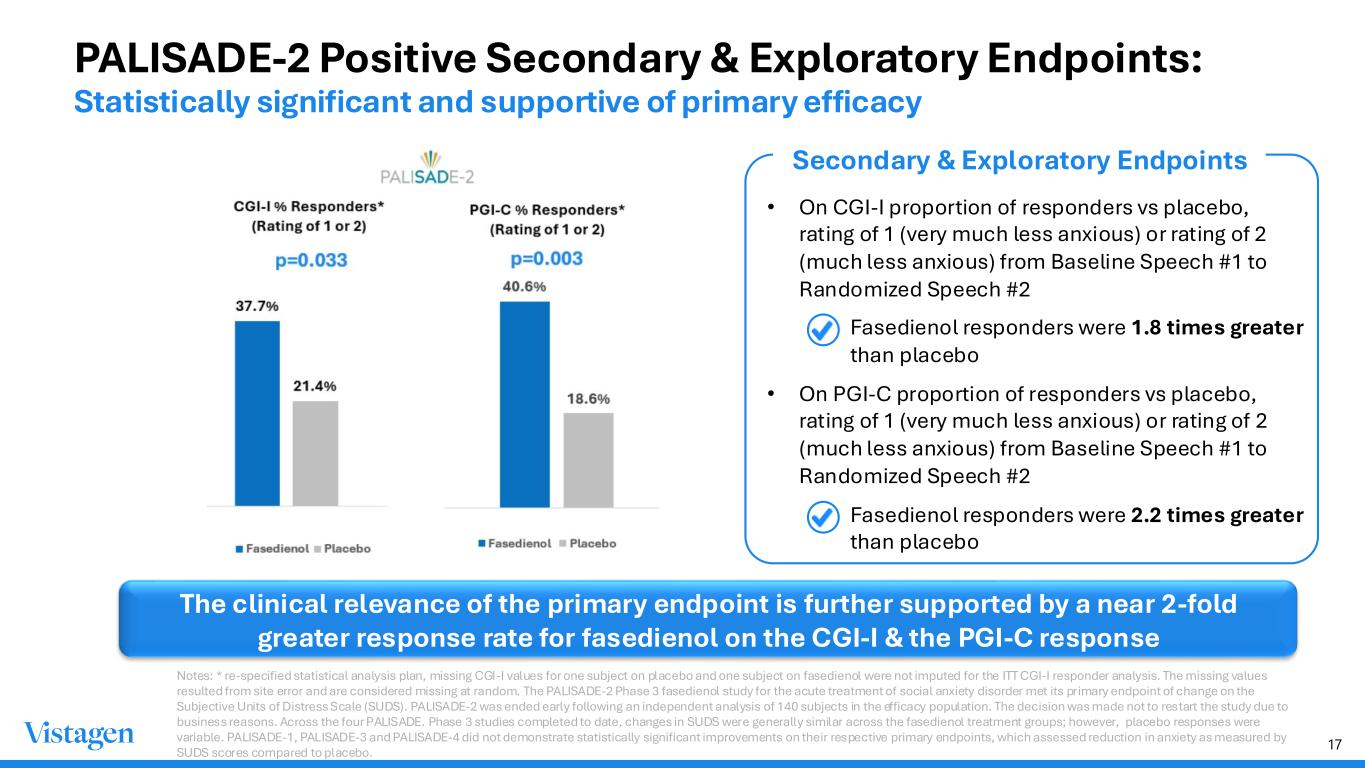
17 PALISADE-2 Positive Secondary & Exploratory Endpoints: Statistically significant and supportive of primary efficacy • On CGI-I proportion of responders vs placebo, rating of 1 (very much less anxious) or rating of 2 (much less anxious) from Baseline Speech #1 to Randomized Speech #2 • Fasedienol responders were 1.8 times greater than placebo • On PGI-C proportion of responders vs placebo, rating of 1 (very much less anxious) or rating of 2 (much less anxious) from Baseline Speech #1 to Randomized Speech #2 • Fasedienol responders were 2.2 times greater than placebo The clinical relevance of the primary endpoint is further supported by a near 2-fold greater response rate for fasedienol on the CGI-I & the PGI-C response Secondary & Exploratory Endpoints Notes: * re-specified statistical analysis plan, missing CGI-I values for one subject on placebo and one subject on fasedienol were not imputed for the ITT CGI-I responder analysis. The missing values resulted from site error and are considered missing at random. The PALISADE-2 Phase 3 fasedienol study for the acute treatment of social anxiety disorder met its primary endpoint of change on the Subjective Units of Distress Scale (SUDS). PALISADE-2 was ended early following an independent analysis of 140 subjects in the efficacy population. The decision was made not to restart the study due to business reasons. Across the four PALISADE. Phase 3 studies completed to date, changes in SUDS were generally similar across the fasedienol treatment groups; however, placebo responses were variable. PALISADE-1, PALISADE-3 and PALISADE-4 did not demonstrate statistically significant improvements on their respective primary endpoints, which assessed reduction in anxiety as measured by SUDS scores compared to placebo.
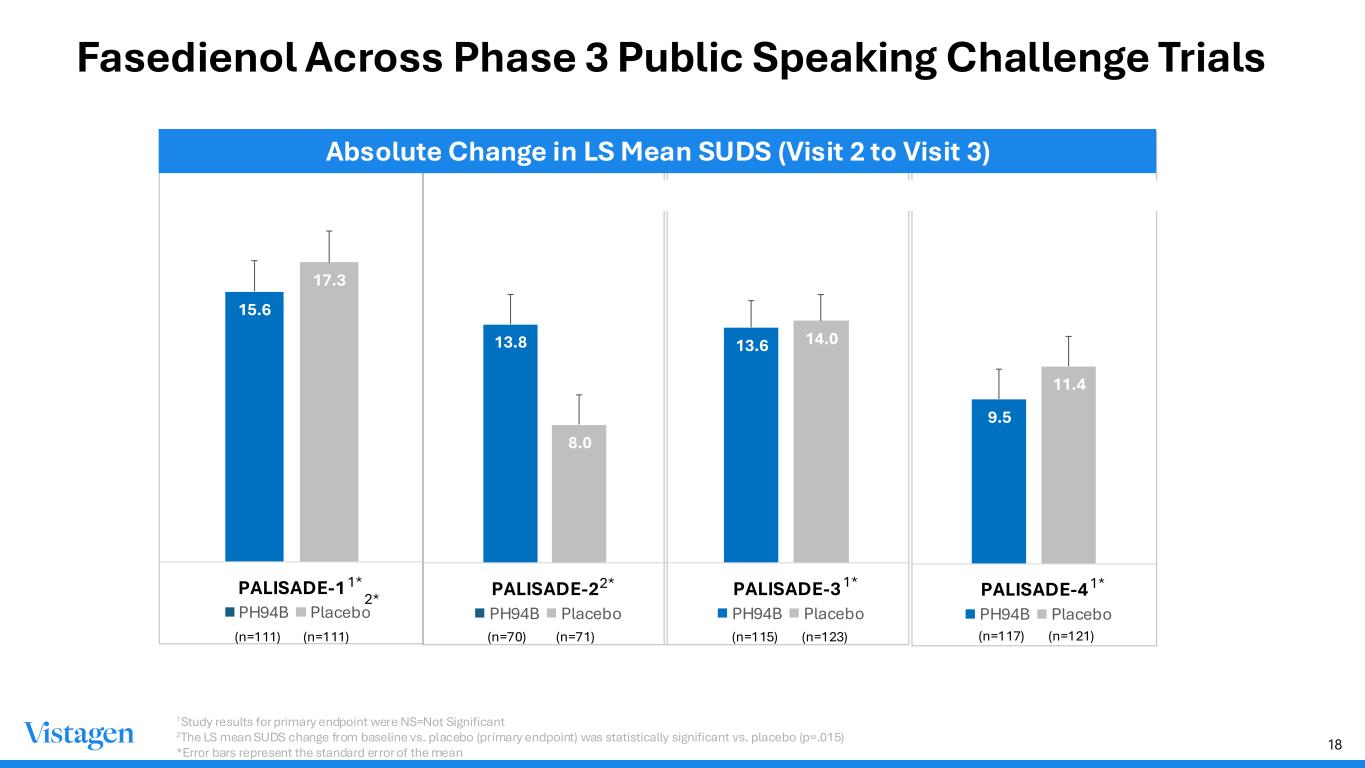
18 Fasedienol Across Phase 3 Public Speaking Challenge Trials 13.6 14.0 PALISADE-3 PH94B Placebo 13.8 8.0 PALISADE-2 PH94B Placebo 15.6 17.3 PALISADE-1 PH94B Placebo (n=111) (n=111) (n=70) (n=71) (n=115) (n=123) 1*1* 2* 1Study results for primary endpoint were NS=Not Significant 2The LS mean SUDS change from baseline vs. placebo (primary endpoint) was statistically significant vs. placebo (p=.015) *Error bars represent the standard error of the mean 9.5 11.4 PALISADE-4 PH94B Placebo (n=117) (n=121) Absolute Change in LS Mean SUDS (Visit 2 to Visit 3) 1* 2*
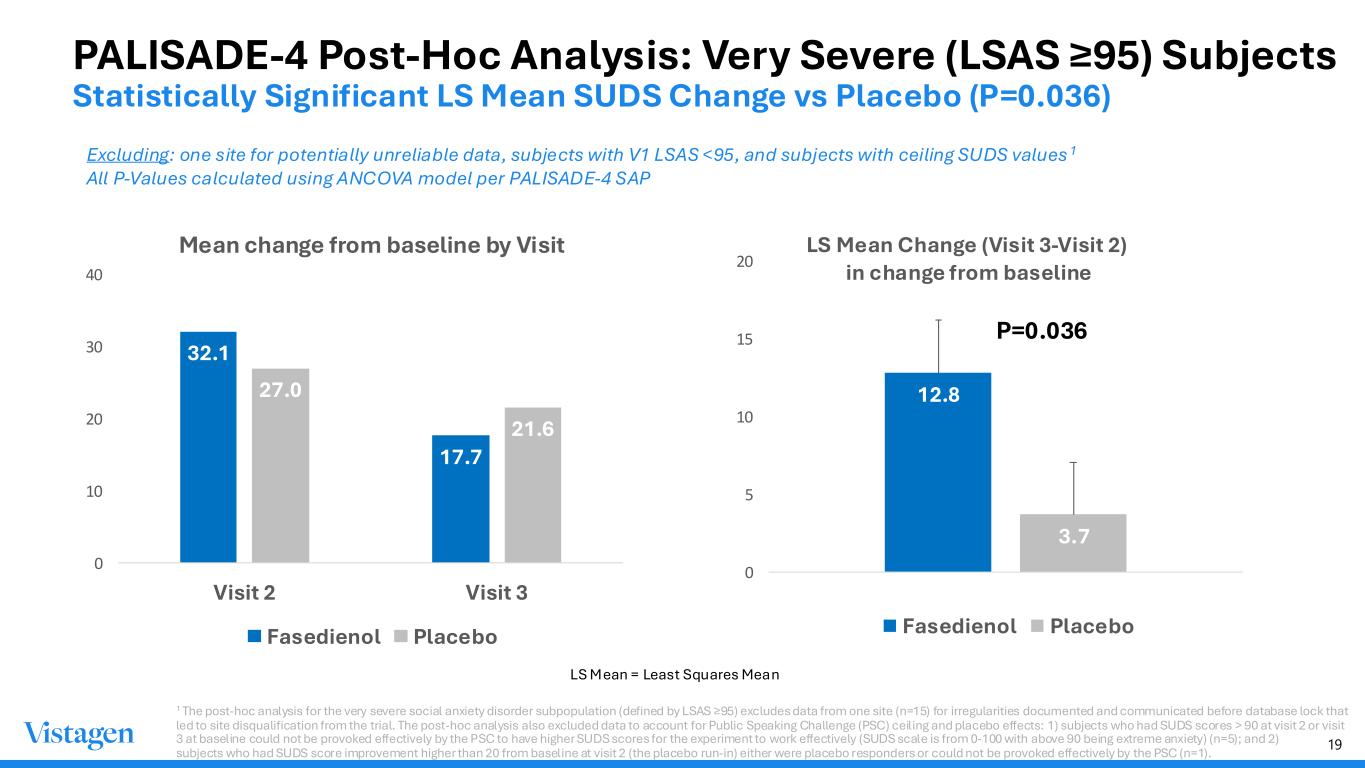
19 PALISADE-4 Post-Hoc Analysis: Very Severe (LSAS ≥95) Subjects Statistically Significant LS Mean SUDS Change vs Placebo (P=0.036) 32.1 17.7 27.0 21.6 0 10 20 30 40 Visit 2 Visit 3 Mean change from baseline by Visit Fasedienol Placebo 12.8 3.7 0 5 10 15 20 P=0.036 LS Mean Change (Visit 3-Visit 2) in change from baseline Fasedienol Placebo LS Mean = Least Squares Mean N=61 N=62 1 The post-hoc analysis for the very severe social anxiety disorder subpopulation (defined by LSAS ≥95) excludes data from one site (n=15) for irregularities documented and communicated before database lock that led to site disqualification from the trial. The post-hoc analysis also excluded data to account for Public Speaking Challenge (PSC) ceiling and placebo effects: 1) subjects who had SUDS scores > 90 at visit 2 or visit 3 at baseline could not be provoked effectively by the PSC to have higher SUDS scores for the experiment to work effectively (SUDS scale is from 0-100 with above 90 being extreme anxiety) (n=5); and 2) subjects who had SUDS score improvement higher than 20 from baseline at visit 2 (the placebo run-in) either were placebo responders or could not be provoked effectively by the PSC (n=1). Excluding: one site for potentially unreliable data, subjects with V1 LSAS <95, and subjects with ceiling SUDS values 1 All P-Values calculated using ANCOVA model per PALISADE-4 SAP P=0.036
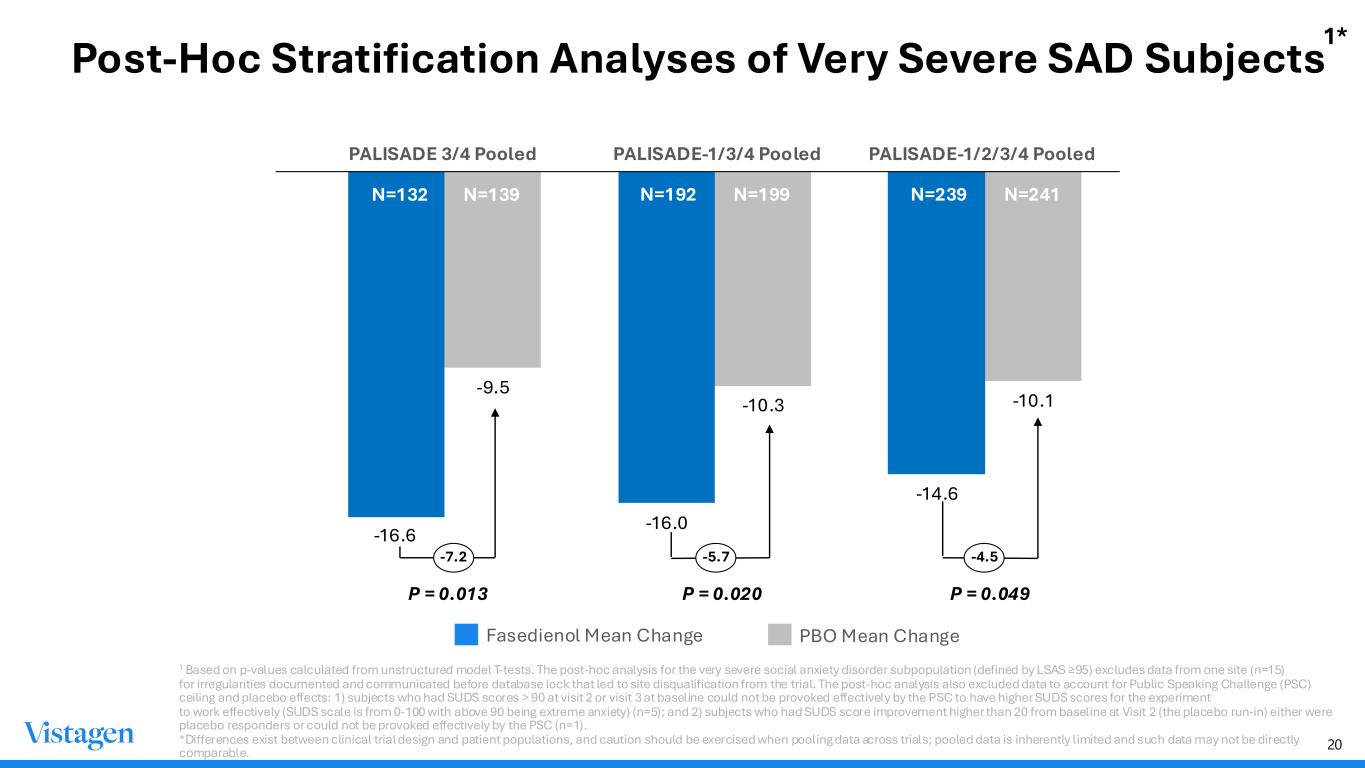
20 Post-Hoc Stratification Analyses of Very Severe SAD Subjects N=7 0 N=7 1-16.6 -16.0 -14.6 -9.5 -10.3 -10.1 PALISADE-1/3/4 PooledPALISADE 3/4 Pooled Fasedienol Mean Change PBO Mean Change -4.5 PALISADE-1/2/3/4 Pooled N=7 0 -5.7N=7 0 N=132 N=139 N=192 N=199 N=239 N=241 P = 0.020 P = 0.049 -7.2 P = 0.013 1 Based on p-values calculated from unstructured model T-tests. The post-hoc analysis for the very severe social anxiety disorder subpopulation (defined by LSAS ≥95) excludes data from one site (n=15) for irregularities documented and communicated before database lock that led to site disqualification from the trial. The post-hoc analysis also excluded data to account for Public Speaking Challenge (PSC) ceiling and placebo effects: 1) subjects who had SUDS scores > 90 at visit 2 or visit 3 at baseline could not be provoked effectively by the PSC to have higher SUDS scores for the experiment to work effectively (SUDS scale is from 0-100 with above 90 being extreme anxiety) (n=5); and 2) subjects who had SUDS score improvement higher than 20 from baseline at Visit 2 (the placebo run-in) either were placebo responders or could not be provoked effectively by the PSC (n=1). *Differences exist between clinical trial design and patient populations, and caution should be exercised when pooling data across trials; pooled data is inherently limited and such data may not be directly comparable. 1*
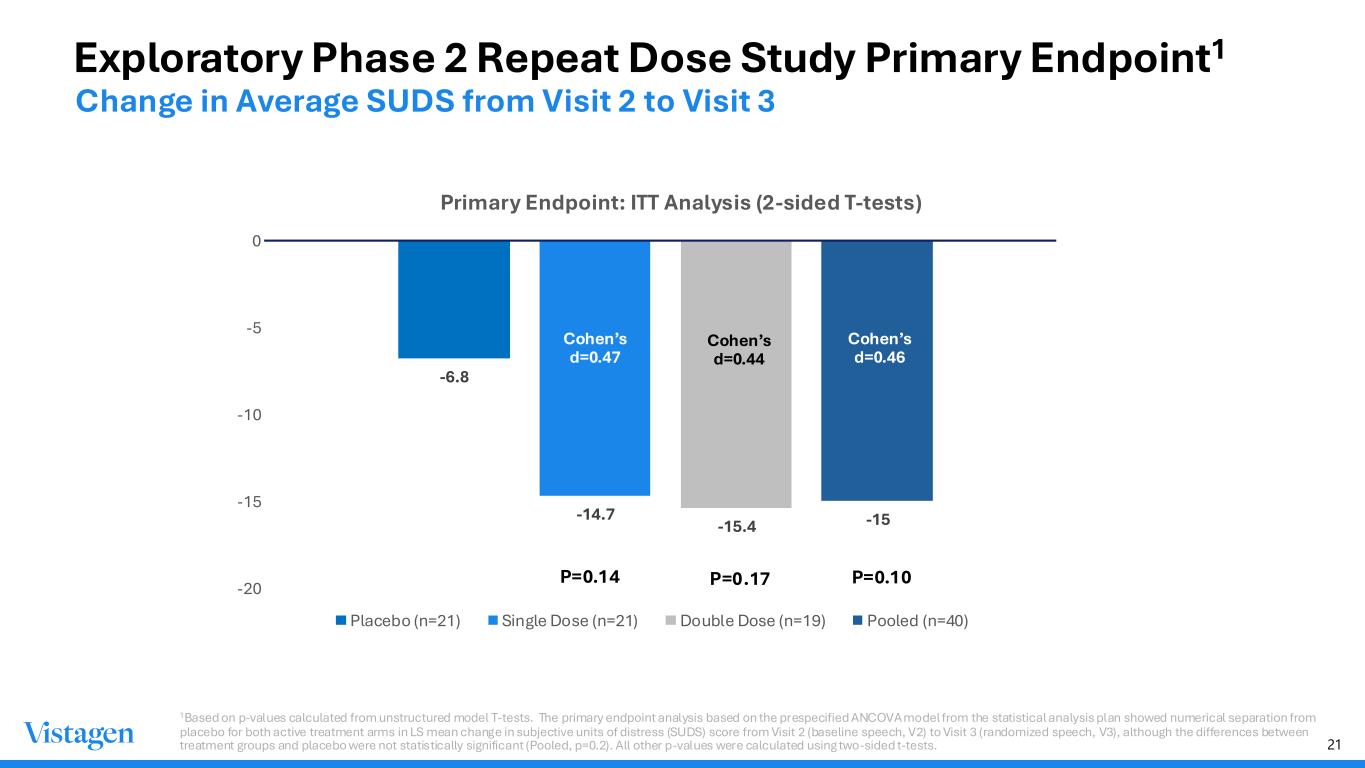
21 Exploratory Phase 2 Repeat Dose Study Primary Endpoint1 -6.8 -14.7 -15.4 -15 -20 -15 -10 -5 0 Primary Endpoint: ITT Analysis (2-sided T-tests) Placebo (n=21) Single Dose (n=21) Double Dose (n=19) Pooled (n=40) P=0.10P=0.14 Cohen’s d=0.47 Cohen’s d=0.46 Cohen’s d=0.44 P=0.17 Change in Average SUDS from Visit 2 to Visit 3 1Based on p-values calculated from unstructured model T-tests. The primary endpoint analysis based on the prespecified ANCOVA model from the statistical analysis plan showed numerical separation from placebo for both active treatment arms in LS mean change in subjective units of distress (SUDS) score from Visit 2 (baseline speech, V2) to Visit 3 (randomized speech, V3), although the differences between treatment groups and placebo were not statistically significant (Pooled, p=0.2). All other p-values were calculated using two-sided t-tests.
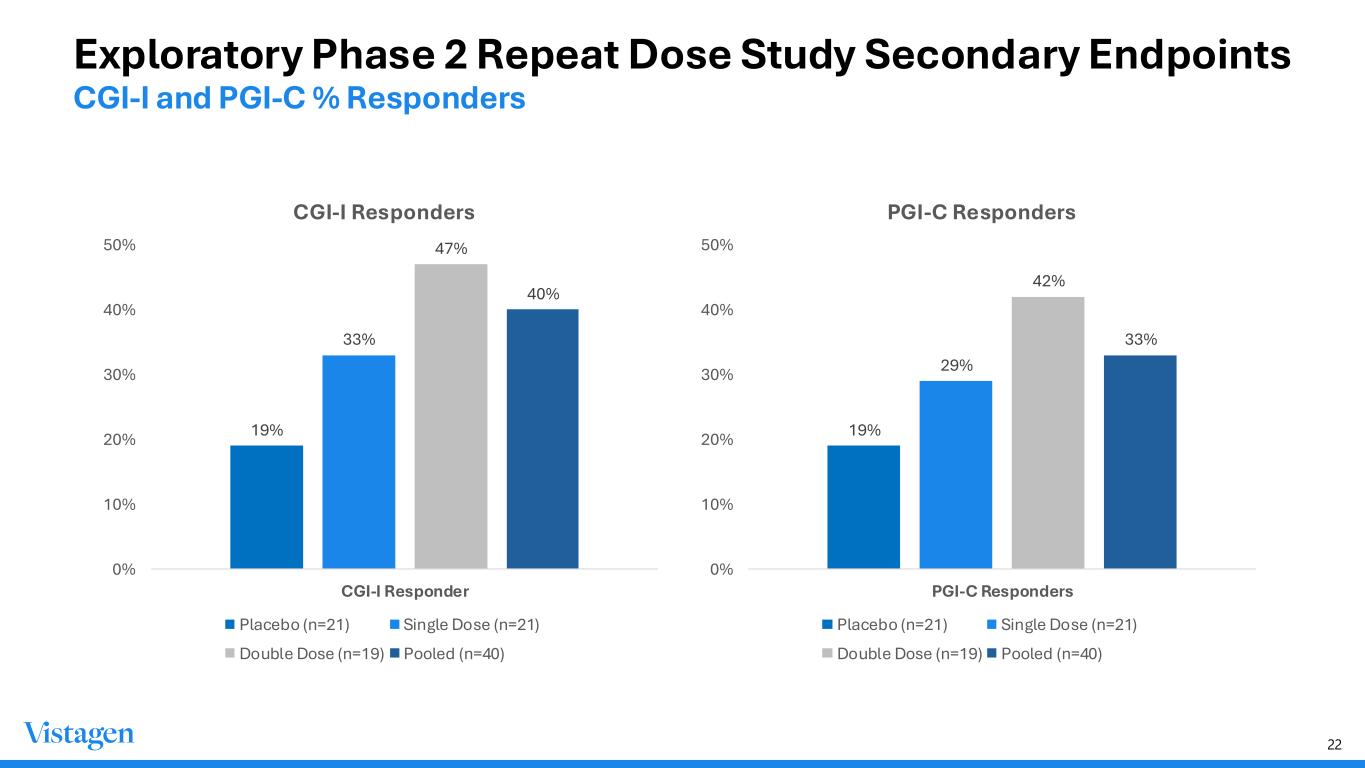
22 Exploratory Phase 2 Repeat Dose Study Secondary Endpoints CGI-I and PGI-C % Responders 19% 33% 47% 40% 0% 10% 20% 30% 40% 50% CGI-I Responder CGI-I Responders Placebo (n=21) Single Dose (n=21) Double Dose (n=19) Pooled (n=40) 19% 29% 42% 33% 0% 10% 20% 30% 40% 50% PGI-C Responders PGI-C Responders Placebo (n=21) Single Dose (n=21) Double Dose (n=19) Pooled (n=40)
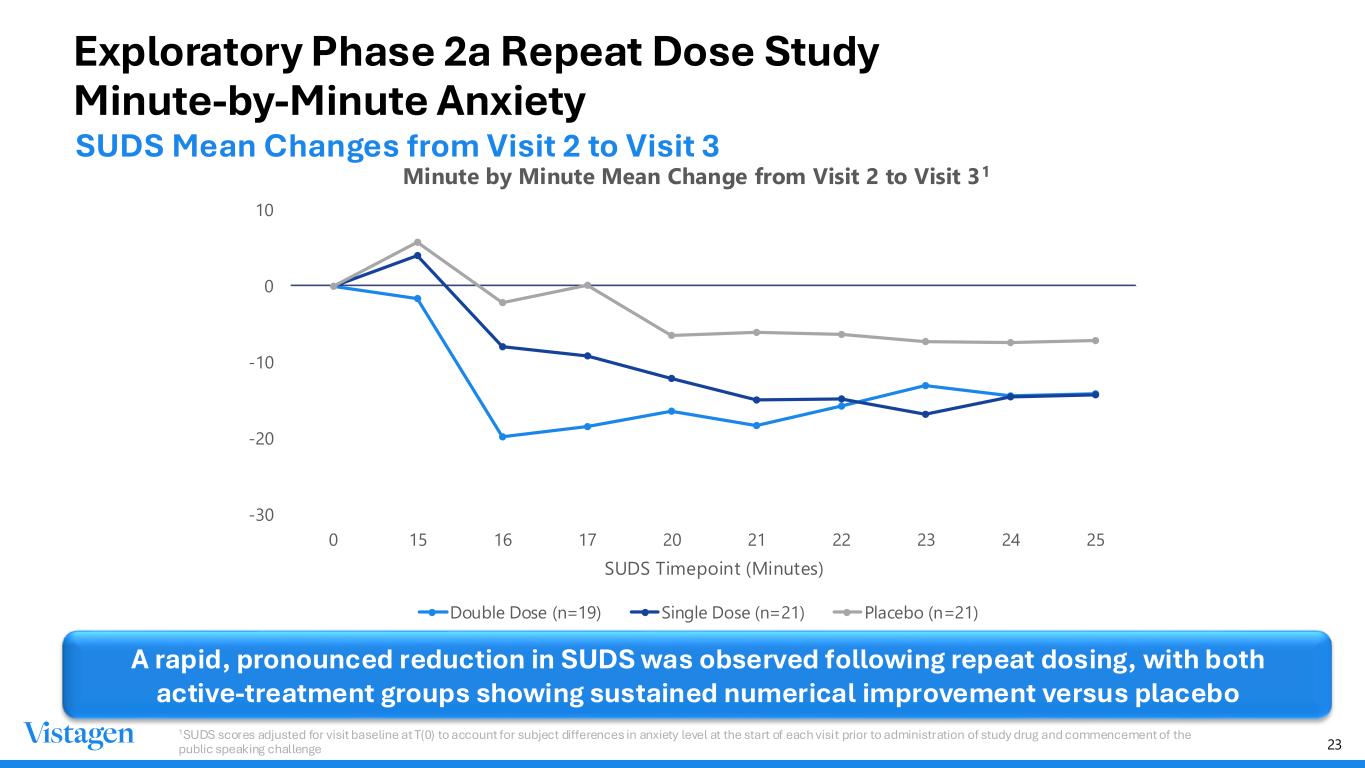
23 Exploratory Phase 2a Repeat Dose Study Minute-by-Minute Anxiety -30 -20 -10 0 10 0 15 16 17 20 21 22 23 24 25 SUDS Timepoint (Minutes) Minute by Minute Mean Change from Visit 2 to Visit 31 Double Dose (n=19) Single Dose (n=21) Placebo (n=21) A rapid, pronounced reduction in SUDS was observed following repeat dosing, with both active-treatment groups showing sustained numerical improvement versus placebo 1SUDS scores adjusted for visit baseline at T(0) to account for subject differences in anxiety level at the start of each visit prior to administration of study drug and commencement of the public speaking challenge SUDS Mean Changes from Visit 2 to Visit 3
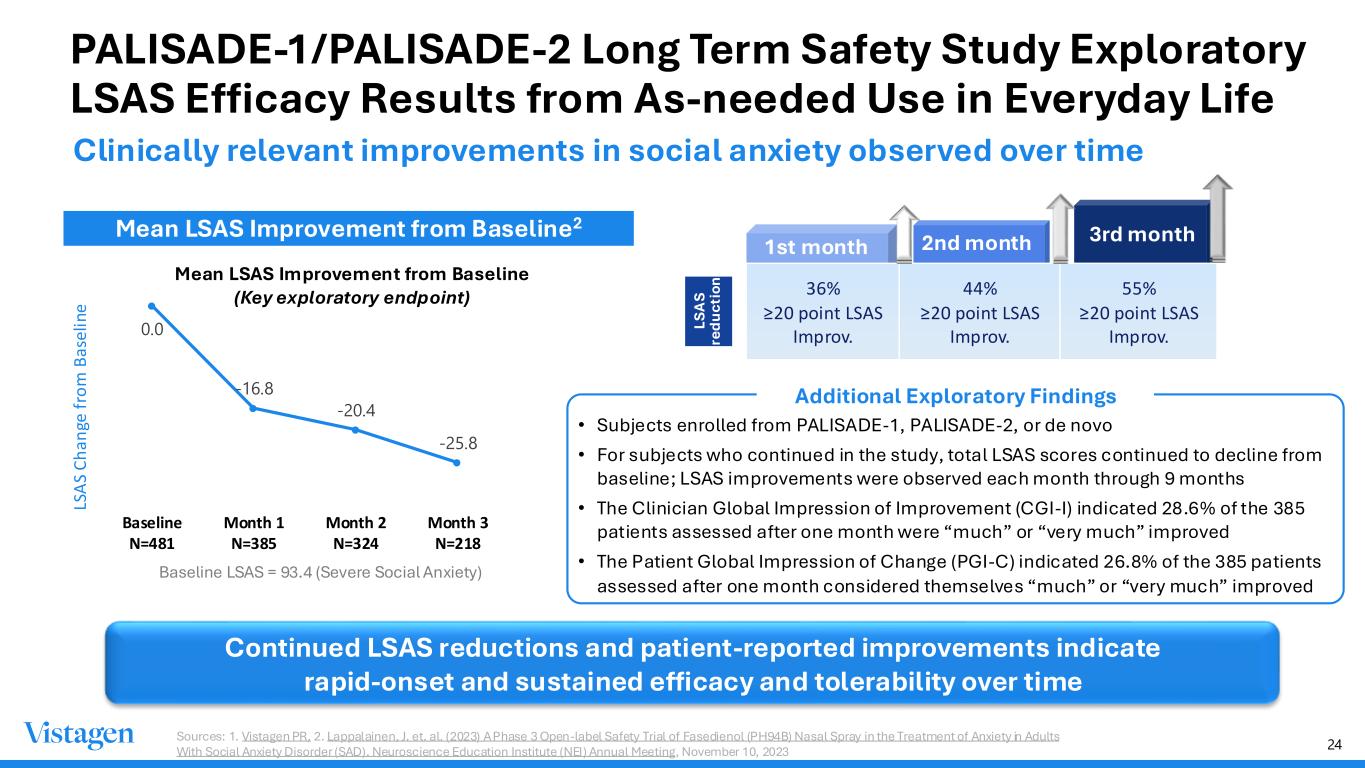
24 PALISADE-1/PALISADE-2 Long Term Safety Study Exploratory LSAS Efficacy Results from As-needed Use in Everyday Life Clinically relevant improvements in social anxiety observed over time Mean LSAS Improvement from Baseline2 Baseline LSAS = 93.4 (Severe Social Anxiety) 0.0 -16.8 -20.4 -25.8 Baseline N=481 Month 1 N=385 Month 2 N=324 Month 3 N=218 LS A S C h an ge f ro m B as el in e Mean LSAS Improvement from Baseline (Key exploratory endpoint) Your Title Here Vestibulum neque elit, Class apt tacit i sociosqu ad lit ora torquent. Vestibulum neque elit, Class apt tacit i sociosqu ad lit ora torquent. LS A S re du ct io n 36% ≥20 point LSAS Improv. 44% ≥20 point LSAS Improv. 55% ≥20 point LSAS Improv. 1st month 2nd month 3rd month Continued LSAS reductions and patient-reported improvements indicate rapid-onset and sustained efficacy and tolerability over time Additional Exploratory Findings • Subjects enrolled from PALISADE-1, PALISADE-2, or de novo • For subjects who continued in the study, total LSAS scores continued to decline from baseline; LSAS improvements were observed each month through 9 months • The Clinician Global Impression of Improvement (CGI-I) indicated 28.6% of the 385 patients assessed after one month were “much” or “very much” improved • The Patient Global Impression of Change (PGI-C) indicated 26.8% of the 385 patients assessed after one month considered themselves “much” or “very much” improved Sources: 1. Vistagen PR, 2. Lappalainen, J. et. al. (2023) A Phase 3 Open-label Safety Trial of Fasedienol (PH94B) Nasal Spray in the Treatment of Anxiety in Adults With Social Anxiety Disorder (SAD). Neuroscience Education Institute (NEI) Annual Meeting, November 10, 2023
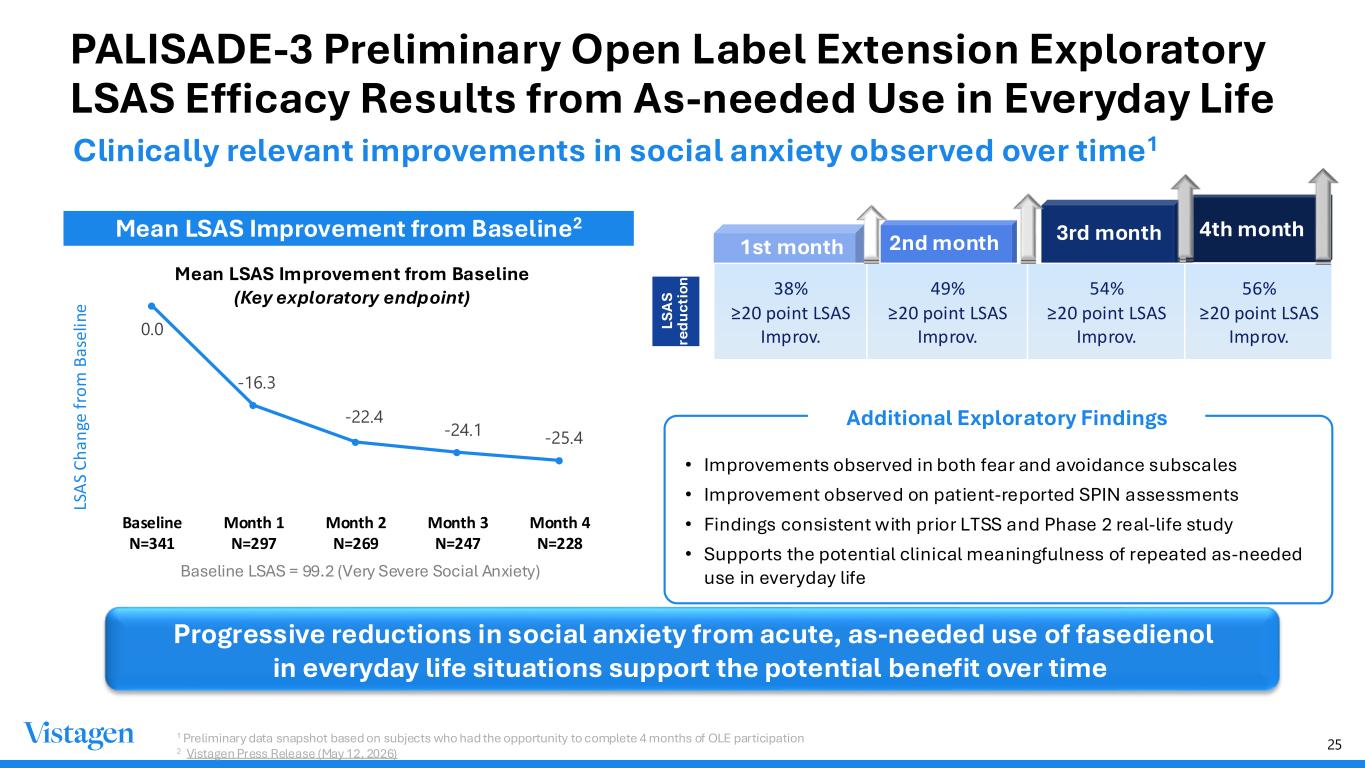
25 PALISADE-3 Preliminary Open Label Extension Exploratory LSAS Efficacy Results from As-needed Use in Everyday Life Clinically relevant improvements in social anxiety observed over time1 Mean LSAS Improvement from Baseline2 Baseline LSAS = 99.2 (Very Severe Social Anxiety) 0.0 -16.3 -22.4 -24.1 -25.4 Baseline N=341 Month 1 N=297 Month 2 N=269 Month 3 N=247 Month 4 N=228 LS A S C h an ge f ro m B as el in e Mean LSAS Improvement from Baseline (Key exploratory endpoint) Your Title Here Vestibulum neque elit, Class apt tacit i sociosqu ad lit ora torquent. Vestibulum neque elit, Class apt tacit i sociosqu ad lit ora torquent. LS A S re du ct io n 38% ≥20 point LSAS Improv. 49% ≥20 point LSAS Improv. 54% ≥20 point LSAS Improv. 56% ≥20 point LSAS Improv. 1st month 2nd month 3rd month 4th month Additional Exploratory Findings • Improvements observed in both fear and avoidance subscales • Improvement observed on patient-reported SPIN assessments • Findings consistent with prior LTSS and Phase 2 real-life study • Supports the potential clinical meaningfulness of repeated as-needed use in everyday life 1 Preliminary data snapshot based on subjects who had the opportunity to complete 4 months of OLE participation 2 Vistagen Press Release (May 12, 2026) Progressive reductions in social anxiety from acute, as-needed use of fasedienol in everyday life situations support the potential benefit over time
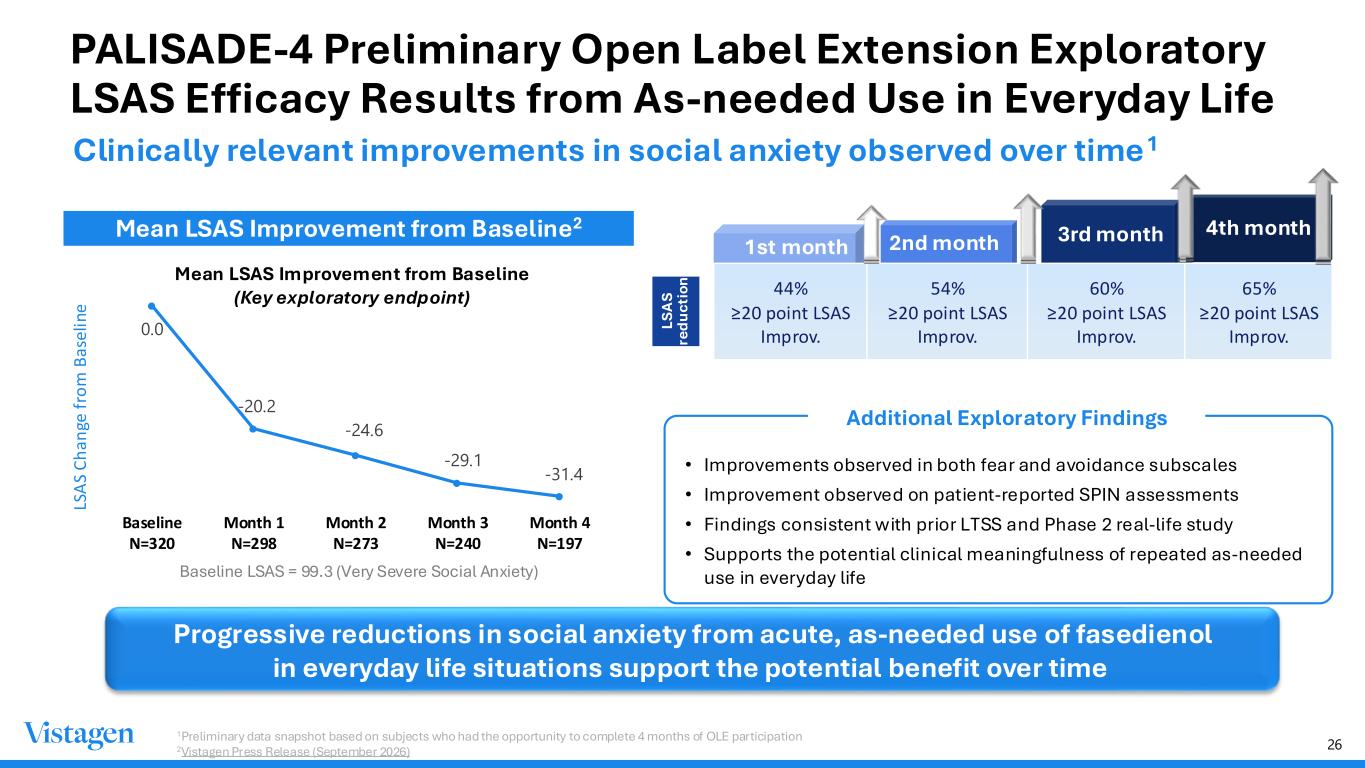
26 PALISADE-4 Preliminary Open Label Extension Exploratory LSAS Efficacy Results from As-needed Use in Everyday Life Clinically relevant improvements in social anxiety observed over time1 Mean LSAS Improvement from Baseline2 Baseline LSAS = 99.3 (Very Severe Social Anxiety) 0.0 -20.2 -24.6 -29.1 -31.4 Baseline N=320 Month 1 N=298 Month 2 N=273 Month 3 N=240 Month 4 N=197 LS A S C h an ge f ro m B as el in e Mean LSAS Improvement from Baseline (Key exploratory endpoint) Your Title Here Vestibulum neque elit, Class apt tacit i sociosqu ad lit ora torquent. Vestibulum neque elit, Class apt tacit i sociosqu ad lit ora torquent. LS A S re du ct io n 44% ≥20 point LSAS Improv. 54% ≥20 point LSAS Improv. 60% ≥20 point LSAS Improv. 65% ≥20 point LSAS Improv. 1st month 2nd month 3rd month 4th month Progressive reductions in social anxiety from acute, as-needed use of fasedienol in everyday life situations support the potential benefit over time Additional Exploratory Findings • Improvements observed in both fear and avoidance subscales • Improvement observed on patient-reported SPIN assessments • Findings consistent with prior LTSS and Phase 2 real-life study • Supports the potential clinical meaningfulness of repeated as-needed use in everyday life 1Preliminary data snapshot based on subjects who had the opportunity to complete 4 months of OLE participation 2Vistagen Press Release (September 2026)
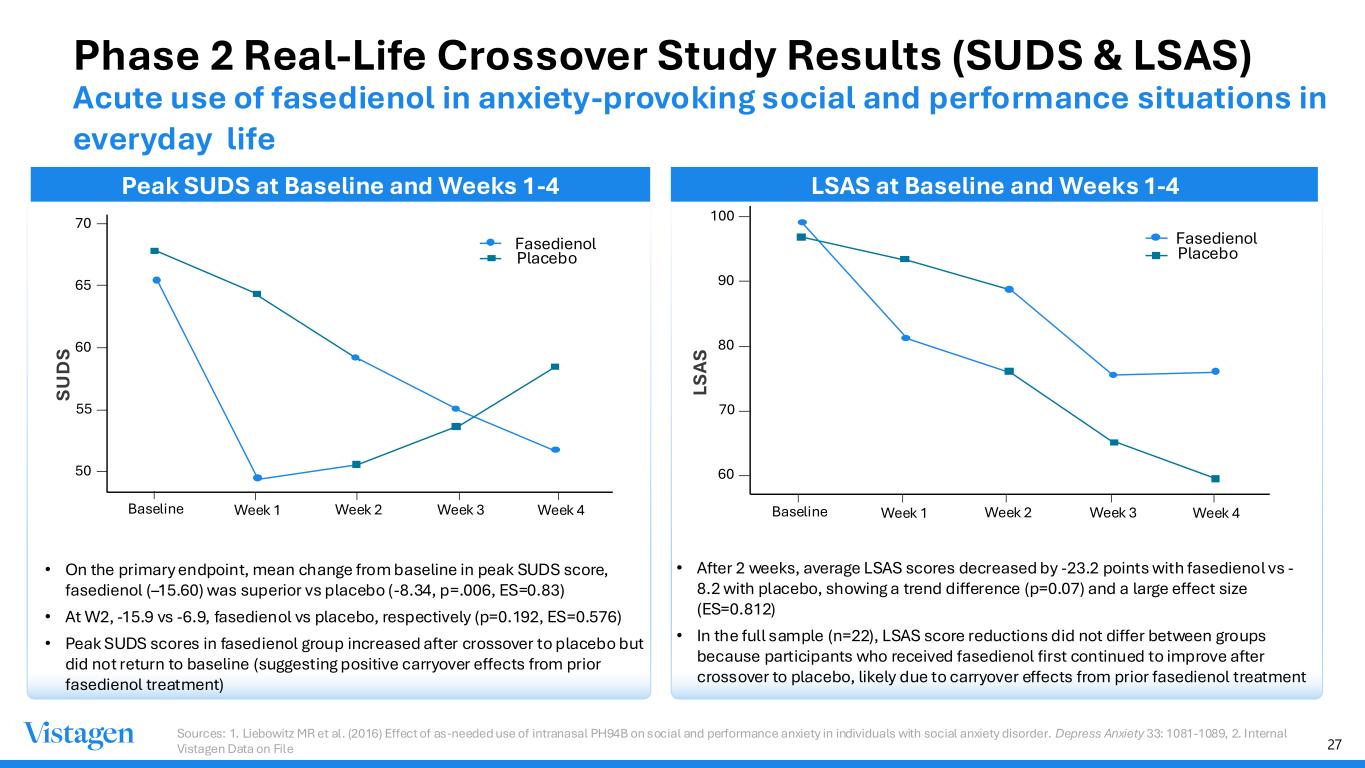
27 • On the primary endpoint, mean change from baseline in peak SUDS score, fasedienol (–15.60) was superior vs placebo (-8.34, p=.006, ES=0.83) • At W2, -15.9 vs -6.9, fasedienol vs placebo, respectively (p=0.192, ES=0.576) • Peak SUDS scores in fasedienol group increased after crossover to placebo but did not return to baseline (suggesting positive carryover effects from prior fasedienol treatment) • After 2 weeks, average LSAS scores decreased by -23.2 points with fasedienol vs - 8.2 with placebo, showing a trend difference (p=0.07) and a large effect size (ES=0.812) • In the full sample (n=22), LSAS score reductions did not differ between groups because participants who received fasedienol first continued to improve after crossover to placebo, likely due to carryover effects from prior fasedienol treatment 70 65 60 55 50 Baseline Week 1 Week 2 Week 3 Week 4 S U D S Fasedienol Placebo 100 90 80 70 60 LS A S Fasedienol Placebo Baseline Week 1 Week 2 Week 3 Week 4 Sources: 1. Liebowitz MR et al. (2016) Effect of as‐needed use of intranasal PH94B on social and performance anxiety in individuals with social anxiety disorder. Depress Anxiety 33: 1081-1089, 2. Internal Vistagen Data on File Phase 2 Real-Life Crossover Study Results (SUDS & LSAS) Peak SUDS at Baseline and Weeks 1-4 LSAS at Baseline and Weeks 1-4 Acute use of fasedienol in anxiety-provoking social and performance situations in everyday life
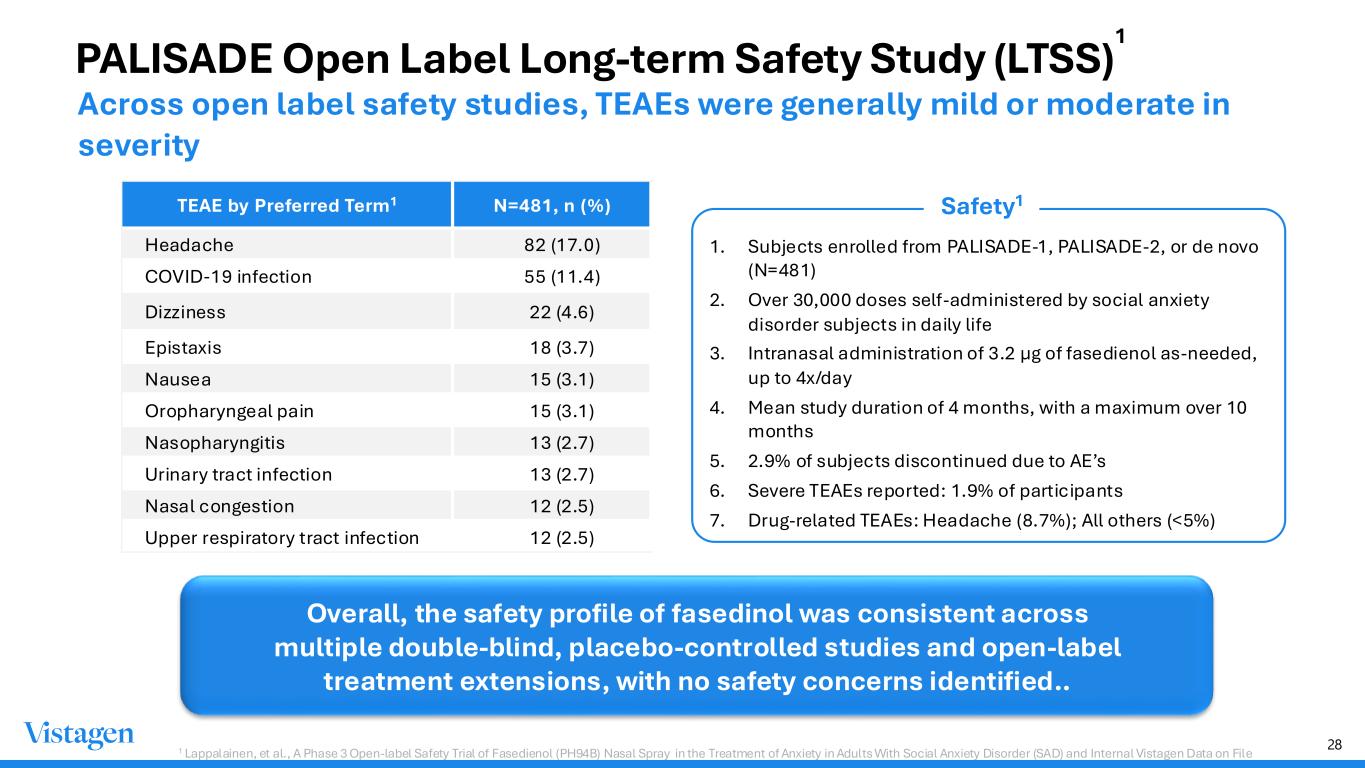
28 TEAE by Preferred Term1 N=481, n (%) Headache 82 (17.0) COVID-19 infection 55 (11.4) Dizziness 22 (4.6) Epistaxis 18 (3.7) Nausea 15 (3.1) Oropharyngeal pain 15 (3.1) Nasopharyngitis 13 (2.7) Urinary tract infection 13 (2.7) Nasal congestion 12 (2.5) Upper respiratory tract infection 12 (2.5) 1. Subjects enrolled from PALISADE-1, PALISADE-2, or de novo (N=481) 2. Over 30,000 doses self-administered by social anxiety disorder subjects in daily life 3. Intranasal administration of 3.2 μg of fasedienol as-needed, up to 4x/day 4. Mean study duration of 4 months, with a maximum over 10 months 5. 2.9% of subjects discontinued due to AE’s 6. Severe TEAEs reported: 1.9% of participants 7. Drug-related TEAEs: Headache (8.7%); All others (<5%) PALISADE Open Label Long-term Safety Study (LTSS) Overall, the safety profile of fasedinol was consistent across multiple double-blind, placebo-controlled studies and open-label treatment extensions, with no safety concerns identified.. 1 Lappalainen, et al., A Phase 3 Open-label Safety Trial of Fasedienol (PH94B) Nasal Spray in the Treatment of Anxiety in Adults With Social Anxiety Disorder (SAD) and Internal Vistagen Data on File Safety1 Across open label safety studies, TEAEs were generally mild or moderate in severity 1
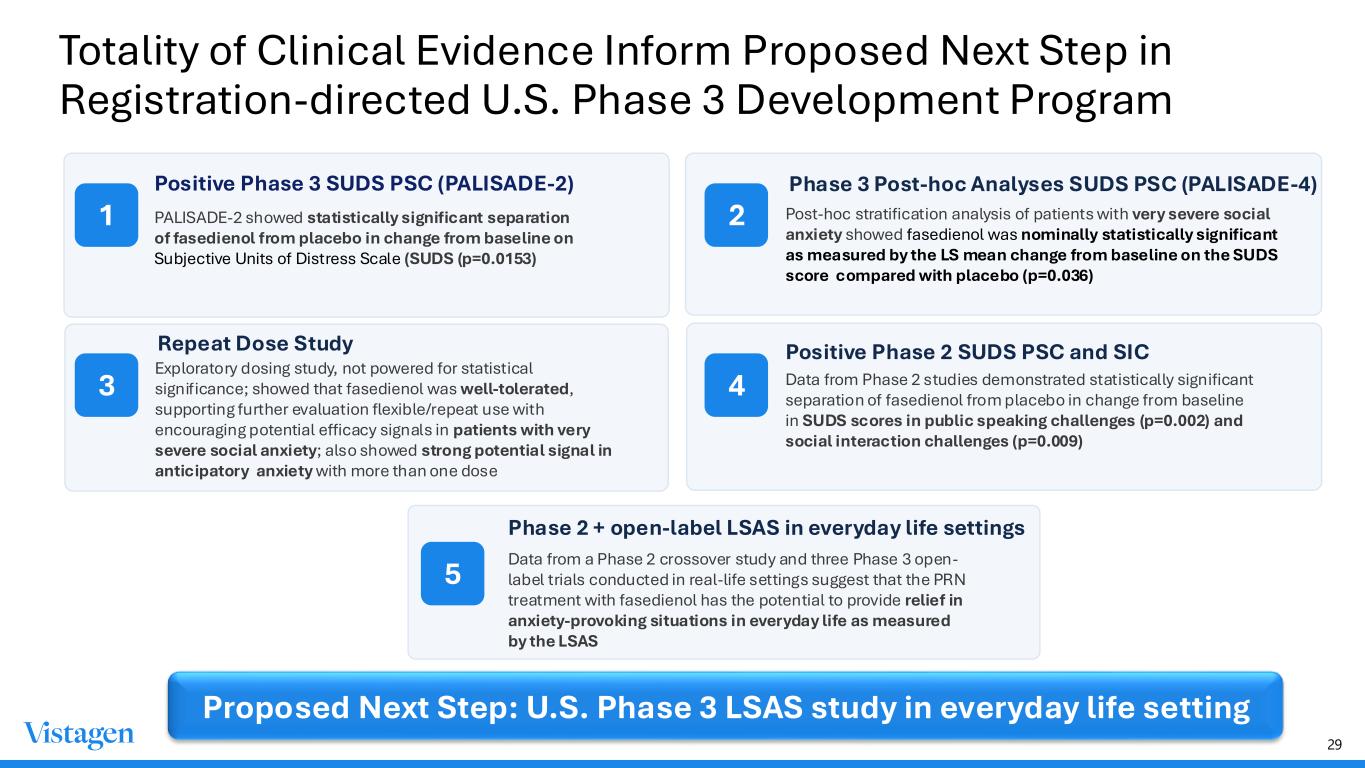
29 Totality of Clinical Evidence Inform Proposed Next Step in Registration-directed U.S. Phase 3 Development Program 1 2 Phase 3 Post-hoc Analyses SUDS PSC (PALISADE-4) Post-hoc stratification analysis of patients with very severe social anxiety showed fasedienol was nominally statistically significant as measured by the LS mean change from baseline on the SUDS score compared with placebo (p=0.036) 3 Repeat Dose Study Exploratory dosing study, not powered for statistical significance; showed that fasedienol was well-tolerated, supporting further evaluation flexible/repeat use with encouraging potential efficacy signals in patients with very severe social anxiety; also showed strong potential signal in anticipatory anxiety with more than one dose 4 Positive Phase 2 SUDS PSC and SIC Data from Phase 2 studies demonstrated statistically significant separation of fasedienol from placebo in change from baseline in SUDS scores in public speaking challenges (p=0.002) and social interaction challenges (p=0.009) 5 Phase 2 + open-label LSAS in everyday life settings Data from a Phase 2 crossover study and three Phase 3 open- label trials conducted in real-life settings suggest that the PRN treatment with fasedienol has the potential to provide relief in anxiety-provoking situations in everyday life as measured by the LSAS Proposed Next Step: U.S. Phase 3 LSAS study in everyday life setting Positive Phase 3 SUDS PSC (PALISADE-2) PALISADE-2 showed statistically significant separation of fasedienol from placebo in change from baseline on Subjective Units of Distress Scale (SUDS (p=0.0153)
30 Potential Registrational Path Forward Fasedienol
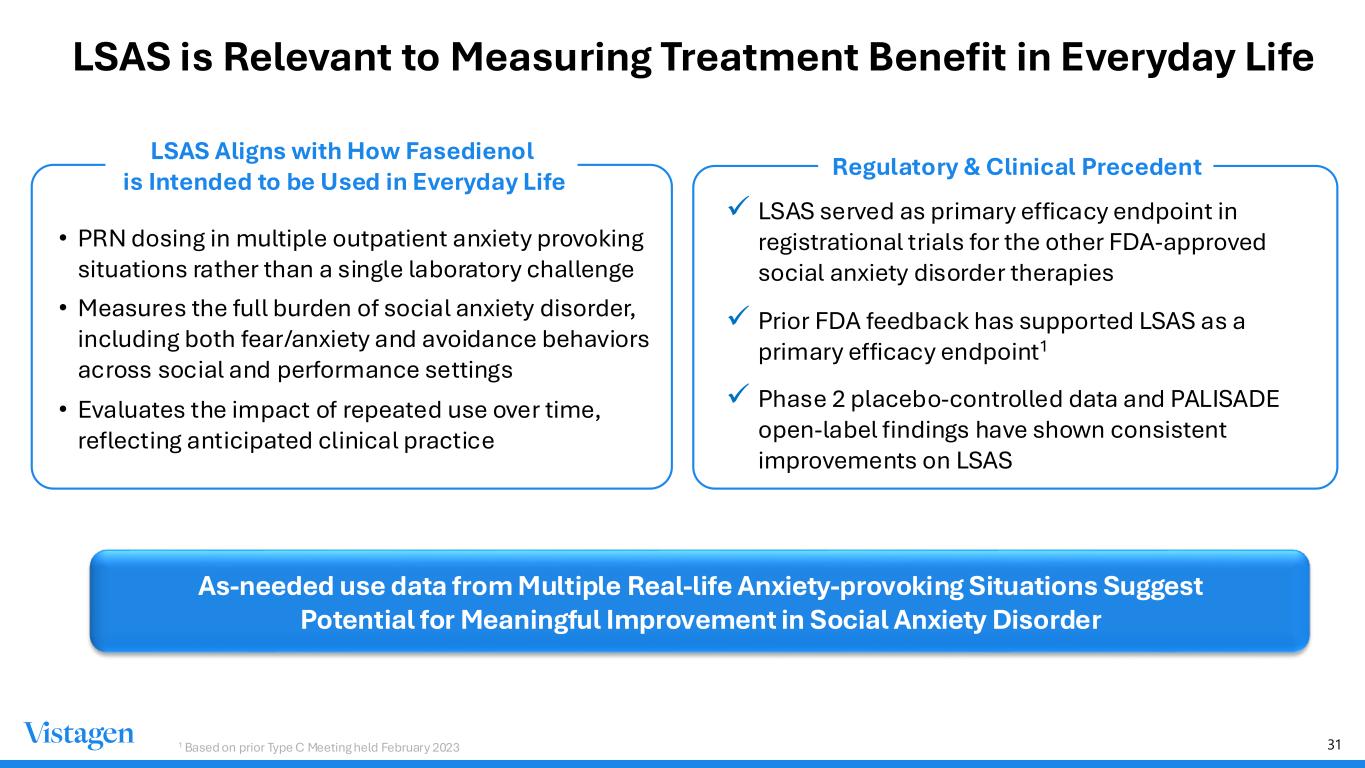
31 LSAS is Relevant to Measuring Treatment Benefit in Everyday Life • PRN dosing in multiple outpatient anxiety provoking situations rather than a single laboratory challenge • Measures the full burden of social anxiety disorder, including both fear/anxiety and avoidance behaviors across social and performance settings • Evaluates the impact of repeated use over time, reflecting anticipated clinical practice ✓ LSAS served as primary efficacy endpoint in registrational trials for the other FDA-approved social anxiety disorder therapies ✓ Prior FDA feedback has supported LSAS as a primary efficacy endpoint1 ✓ Phase 2 placebo-controlled data and PALISADE open-label findings have shown consistent improvements on LSAS Regulatory & Clinical Precedent As-needed use data from Multiple Real-life Anxiety-provoking Situations Suggest Potential for Meaningful Improvement in Social Anxiety Disorder LSAS Aligns with How Fasedienol is Intended to be Used in Everyday Life 1 Based on prior Type C Meeting held February 2023
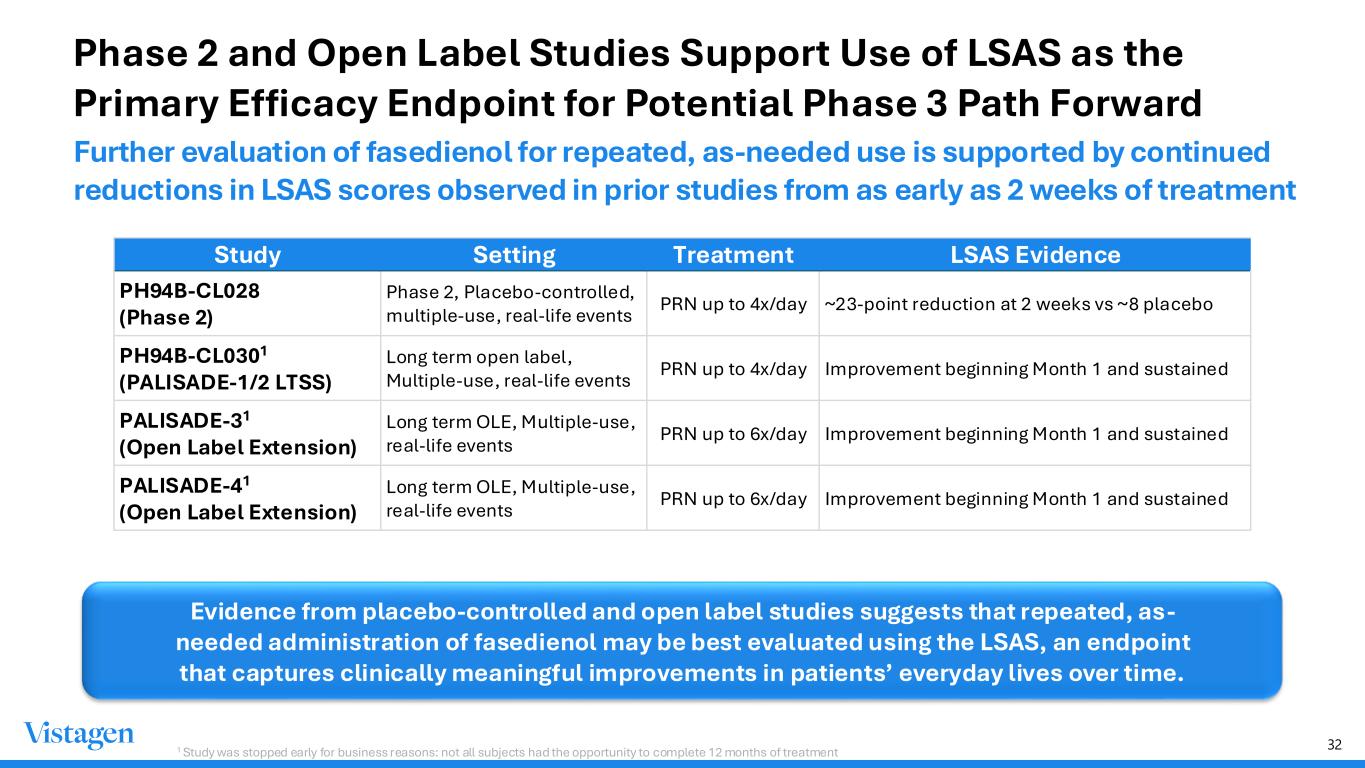
32 Phase 2 and Open Label Studies Support Use of LSAS as the Primary Efficacy Endpoint for Potential Phase 3 Path Forward Further evaluation of fasedienol for repeated, as-needed use is supported by continued reductions in LSAS scores observed in prior studies from as early as 2 weeks of treatment Study Setting Treatment LSAS Evidence PH94B-CL028 (Phase 2) Phase 2, Placebo-controlled, multiple-use, real-life events PRN up to 4x/day ~23-point reduction at 2 weeks vs ~8 placebo PH94B-CL0301 (PALISADE-1/2 LTSS) Long term open label, Multiple-use, real-life events PRN up to 4x/day Improvement beginning Month 1 and sustained PALISADE-31 (Open Label Extension) Long term OLE, Multiple-use, real-life events PRN up to 6x/day Improvement beginning Month 1 and sustained PALISADE-41 (Open Label Extension) Long term OLE, Multiple-use, real-life events PRN up to 6x/day Improvement beginning Month 1 and sustained Evidence from placebo-controlled and open label studies suggests that repeated, as- needed administration of fasedienol may be best evaluated using the LSAS, an endpoint that captures clinically meaningful improvements in patients’ everyday lives over time. 1 Study was stopped early for business reasons: not all subjects had the opportunity to complete 12 months of treatment
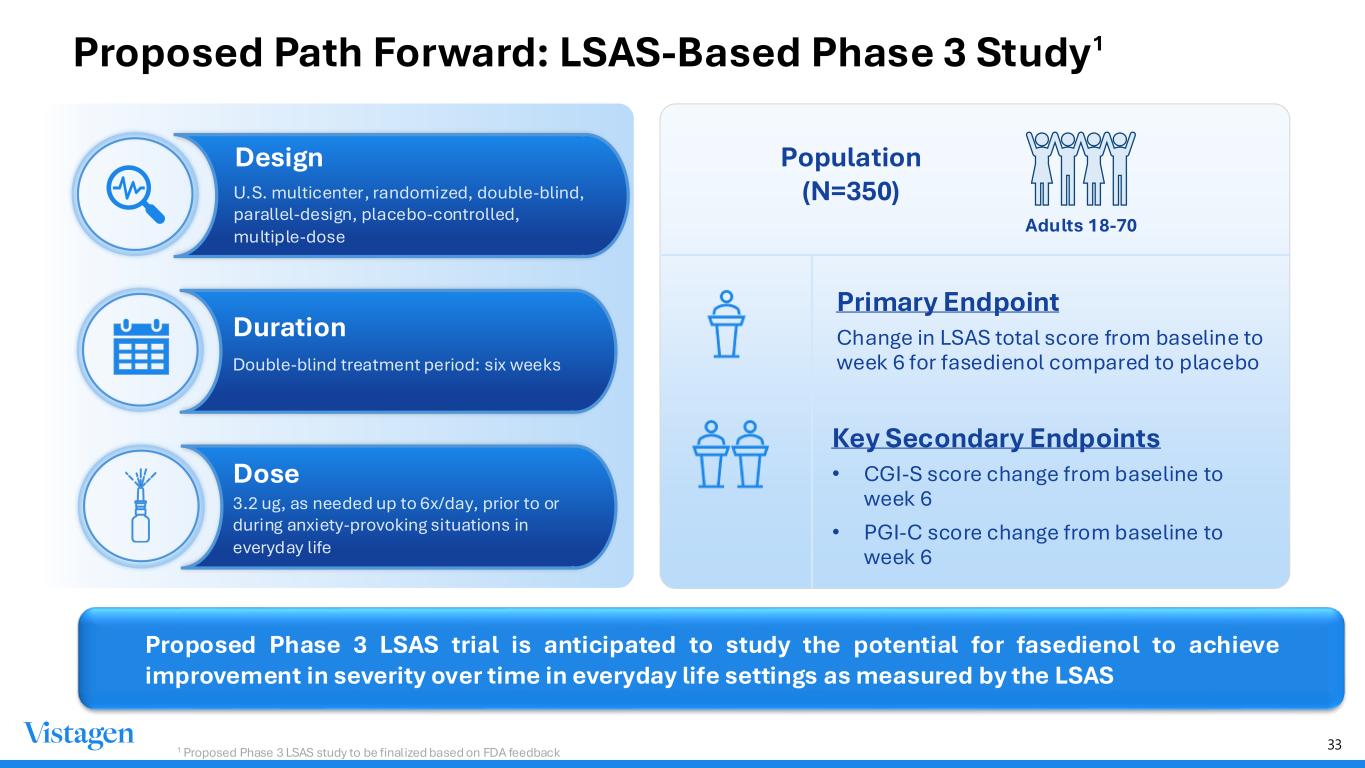
33 Design U.S. multicenter, randomized, double-blind, parallel-design, placebo-controlled, multiple-dose Dose 3.2 ug, as needed up to 6x/day, prior to or during anxiety-provoking situations in everyday life Duration Double-blind treatment period: six weeks Primary Endpoint Change in LSAS total score from baseline to week 6 for fasedienol compared to placebo Population (N=350) Key Secondary Endpoints • CGI-S score change from baseline to week 6 • PGI-C score change from baseline to week 6 1 Proposed Phase 3 LSAS study to be finalized based on FDA feedback 1 Adults 18-70 Proposed Path Forward: LSAS-Based Phase 3 Study Proposed Phase 3 LSAS trial is anticipated to study the potential for fasedienol to achieve improvement in severity over time in everyday life settings as measured by the LSAS
34 Major Depressive Disorder Itruvone
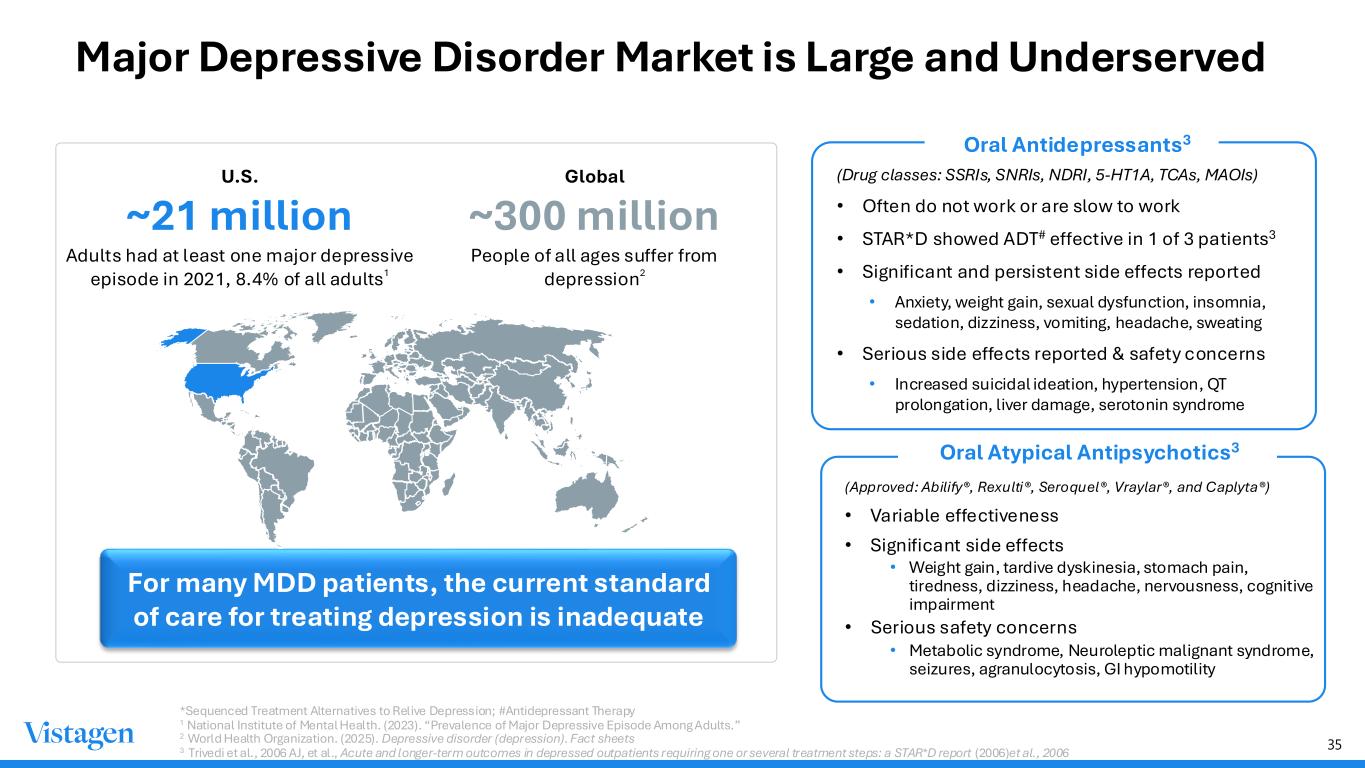
35 Major Depressive Disorder Market is Large and Underserved (Drug classes: SSRIs, SNRIs, NDRI, 5-HT1A, TCAs, MAOIs) • Often do not work or are slow to work • STAR*D showed ADT# effective in 1 of 3 patients3 • Significant and persistent side effects reported • Anxiety, weight gain, sexual dysfunction, insomnia, sedation, dizziness, vomiting, headache, sweating • Serious side effects reported & safety concerns • Increased suicidal ideation, hypertension, QT prolongation, liver damage, serotonin syndrome For many MDD patients, the current standard of care for treating depression is inadequate U.S. ~21 million Adults had at least one major depressive episode in 2021, 8.4% of all adults1 Global ~300 million People of all ages suffer from depression2 *Sequenced Treatment Alternatives to Relive Depression; #Antidepressant Therapy 1 National Institute of Mental Health. (2023). “Prevalence of Major Depressive Episode Among Adults.” 2 World Health Organization. (2025). Depressive disorder (depression). Fact sheets 3 Trivedi et al., 2006 AJ, et al., Acute and longer-term outcomes in depressed outpatients requiring one or several treatment steps: a STAR*D report (2006)et al., 2006 Oral Antidepressants3 (Approved: Abilify®, Rexulti®, Seroquel®, Vraylar®, and Caplyta®) • Variable effectiveness • Significant side effects • Weight gain, tardive dyskinesia, stomach pain, tiredness, dizziness, headache, nervousness, cognitive impairment • Serious safety concerns • Metabolic syndrome, Neuroleptic malignant syndrome, seizures, agranulocytosis, GI hypomotility Oral Atypical Antipsychotics3
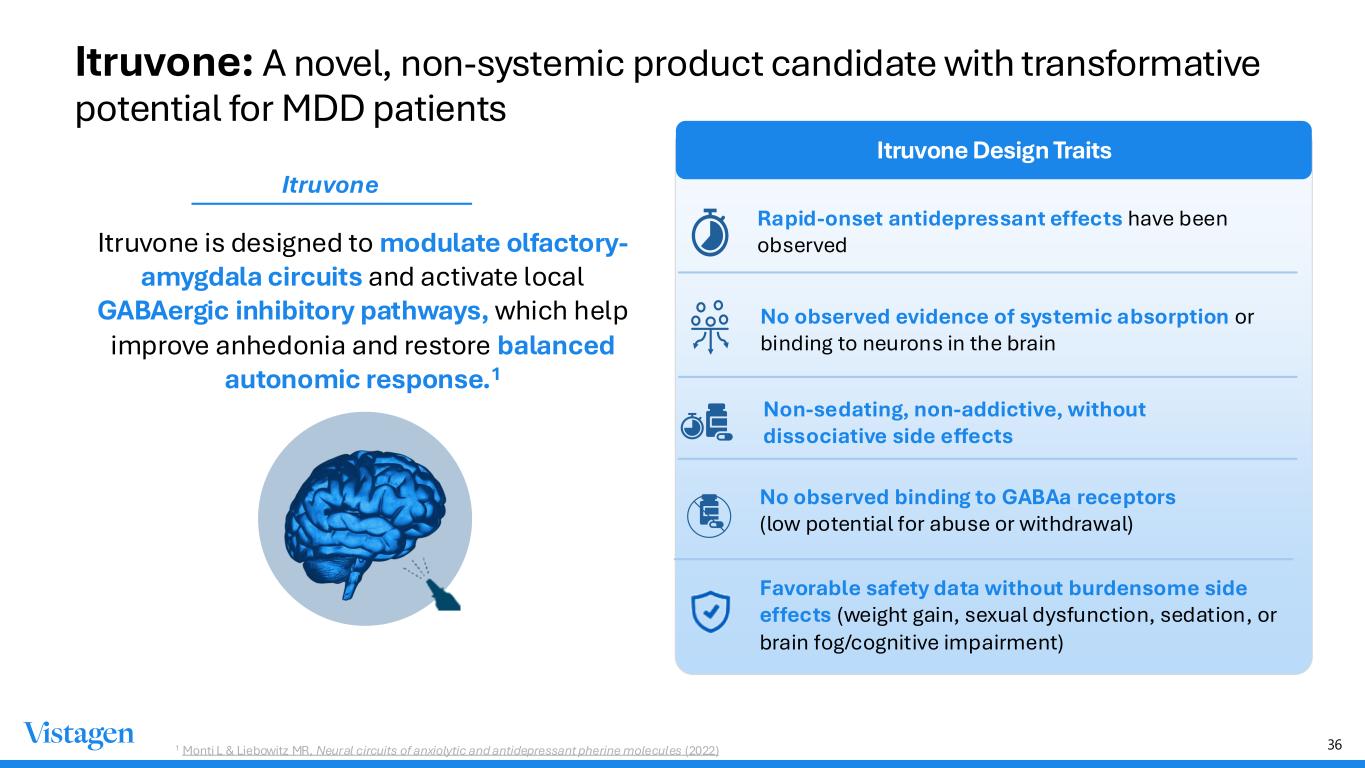
36 Itruvone is designed to modulate olfactory- amygdala circuits and activate local GABAergic inhibitory pathways, which help improve anhedonia and restore balanced autonomic response.1 Itruvone Design Traits Rapid-onset antidepressant effects have been observed No observed evidence of systemic absorption or binding to neurons in the brain 1 Monti L & Liebowitz MR, Neural circuits of anxiolytic and antidepressant pherine molecules (2022) No observed binding to GABAa receptors (low potential for abuse or withdrawal) Favorable safety data without burdensome side effects (weight gain, sexual dysfunction, sedation, or brain fog/cognitive impairment) Non-sedating, non-addictive, without dissociative side effects Itruvone Itruvone: A novel, non-systemic product candidate with transformative potential for MDD patients
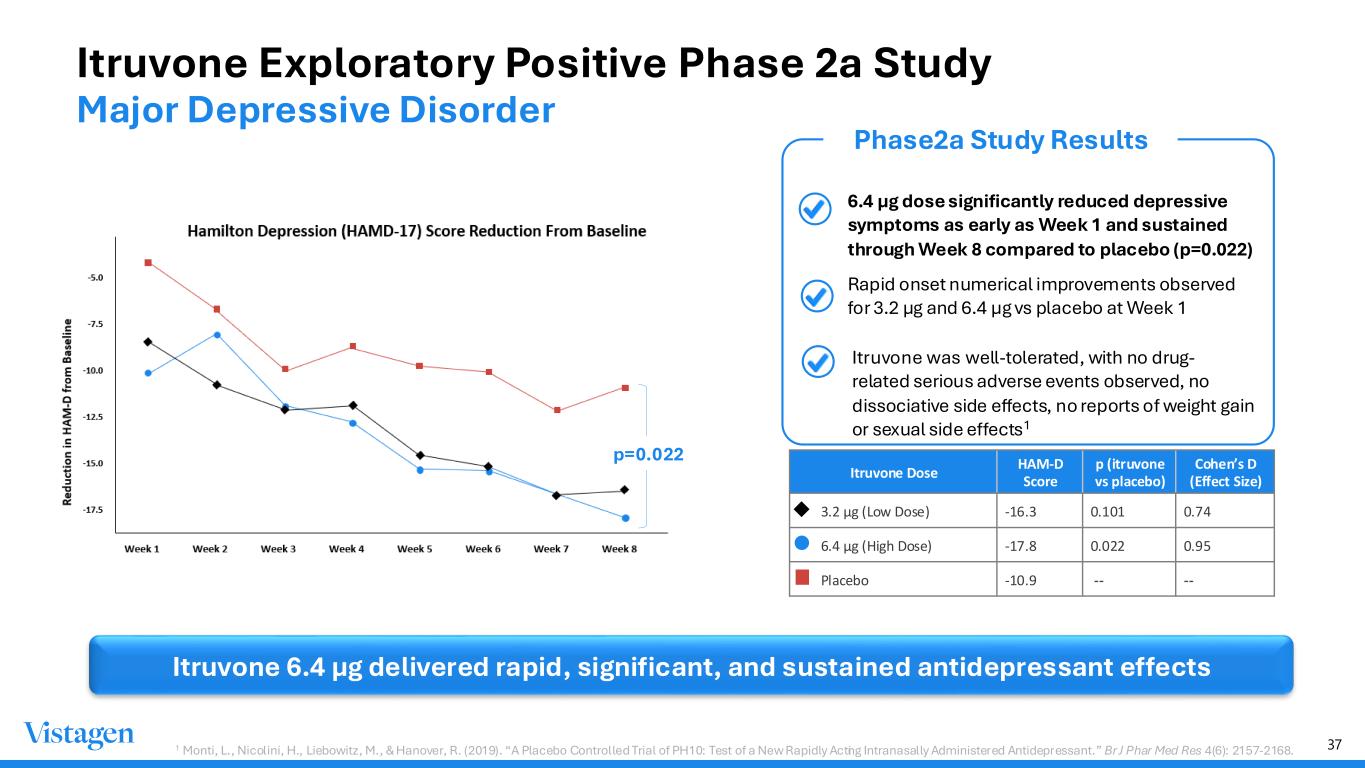
37 Itruvone Exploratory Positive Phase 2a Study Major Depressive Disorder • 6.4 µg dose significantly reduced depressive symptoms as early as Week 1 and sustained through Week 8 compared to placebo (p=0.022) • Rapid onset numerical improvements observed for 3.2 µg and 6.4 µg vs placebo at Week 1 Phase2a Study Results Itruvone 6.4 µg delivered rapid, significant, and sustained antidepressant effects Itruvone Dose HAM-D Score p (itruvone vs placebo) Cohen’s D (Effect Size) 3.2 µg (Low Dose) -16.3 0.101 0.74 6.4 µg (High Dose) -17.8 0.022 0.95 Placebo -10.9 -- -- p=0.022 1 Monti, L., Nicolini, H., Liebowitz, M., & Hanover, R. (2019). “A Placebo Controlled Trial of PH10: Test of a New Rapidly Acting Intranasally Administered Antidepressant.” Br J Phar Med Res 4(6): 2157-2168. • Itruvone was well-tolerated, with no drug- related serious adverse events observed, no dissociative side effects, no reports of weight gain or sexual side effects1
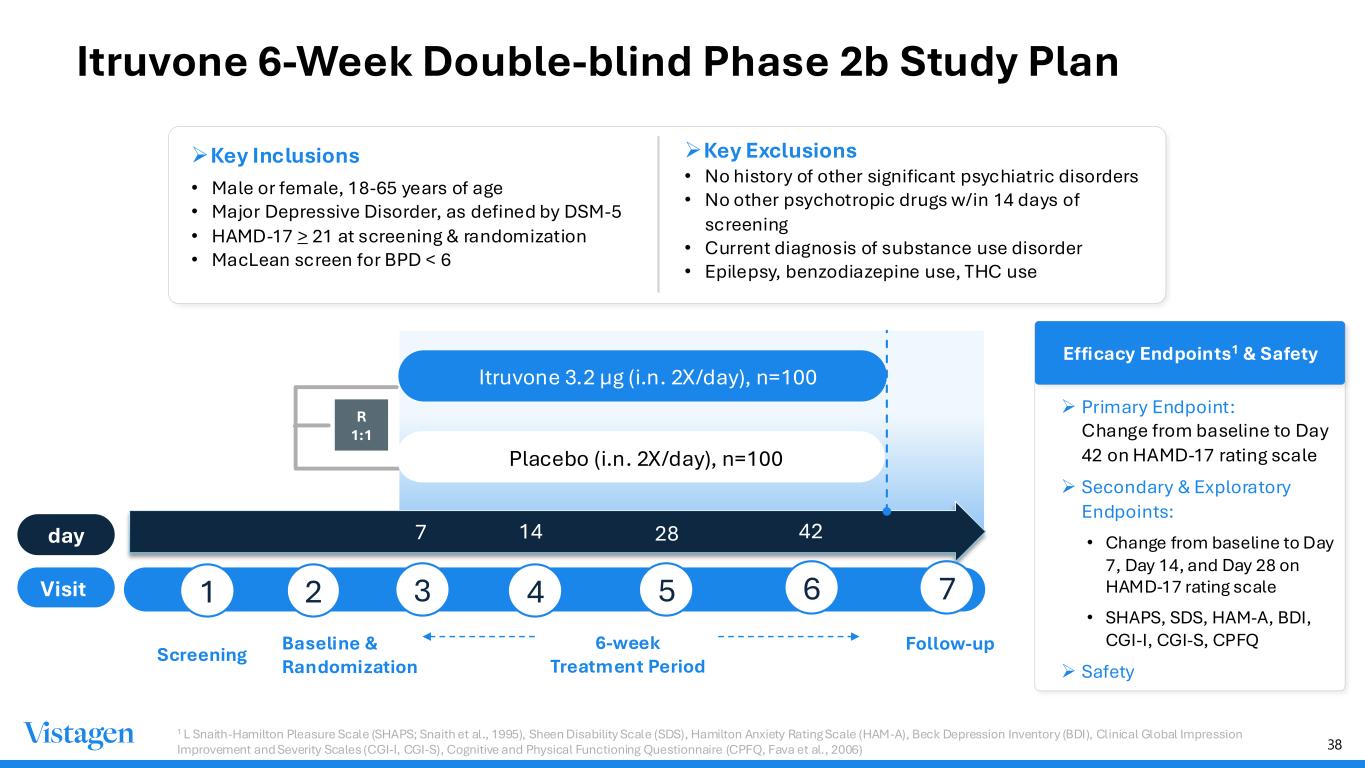
38 Itruvone 6-Week Double-blind Phase 2b Study Plan ➢Key Inclusions • Male or female, 18-65 years of age • Major Depressive Disorder, as defined by DSM-5 • HAMD-17 > 21 at screening & randomization • MacLean screen for BPD < 6 ➢Key Exclusions • No history of other significant psychiatric disorders • No other psychotropic drugs w/in 14 days of screening • Current diagnosis of substance use disorder • Epilepsy, benzodiazepine use, THC use Baseline & Randomization 7 R 1:1 day Visit Screening Follow-up Itruvone 3.2 µg (i.n. 2X/day), n=100 Placebo (i.n. 2X/day), n=100 Efficacy Endpoints1 & Safety ➢ Primary Endpoint: Change from baseline to Day 42 on HAMD-17 rating scale ➢ Secondary & Exploratory Endpoints: • Change from baseline to Day 7, Day 14, and Day 28 on HAMD-17 rating scale • SHAPS, SDS, HAM-A, BDI, CGI-I, CGI-S, CPFQ ➢ Safety 1 L Snaith-Hamilton Pleasure Scale (SHAPS; Snaith et al., 1995), Sheen Disability Scale (SDS), Hamilton Anxiety Rating Scale (HAM-A), Beck Depression Inventory (BDI), Clinical Global Impression Improvement and Severity Scales (CGI-I, CGI-S), Cognitive and Physical Functioning Questionnaire (CPFQ, Fava et al., 2006) 1 2 3 4 5 6 14 28 42 7 6-week Treatment Period
39 Vasomotor Symptoms (Hot Flashes) due to Menopause Refisolone
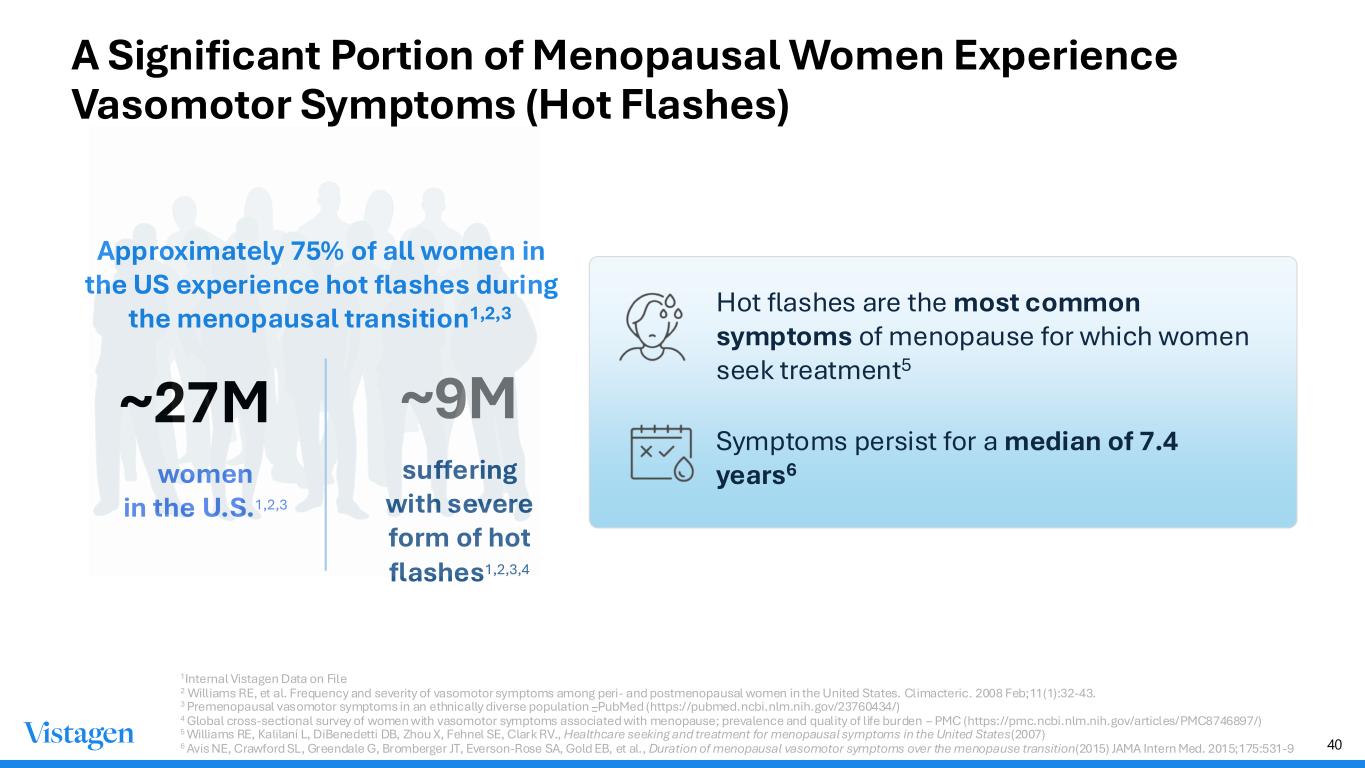
40 A Significant Portion of Menopausal Women Experience Vasomotor Symptoms (Hot Flashes) ~27M women in the U.S.1,2,3 ~9M suffering with severe form of hot flashes1,2,3,4 Symptoms persist for a median of 7.4 years6 Hot flashes are the most common symptoms of menopause for which women seek treatment5 Approximately 75% of all women in the US experience hot flashes during the menopausal transition1,2,3 1Internal Vistagen Data on File 2 Williams RE, et al. Frequency and severity of vasomotor symptoms among peri- and postmenopausal women in the United States. Climacteric. 2008 Feb;11(1):32-43. 3 Premenopausal vasomotor symptoms in an ethnically diverse population –PubMed (https://pubmed.ncbi.nlm.nih.gov/23760434/) 4 Global cross-sectional survey of women with vasomotor symptoms associated with menopause; prevalence and quality of life burden – PMC (https://pmc.ncbi.nlm.nih.gov/articles/PMC8746897/) 5 Williams RE, Kalilani L, DiBenedetti DB, Zhou X, Fehnel SE, Clark RV., Healthcare seeking and treatment for menopausal symptoms in the United States (2007) 6 Avis NE, Crawford SL, Greendale G, Bromberger JT, Everson-Rose SA, Gold EB, et al., Duration of menopausal vasomotor symptoms over the menopause transition (2015) JAMA Intern Med. 2015;175:531-9
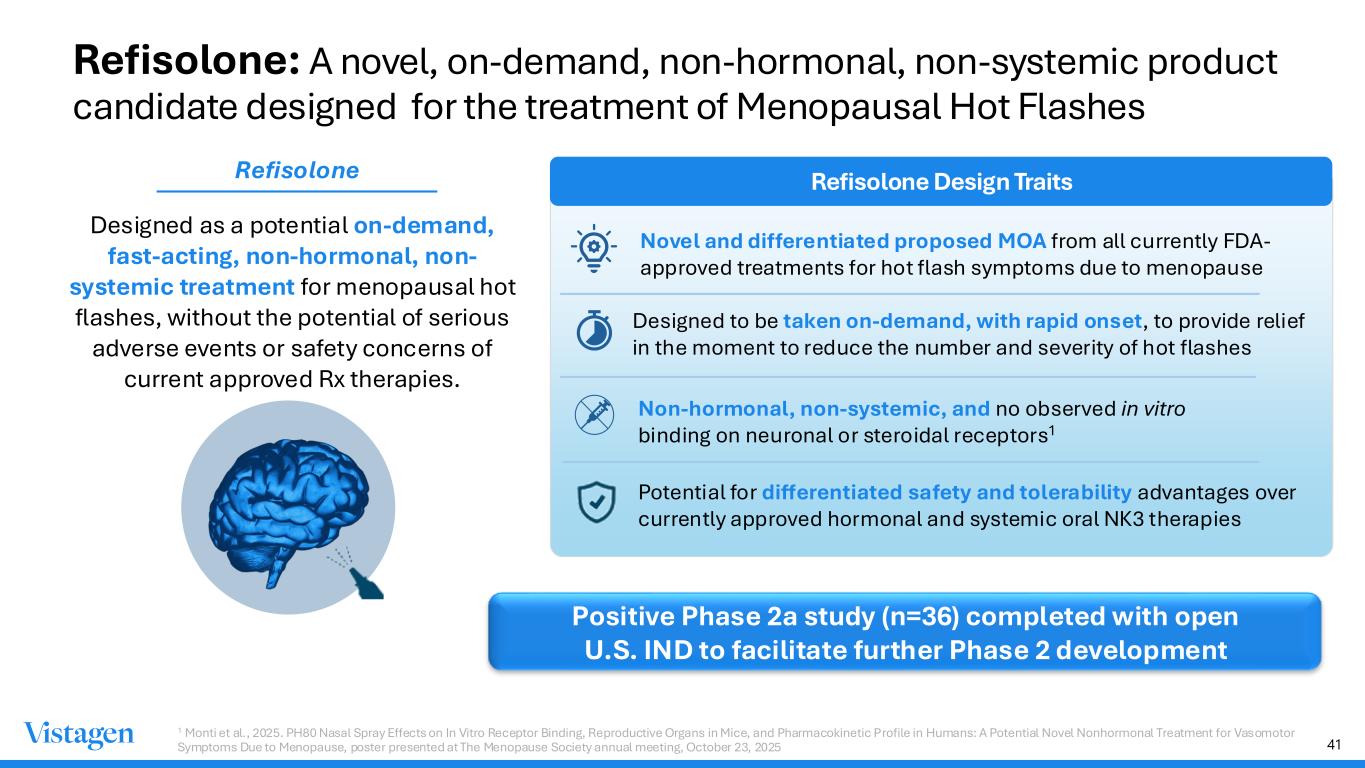
41 Refisolone: A novel, on-demand, non-hormonal, non-systemic product candidate designed for the treatment of Menopausal Hot Flashes Designed as a potential on-demand, fast-acting, non-hormonal, non- systemic treatment for menopausal hot flashes, without the potential of serious adverse events or safety concerns of current approved Rx therapies. Refisolone Design Traits Novel and differentiated proposed MOA from all currently FDA- approved treatments for hot flash symptoms due to menopause Designed to be taken on-demand, with rapid onset, to provide relief in the moment to reduce the number and severity of hot flashes Non-hormonal, non-systemic, and no observed in vitro binding on neuronal or steroidal receptors1 Potential for differentiated safety and tolerability advantages over currently approved hormonal and systemic oral NK3 therapies Refisolone Positive Phase 2a study (n=36) completed with open U.S. IND to facilitate further Phase 2 development 1 Monti et al., 2025. PH80 Nasal Spray Effects on In Vitro Receptor Binding, Reproductive Organs in Mice, and Pharmacokinetic Profile in Humans: A Potential Novel Nonhormonal Treatment for Vasomotor Symptoms Due to Menopause, poster presented at The Menopause Society annual meeting, October 23, 2025
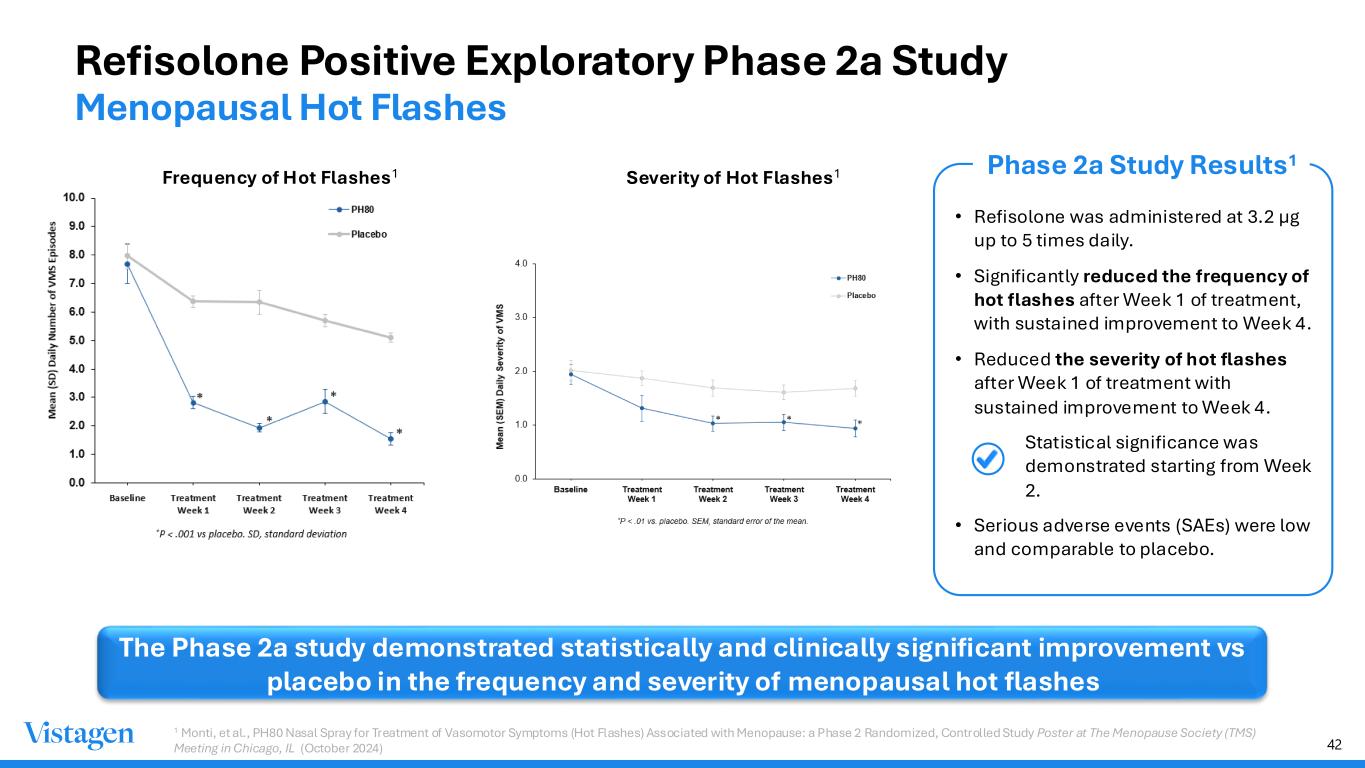
42 Refisolone Positive Exploratory Phase 2a Study Menopausal Hot Flashes The Phase 2a study demonstrated statistically and clinically significant improvement vs placebo in the frequency and severity of menopausal hot flashes Phase 2a Study Results1 • Refisolone was administered at 3.2 µg up to 5 times daily. • Significantly reduced the frequency of hot flashes after Week 1 of treatment, with sustained improvement to Week 4. • Reduced the severity of hot flashes after Week 1 of treatment with sustained improvement to Week 4. • Statistical significance was demonstrated starting from Week 2. • Serious adverse events (SAEs) were low and comparable to placebo. Frequency of Hot Flashes1 Severity of Hot Flashes1 1 Monti, et al., PH80 Nasal Spray for Treatment of Vasomotor Symptoms (Hot Flashes) Associated with Menopause: a Phase 2 Randomized, Controlled Study Poster at The Menopause Society (TMS) Meeting in Chicago, IL (October 2024)
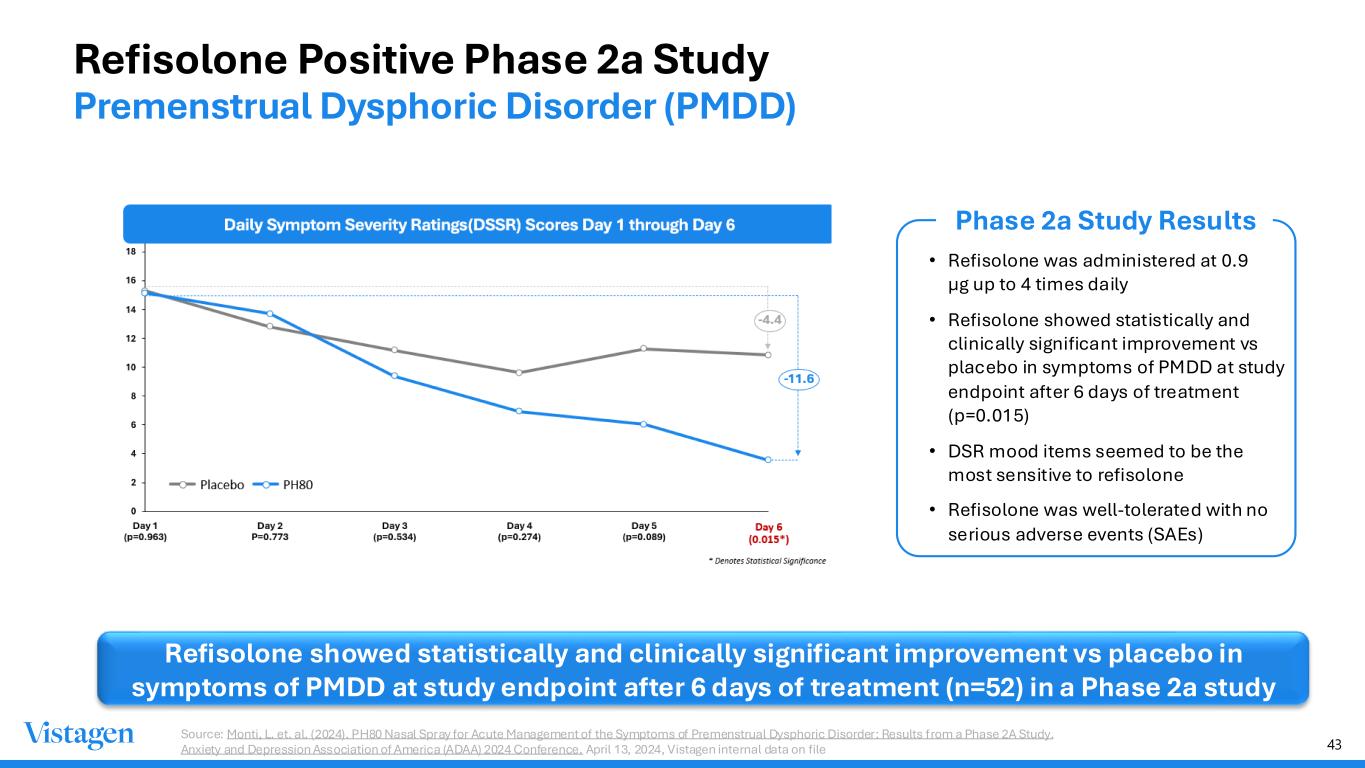
43 Refisolone Positive Phase 2a Study Premenstrual Dysphoric Disorder (PMDD) Refisolone showed statistically and clinically significant improvement vs placebo in symptoms of PMDD at study endpoint after 6 days of treatment (n=52) in a Phase 2a study Phase 2a Study Results • Refisolone was administered at 0.9 µg up to 4 times daily • Refisolone showed statistically and clinically significant improvement vs placebo in symptoms of PMDD at study endpoint after 6 days of treatment (p=0.015) • DSR mood items seemed to be the most sensitive to refisolone • Refisolone was well-tolerated with no serious adverse events (SAEs) Source: Monti, L. et. al. (2024). PH80 Nasal Spray for Acute Management of the Symptoms of Premenstrual Dysphoric Disorder: Results from a Phase 2A Study. Anxiety and Depression Association of America (ADAA) 2024 Conference. April 13, 2024, Vistagen internal data on file
44 Psychomotor / Cognitive Impairment due to Mental Fatigue PH15
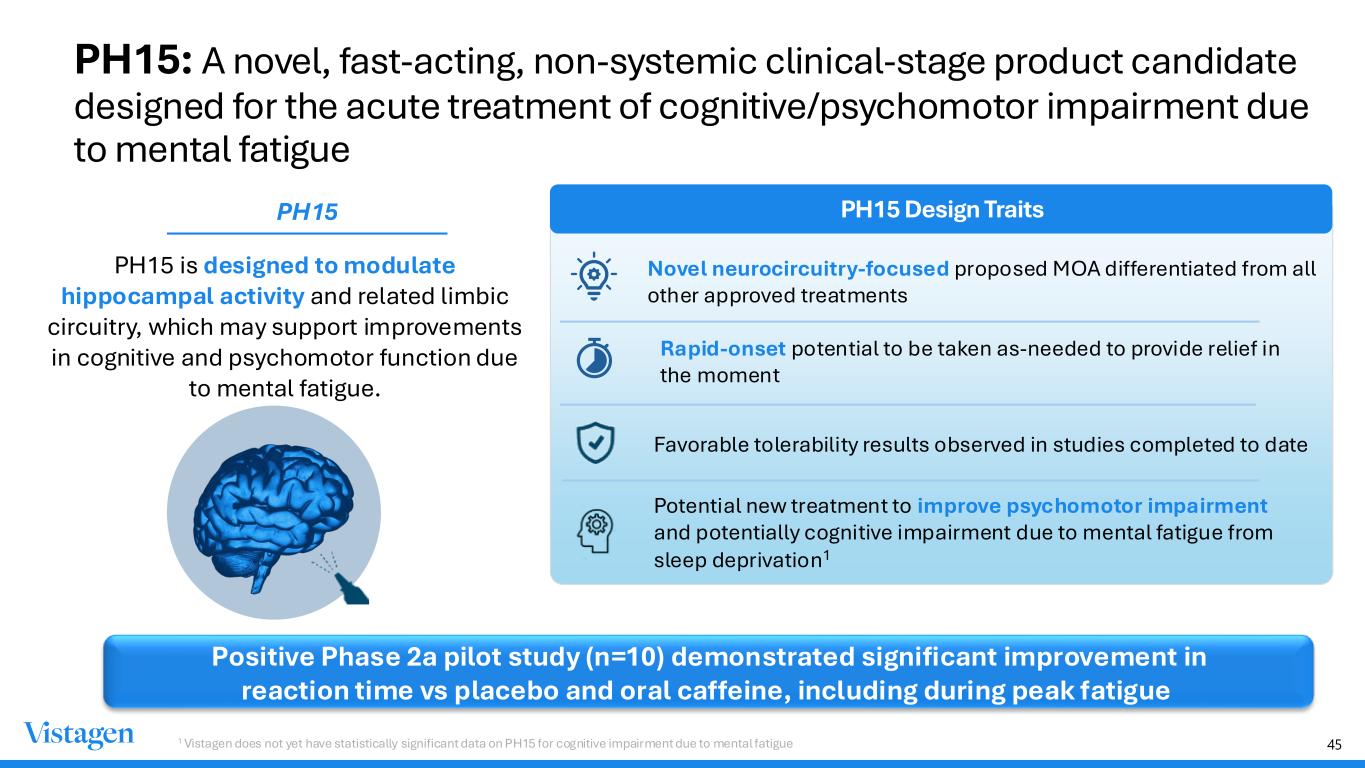
45 PH15: A novel, fast-acting, non-systemic clinical-stage product candidate designed for the acute treatment of cognitive/psychomotor impairment due to mental fatigue PH15 is designed to modulate hippocampal activity and related limbic circuitry, which may support improvements in cognitive and psychomotor function due to mental fatigue. PH15 Design Traits Novel neurocircuitry-focused proposed MOA differentiated from all other approved treatments Rapid-onset potential to be taken as-needed to provide relief in the moment Favorable tolerability results observed in studies completed to date Potential new treatment to improve psychomotor impairment and potentially cognitive impairment due to mental fatigue from sleep deprivation1 PH15 Positive Phase 2a pilot study (n=10) demonstrated significant improvement in reaction time vs placebo and oral caffeine, including during peak fatigue 1 Vistagen does not yet have statistically significant data on PH15 for cognitive impairment due to mental fatigue
46 Cancer Cachexia (Cancer Supportive Care) PH284
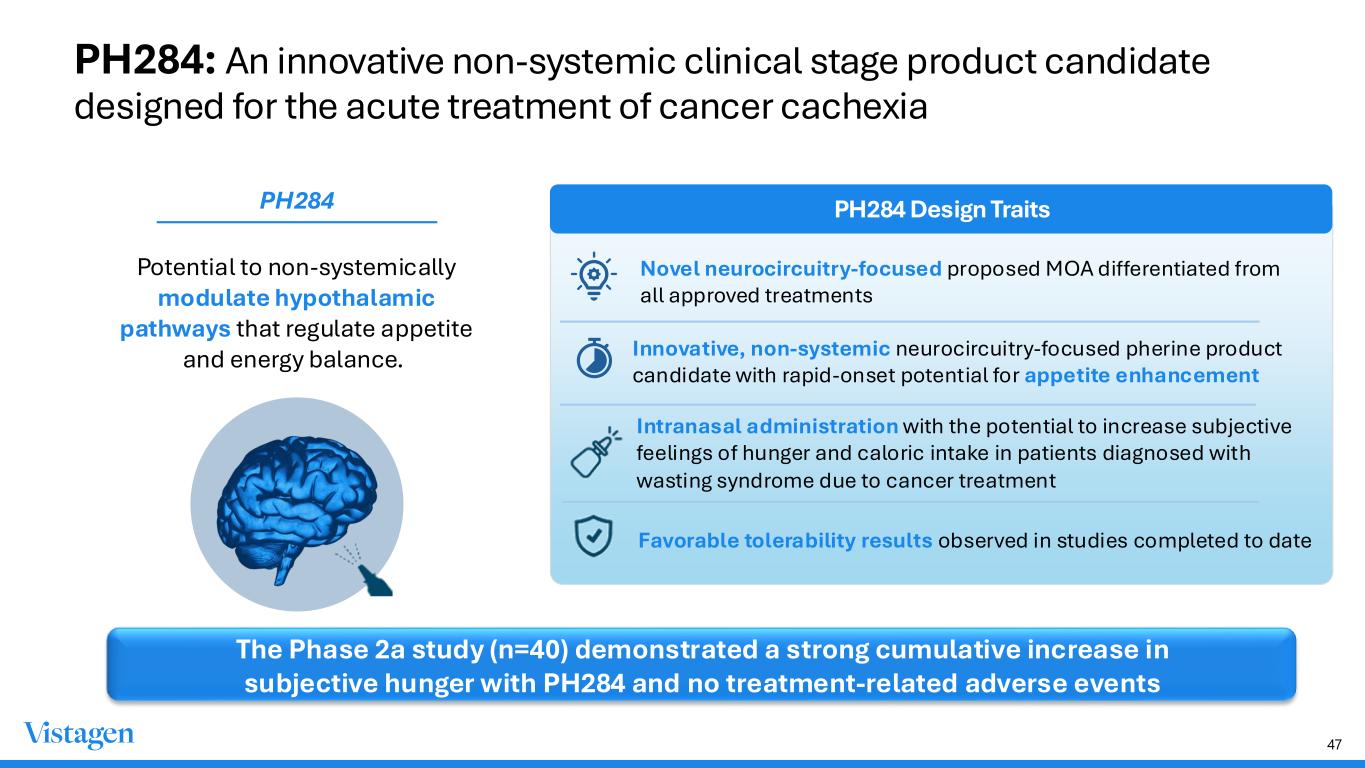
47 PH284: An innovative non-systemic clinical stage product candidate designed for the acute treatment of cancer cachexia Potential to non-systemically modulate hypothalamic pathways that regulate appetite and energy balance. PH284 Design Traits Novel neurocircuitry-focused proposed MOA differentiated from all approved treatments Innovative, non-systemic neurocircuitry-focused pherine product candidate with rapid-onset potential for appetite enhancement Intranasal administration with the potential to increase subjective feelings of hunger and caloric intake in patients diagnosed with wasting syndrome due to cancer treatment Favorable tolerability results observed in studies completed to date PH284 The Phase 2a study (n=40) demonstrated a strong cumulative increase in subjective hunger with PH284 and no treatment-related adverse events
48 Advancing a Differentiated Neuroscience Pipeline Harnessing the power and therapeutic potential of brain regulation. • Differentiated intranasal mechanism • Phase 3 opportunity in social anxiety disorder • Multiple Phase 2 neuroscience assets with established clinical proof-of-concept • Near-term regulatory and strategic catalysts • Experienced CNS team

49 Contact us: Investors: IR@vistagen.com Media: media@vistagen.com Business Development: busdev@vistagen.com